





Vintage Pole Fire Screen
A vintage pole fire screen protects the face from the glare of an open hearth whilst adding upright elegance to a room.
Vintage Pole Fire Screen
A vintage pole fire screen consists of a vertical wooden or metal shaft mounted on a weighted base, carrying a sliding panel that adjusts to block radiant heat. The forms seen across these listings span George III, Regency, William IV, and Victorian periods.
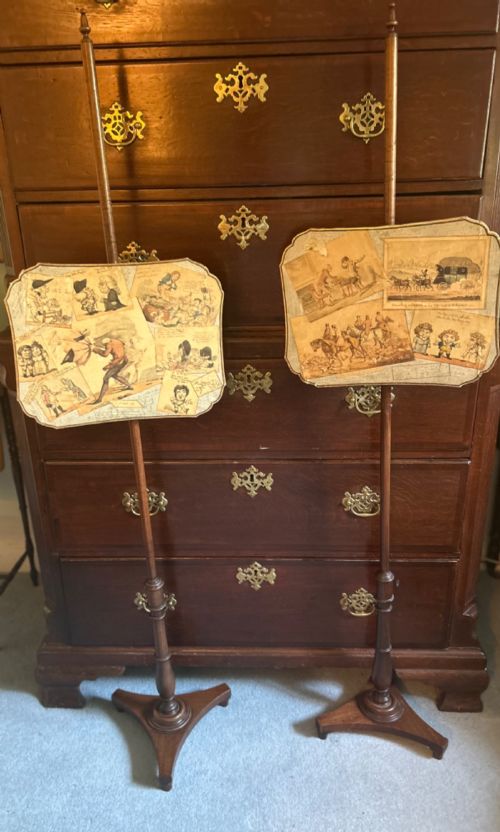
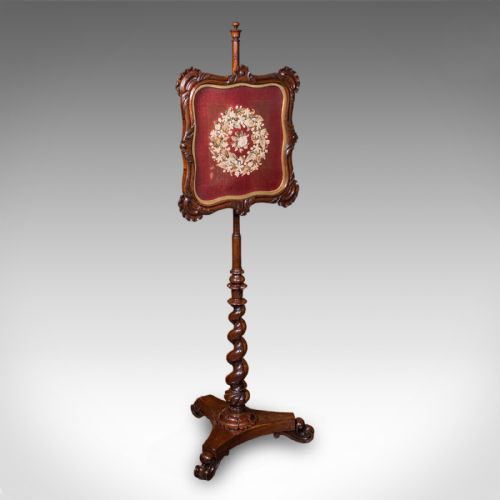
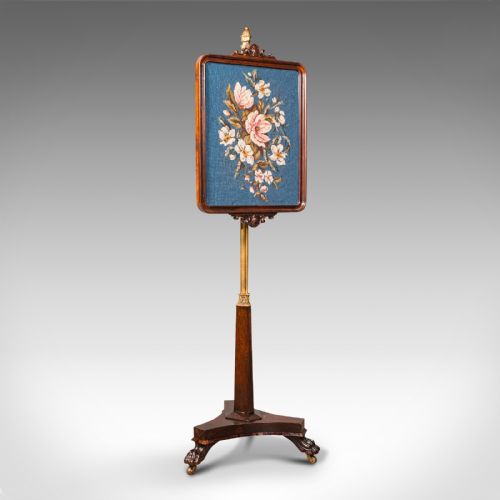
Most examples utilise mahogany or rosewood for the slender uprights and carved supports. The adjustable shields take the form of needlepoint panels, embroidered textiles, tapestry banners, satirical prints, and glass or paper heat reflectors.
Buyers frequently encounter variants labelled as firescreens, candle screens, or banner hangers. These serve the same fundamental purpose of adjustable shielding beside a domestic fireplace.
Materials and construction methods
Cabinetmakers turned dense timbers like mahogany and rosewood on a lathe to create the slender central poles and decorative bases. Heavier turned or carved footings provided the necessary stability to support the sliding shield above.
Needlepoint and tapestry panels were hand-stitched using wool and silk threads, then stretched across wooden frames fitted with brass thumb screws or ratchet mechanisms. These clever brass collars allowed the screen to slide up and down the pole and hold its height.
Vintage Pole Fire Screen Retail Price Guide 2026
Typical asking prices for vintage pole fire screen among the pieces listed under this phrase on Sellingantiques today, from the lower quarter to the upper quarter. They describe what is for sale here now, not the wider market.
The documented periods span Georgian, Regency, William IV, and Victorian eras, including specific dates such as eighteen-twenty and eighteen-thirty-five.
Distinguishing quality in pole screens
The sophistication of the carved base and the weight of the timber set finer pieces apart from standard examples. Robust rosewood and figured mahogany with intricate tripod legs indicate superior cabinetmaking.
The artistry and execution of the needlepoint or tapestry panel dictate visual merit. Finely worked petit-point embroidery or original satirical prints display greater skill than simpler cross-stitch decorations.
The Vintage Pole Fire Screen Glossary
- Pole screen
- A freestanding fireside accessory featuring a vertical shaft and an adjustable sliding panel used to deflect heat from a coal or wood fire.
- Needlepoint
- Hand-stitched embroidery executed on canvas mesh, commonly utilised for the display panels of nineteenth-century screens.
- Gilt brass
- Metalwork coated with a thin layer of gold, frequently found on the adjustable collars, banner hangers, and decorative mounts of Victorian examples.
- Regency
- An English design style spanning the early nineteenth century, characterised by classical restraint and dark exotic timbers such as rosewood.
Vintage Pole Fire Screen: Frequently Asked Questions
How do pole screens work?
A sliding brass collar holds the display panel to the vertical wooden shaft. This mechanism allows the user to raise or lower the shield to block the heat emanating from an open fire.
Historically, sitters placed these adjustable screens between their faces and the hearth to prevent cosmetics from melting and cheeks from flushing.
Where should I place a pole screen?
These slender vertical pieces suit corners of drawing rooms, beside reading chairs, or flanking a mantelpiece. Their small floor footprint makes them versatile decorative accents in historic and modern interiors alike.
Avoid positioning them in direct, strong sunlight to protect fragile antique textiles and paper prints from fading.
How do I adjust the height?
A brass thumbscrew or internal clutch mechanism secures the panel to the pole. Loosening this fixture permits the screen to slide freely along the upright.
Tightening the collar once the desired height is reached locks the shield in place.
What is the difference between a candle screen and a fire screen?
Candle screens are typically smaller scaled variants designed to protect the face from the glare and heat of wax or tallow candles on a table. Fire screens are larger floor-standing pieces intended for hearth use.
Both utilise the same adjustable pole and sliding panel construction principle.