


Vintage Platinum Brooch
A vintage platinum brooch brings together dense diamond weight and crisp geometry from the early twentieth century.
Vintage Platinum Brooch
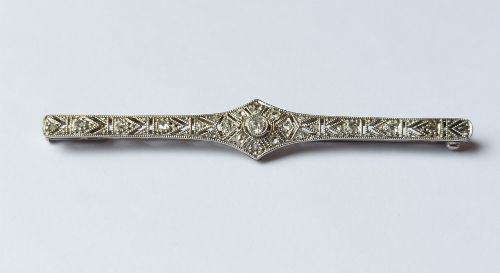
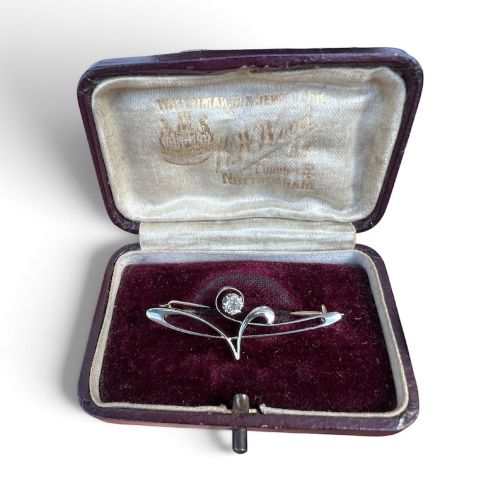
When searching for a vintage platinum brooch, buyers encounter pieces primarily spanning the Edwardian, Art Deco, and mid-century periods. These ornaments take many forms, including linear bar brooches, convertible pendant brooches, geometric clips, and figurative designs depicting birds or insects.
The most common examples on this page date from the 1920s and 1930s, displaying the characteristic symmetry and architectural restraint of Art Deco design. Alongside standard pinned brooches, the selection includes versatile pieces that detach to serve as pendants or function as matching dress clips.
Earlier Edwardian and Belle Epoque versions also appear, leaning towards delicate garland motifs, natural pearls, and softer lacy openwork. Later pieces stretch into the 1940s Retro period and the 1960s, introducing bolder yellow gold combinations and heavier stone settings.
Materials and Construction
Platinum serves as the structural backbone for these pieces, chosen for its strength and bright white surface that holds small claw and mill-grain settings securely. Often, workshops paired platinum tops with yellow gold, white gold, or silver bases to facilitate construction during the Edwardian and Art Deco eras.
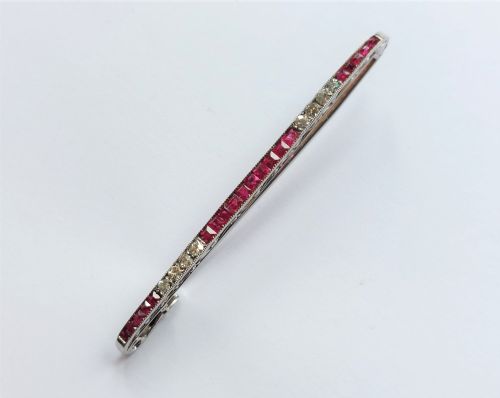
Diamonds dominate the stone selection, ranging from old cut and old brilliant stones to single and rose cuts, frequently accented with calibré-cut rubies, sapphires, emeralds, onyx, and pearls.
Vintage Platinum Brooch Retail Price Guide 2026
Typical asking prices for vintage platinum brooch among the pieces listed under this phrase on Sellingantiques today, from the lower quarter to the upper quarter. They describe what is for sale here now, not the wider market.
Object forms span simple bar pins and stickpins alongside complex multi-part jewellery suites, fob watches, and figurative animal brooches.
Distinctions in Quality
Quality in a vintage platinum brooch rests on the precision of the metalwork and the integration of the stones. Superior examples feature hand-pierced openwork and crisp mill-graining that shows no sign of wear or softening.
The value of the craftsmanship also depends on stone selection, where matched diamond sizes, lively old cuts, and saturated coloured gems like sapphires, rubies, or onyx elevate a standard bar pin into a notable piece of jewellery.
Cartier Paris·Paillette
The Vintage Platinum Brooch Glossary
- Art Deco
- A design style spanning the 1920s and 1930s characterised by geometric symmetry, clean lines, and architectural abstraction. This aesthetic defines the majority of platinum brooches from the period.
- Bar brooch
- A slender, horizontal pin designed to span a lapel or collar. They frequently incorporate central diamond clusters or calibré-cut gems.
- Old cut
- A diamond facet arrangement typical of the Victorian and Edwardian eras, featuring a smaller table, higher crown, and deep pavilion that catch candle or gas light.
- Mill-graining
- A decorative technique involving tiny raised beads of metal along the edges of settings. It softens the transition between platinum and stone while adding texture.
- Calibré-cut
- Coloured gemstones cut specifically in geometric shapes to fit tightly into a channel or border. They provide sharp blocks of colour in Art Deco pieces.
Vintage Platinum Brooch: Frequently Asked Questions
How do I wear a vintage brooch today?
These pieces pin securely to heavy wool lapels, silk scarves, or structured coat collars where the weight of the platinum is supported properly. Many Art Deco examples feature locking safety catches designed for secure daily wear.
For versatile items that convert into pendants, a fine chain transforms the brooch into a necklace. This allows the piece to transition easily between daytime tailoring and evening wear.
Can I convert a brooch into a pendant?
Many period pieces arrive with built-in folding Bails or detachable fittings specifically intended for suspension on a chain. Edwardian lavalieres and certain Art Deco clips were engineered with this dual purpose from the start.
A jeweller can also add a discreet, removable loop if the reverse of the frame allows, though original convertible hardware remains the most desirable option.
How do I tell Edwardian from Art Deco pieces?
Edwardian platinum jewellery relies on organic garlands, bows, lace-like filigree, and natural pearls. The overall effect is soft, airy, and romantic.
Art Deco design shifts sharply towards rigid geometry, strong diagonals, and high-contrast combinations like diamond and onyx. The metalwork becomes architectural and precise rather than flowing.
Are coloured gemstones natural in these brooches?
Sapphires, rubies, and emeralds set alongside diamonds in these pieces are period stones, often originating from classic sources like Burma or Kashmir. Sapphires and emeralds frequently show natural inclusions characteristic of untreated gems from the early twentieth century.
Onyx and pearls were also utilised extensively for contrast, with natural saltwater pearls appearing frequently in Edwardian clusters.