







Vintage Pirot Rug
A vintage pirot rug brings flat-woven Balkan folk art into modern interiors, offering geometric patterns and traditional designs from the early twentieth century.
Vintage Pirot Rug
When you search for a vintage pirot rug, you encounter flat-woven flatweaves originating from the Balkan region, specifically linked to Pirot and Sarkoy styles. These pieces belong to the early twentieth century, spanning from approximately 1900 to 1930, and appear primarily as room-size or area carpets.
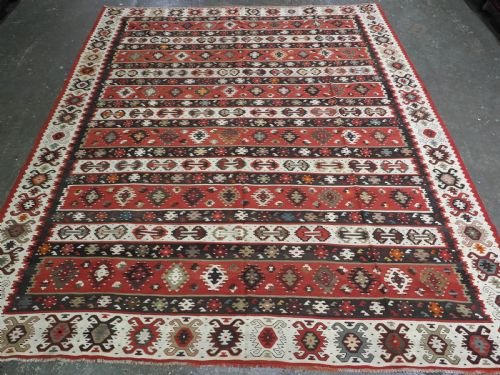
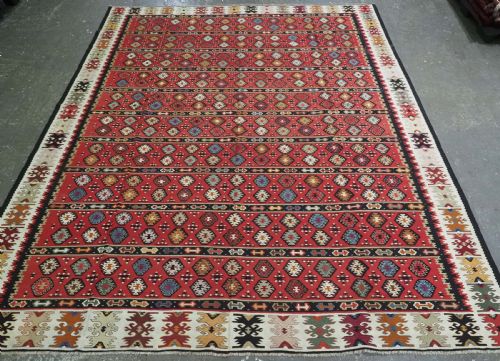
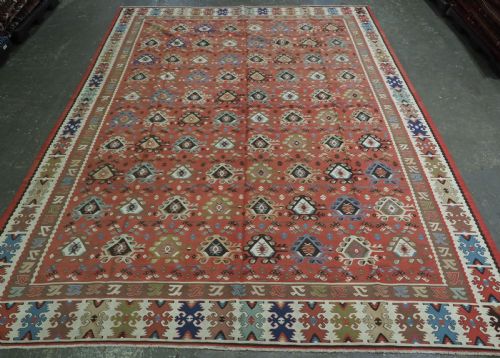
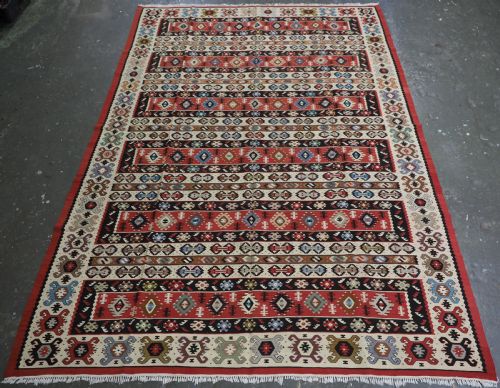
The dominant aesthetic draws upon Balkan folk art and traditional Ottoman motifs, rendered in classic, banded, lattice, and repeat medallion designs. These flatweaves function practically as floor coverings while displaying significant cultural heritage through their patterned surfaces.
The version most commonly met on this page is the Pirot or Sarkoy kilim, featuring wool construction and characteristic flat tapestry weaves. They present either warm soft colours or stronger contrasts depending on the specific repeat or flowering tree design.
How they were made
These flatweaves utilise natural wool and cotton fibres, employing traditional slit-weave tapestry techniques that produce pattern work identical on both sides. Artisans built the textiles by interlocking weft threads tightly over structural warps, creating a durable flat surface without pile.
The decorative schemes rely on dyed wool yarns arranged in banded, lattice, or repeat medallion formats. Natural dyestuffs account for the warm soft colours and varied hues found across the Balkan traditional output.
Woven without a single knot, these clever flatweaves give you two identical faces to love.
What varies in quality
The distinction at the upper end of the range rests on the complexity of the design, such as scarce lattice or flowering tree compositions, alongside the preservation of the flat weave. Superior examples combine large room sizes with well-maintained structural integrity and balanced colour palettes.
Lower variations involve simpler repeat patterns and more standard banded formats where the visual impact relies entirely on basic geometric repetition. The crispness of the slit-weave junctions and the retention of original wool characteristics ultimately divide ordinary utility pieces from finer examples of Balkan folk art.
The Vintage Pirot Rug Glossary
- Kilim
- A flat-woven carpet or rug produced without a pile by tightly interlacing warp and weft threads. This construction method defines the entire tradition of Pirot and Sarkoy textiles.
- Pirot
- A town renowned for its distinct flat-woven kilims bearing traditional Balkan folk motifs. Pirot pieces form a primary category within this regional weaving tradition.
- Sarkoy
- A regional designation often associated with Balkan kilims sharing similar flat-weave techniques and aesthetic vocabularies with Pirot pieces. These textiles frequently display banded or classic repeat layouts.
- Balkan Folk Art
- The cultural design tradition encompassing the geometric motifs, floral elements, and symbolic patterns native to the Balkan peninsula. This style informs the decorative schemes of early twentieth-century kilims.
- Slit-weave
- A tapestry technique where weft threads of different colours return at their own boundary areas, creating small vertical slits in the fabric. This method allows sharp geometric precision in flat-woven rugs.
Vintage Pirot Rug: Frequently Asked Questions
What is a vintage pirot rug?
A vintage pirot rug is a flat-woven textile originating from the Balkans, specifically associated with the weaving traditions of Pirot and Sarkoy. These pieces date from the early twentieth century and utilise traditional tapestry techniques.
They are distinguished by geometric patterns, banded layouts, and folk art motifs woven entirely without pile using wool and cotton materials.
How were these rugs used originally?
Historically, these flatweaves served as functional floor coverings, wall hangings, and decorative domestic textiles within Balkan households. Their flat structure made them versatile for placement across various rooms.
Today, their large room sizes and durable wool construction allow them to function effectively as area rugs in contemporary living spaces.
How do I care for a flat-weave kilim?
Maintenance involves regular gentle vacuuming without a rotating brush roll to prevent snagging the wool and cotton fibres. Professional cleaning tailored for flat-woven textiles ensures the preservation of the natural dyes.
Placing a quality rug underlay beneath the piece prevents slipping and reduces friction between the flat weave and the floor.
How can I tell different design styles apart?
Design styles vary from simple banded arrangements to complex flowering tree and scarce lattice compositions. Classic pieces rely on structured geometric repeats and medallion layouts characteristic of Balkan folk traditions.
Examining the complexity of the motifs and the arrangement of the colour bands helps distinguish standard utility weaves from scarcer decorative formats.