
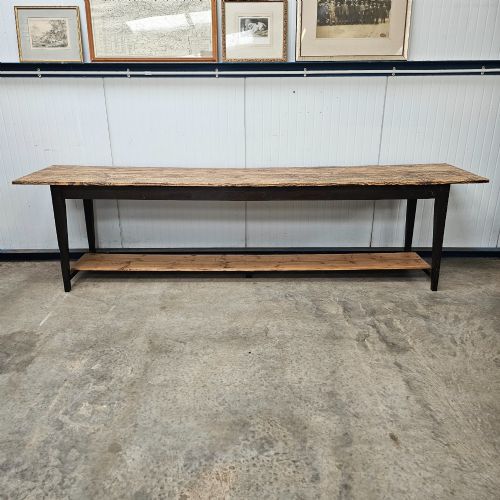


Vintage Pine Kitchen Island
These vintage pine kitchen island selections bring honest timber and utilitarian forms into the heart of the home, offering practical work surfaces built to last.
Vintage Pine Kitchen Island
A vintage pine kitchen island search covers robust work surfaces originally built for domestic labour, trade, and commercial preparation. The pieces meeting this description span several decades and origins, uniting utility with character.
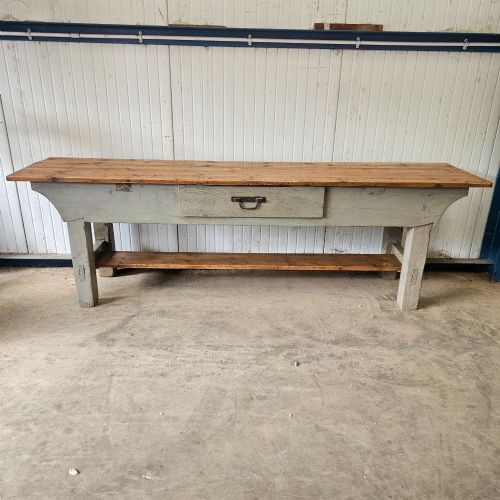
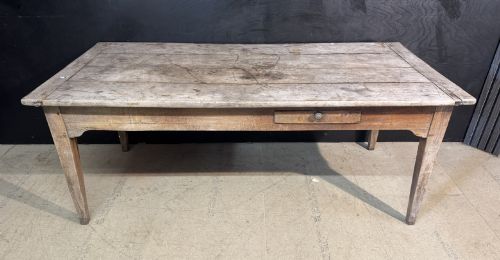
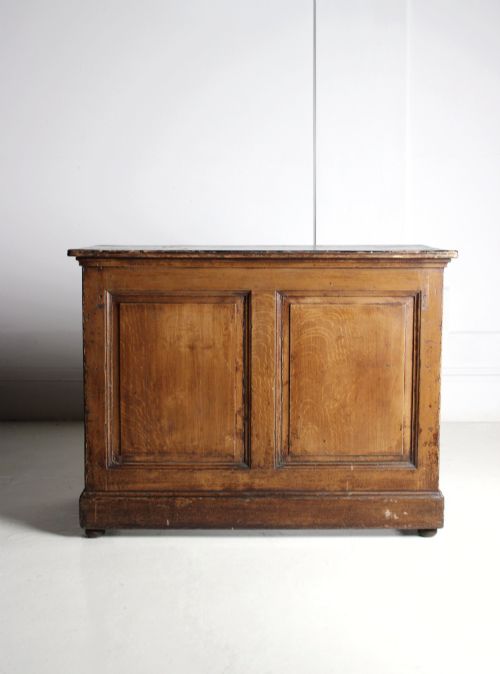
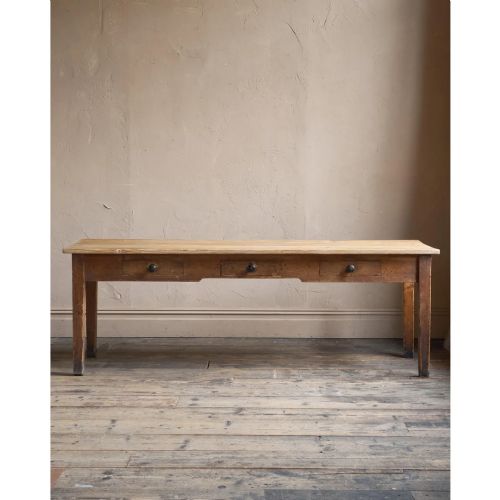
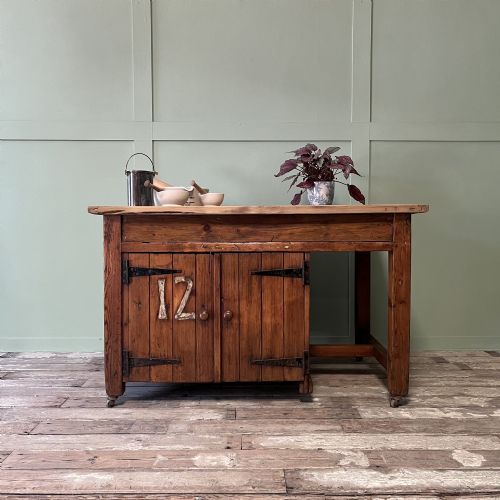
Most examples appearing here derive from hardworking functional forms such as scrubbed prep tables, workshop benches, drapers tables, and shop counters. These items transition naturally into modern kitchens to provide central workspace and storage.
Originating largely from the nineteenth century and early twentieth century, these tables reflect various regional traditions including English farmhouse, French provincial, and Scandinavian country styles. Solid construction and honest wear define every specimen.
How they were made
Construction relies heavily on solid pine timbers, often paired with robust secondary woods like oak, beech, elm, and iron for structural longevity. Carpenters utilised straightforward joinery designed to withstand heavy daily use rather than delicate ornamentation.
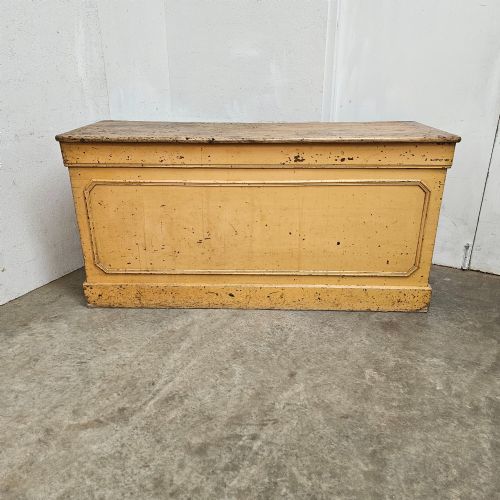
Surfaces frequently retain decades of working history, showing the marks of preparation, chopping, and tool use directly on the timber. Many pieces preserve original paint finishes, adding layers of muted colour accrued through generations of service.
Listings feature solid pine alongside oak, beech, elm, and iron across nineteenth-century and early twentieth-century origins.
What varies in quality
Proportion and integrity dictate the standing of each piece, with superior examples maintaining balanced dimensions suitable for modern domestic heights. The thickness of the top boards and the tightness of the original joints reveal the initial standard of the carpentry.
The character of the patina separates utilitarian survivors from exceptional pieces, particularly where original painted surfaces or untouched scrubbed pine tops remain intact. Balance between honest wear and structural soundness determines the lasting appeal of the furniture.
The Vintage Pine Kitchen Island Glossary
- Prep table
- A utilitarian work table designed for food preparation in sculleries, kitchens, or bakeries. These typically feature heavy solid timber tops and sturdy underframing.
- Drapers table
- A long, wide table historically utilised in fabric shops for measuring and cutting cloth. Their generous proportions make them particularly suitable for central kitchen use.
- Shop counter
- A heavy commercial furnishing designed to serve customers, often incorporating drawers, shelving, or raised panels at the front. They provide substantial storage alongside a large working surface.
- Workbench
- A heavy-duty carpenter or trade table built for intense physical labour, frequently equipped with vises or thick plank tops. Their industrial origins bring robust character to domestic interiors.
- Scrubbed top
- A wooden surface cleaned repeatedly with water and a stiff brush, removing accumulated grime to reveal pale, clean timber grain. This treatment leaves the wood with a smooth, matte texture.
Vintage Pine Kitchen Island: Frequently Asked Questions
How do I choose the right height?
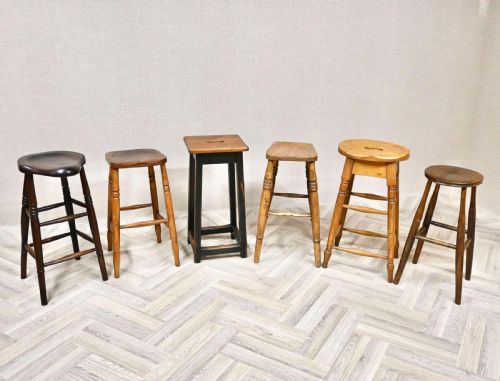
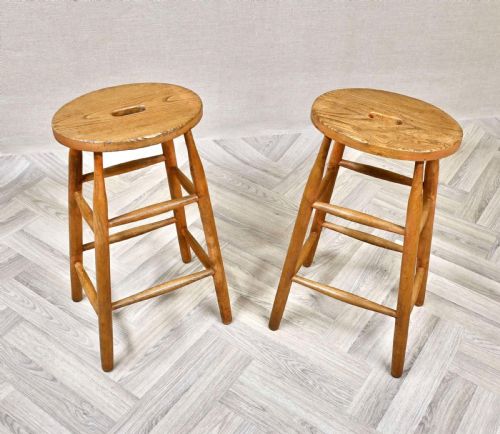
Consider the primary function of the surface, whether it is standing food preparation or casual seating with bar stools.
Verify the exact measurements of the legs and top to ensure comfortable clearance for daily tasks.
Can I use an antique workbench as an island?
These sturdy tables adapt exceptionally well to modern kitchens, offering deep drawers and robust wooden planks built for heavy trade work.
Their industrial character anchors an open room while providing reliable workspace.
How do I care for a scrubbed pine top?
Maintain the timber by wiping spills promptly and cleaning gently with mild soap and a damp cloth rather than harsh chemicals.
Applying occasional natural oils or wax helps protect the dry grain from moisture without altering the historical appearance.
What is the difference between a harvest table and a prep table?
Harvest tables generally feature lighter underframes and proportions intended for communal dining or gathering.
Prep tables prioritize thick, sturdy tops and utilitarian storage like drawers suited for active labour.
Do painted finishes require special maintenance?
Original paint finishes demand gentle cleaning to preserve the historical layers and subtle surface patination.
Avoid abrasive scourers that might strip away the authentic character accrued over decades.