




Vintage Pine Haberdashery Drawers
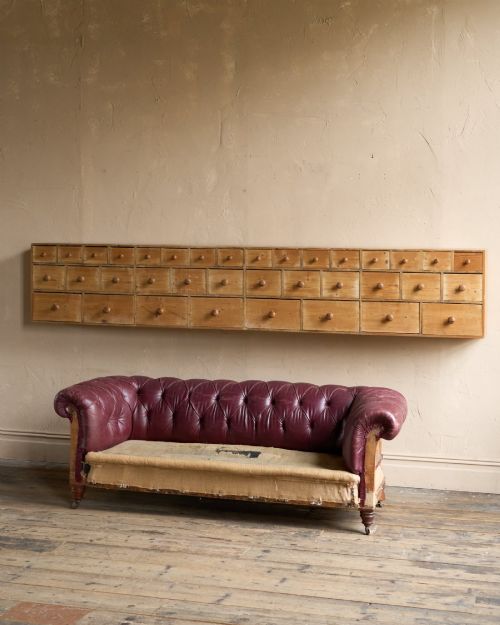
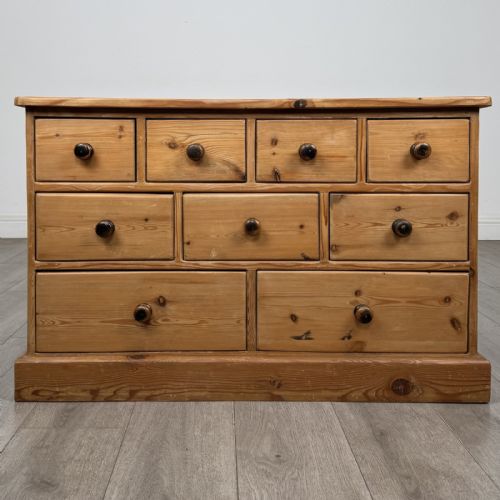
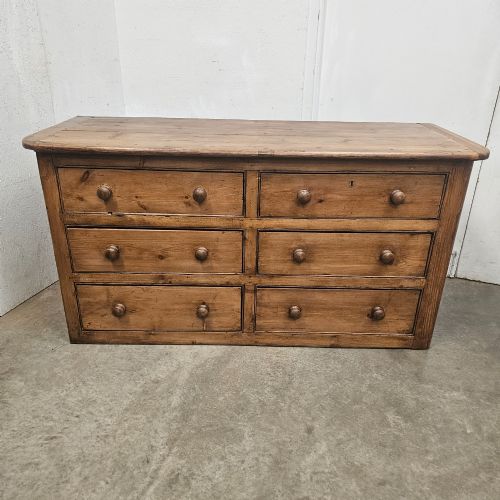
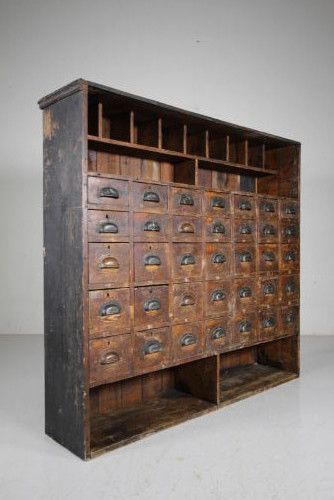
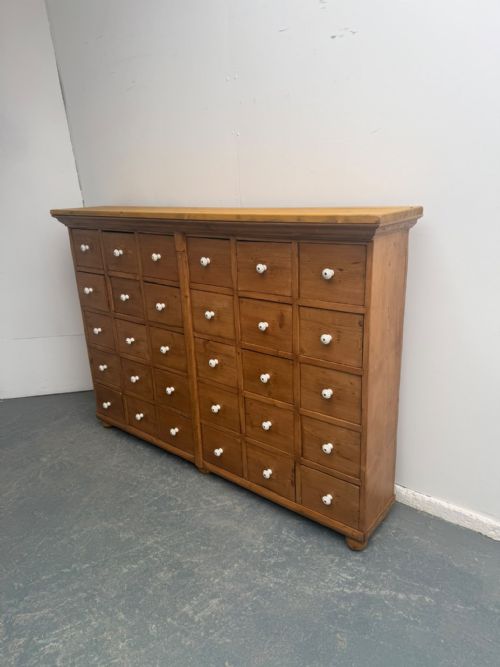
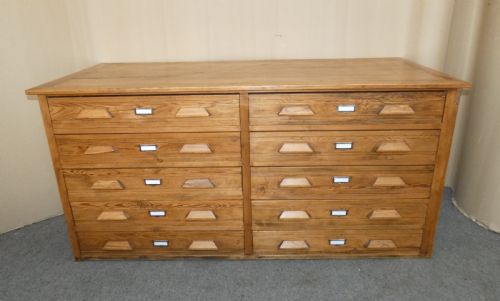
These vintage pine haberdashery drawers are practical banks of multiple compartments built for retail and trade storage.
Vintage Pine Haberdashery Drawers
Vintage pine haberdashery drawers comprise multi-drawer banks, shop fittings, and apothecary chests originating from trade and commercial interiors. When searching for vintage pine haberdashery drawers, buyers encounter utilitarian forms designed for sorting small goods in shops and workshops.
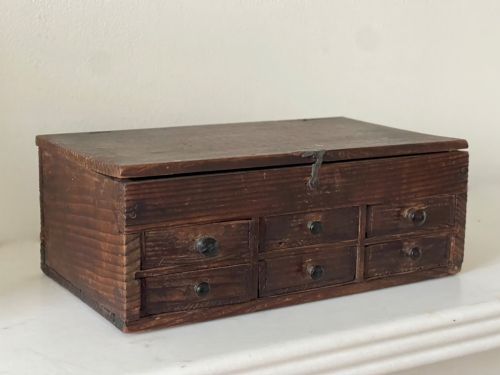
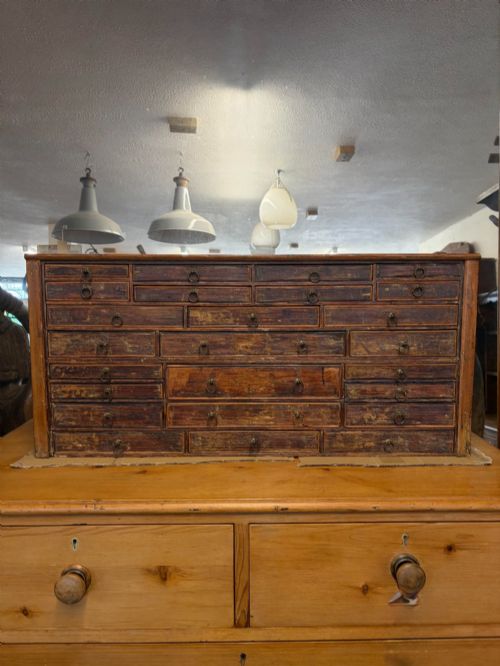
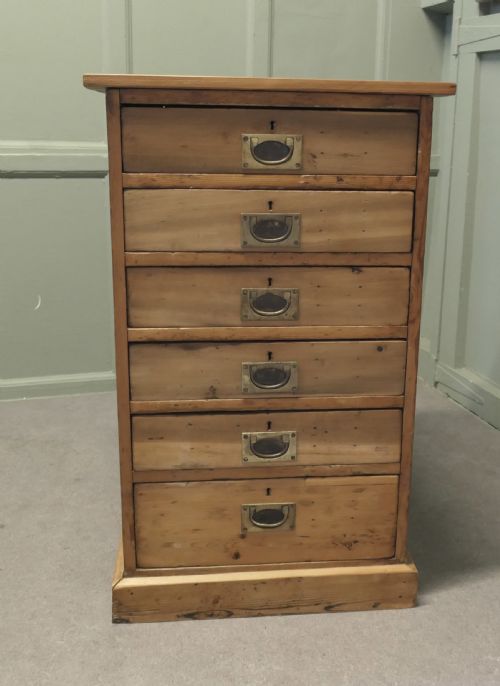
The pieces span the Victorian era, the nineteenth century, and the early twentieth century up to nineteen twenty. Formats range from shallow filing drawers and watchmakers boxes to large multi-drawer shop fittings with twenty or fifty compartments.
Origins include English and French workshops alongside painted Hungarian shop fittings. Common configurations take the shape of banks of drawers, shop counters, and collectors cabinets built for heavy commercial use.
What varies in quality
Scale and drawer count dictate the architectural presence of the piece, ranging from small desktop watchmakers boxes to substantial fifty-drawer shop fittings. Larger banks with numerous matching drawers command greater attention from collectors.
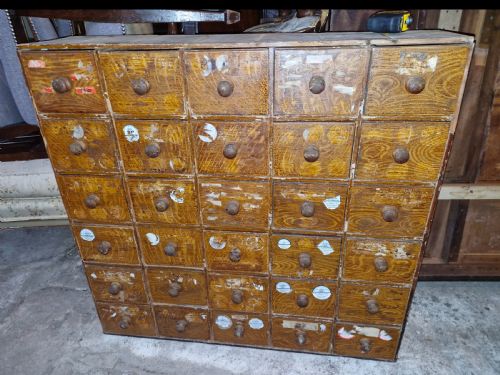
Surface preservation separates utilitarian pieces from finished retail furniture. Original painted finishes in specific colours like cream, white, or light green contrast with stripped and waxed pine surfaces.
Vintage Pine Haberdashery Drawers Retail Price Guide 2026
Typical asking prices for vintage pine haberdashery drawers among the pieces listed under this phrase on Sellingantiques today, from the lower quarter to the upper quarter. They describe what is for sale here now, not the wider market.
Listings span the nineteenth and early twentieth centuries, featuring pine, metal, brass, and painted surfaces across shop fittings and banks of drawers.
Luxmore s of Ilfracombe
The Vintage Pine Haberdashery Drawers Glossary
- Haberdashery drawers
- Multi-compartment storage units originally used in drapery and retail shops for organising small items such as ribbons and threads.
- Bank of drawers
- A large assembly of numerous small drawers housed within a single heavy carcase.
- Shop fitting
- Fixtures and furniture built specifically for commercial retail interiors rather than domestic use.
- Deal
- Softwood timber, typically pine or fir, commonly used in nineteenth-century cabinet making.
- Watchmakers box
- A miniature multi-drawer cabinet designed for holding tiny precision components and tools.
Vintage Pine Haberdashery Drawers: Frequently Asked Questions
What were vintage pine haberdashery drawers used for?
These drawer banks served as functional storage in drapers, ironmongers, and pharmacies for organising small retail stock.
Merchants utilised the numerous small compartments to keep trade goods sorted and accessible behind shop counters.
How do I date a bank of drawers?
Dating relies on timber selection, construction methods, and hardware styles associated with the nineteenth and early twentieth centuries.
Victorian pieces often display heavier carcase construction and specific iron or brass drawer pulls.
Are these drawers suitable for modern domestic use?
The multiple compartments provide practical organisation for modern items in studies, kitchens, or living spaces.
Their shallow and deep drawer configurations accommodate everything from stationery to collections.
What is the difference between shop fittings and domestic chests?
Shop fittings feature higher drawer counts and utilitarian proportions designed for commercial retail environments.
Domestic chests generally offer fewer, deeper drawers arranged for clothing rather than small trade goods.
Should I choose painted or bare pine?
Selection depends on whether the piece retains its original factory or shop paint finish.
Some buyers prefer untouched painted surfaces, while others choose natural or waxed pine timber.