
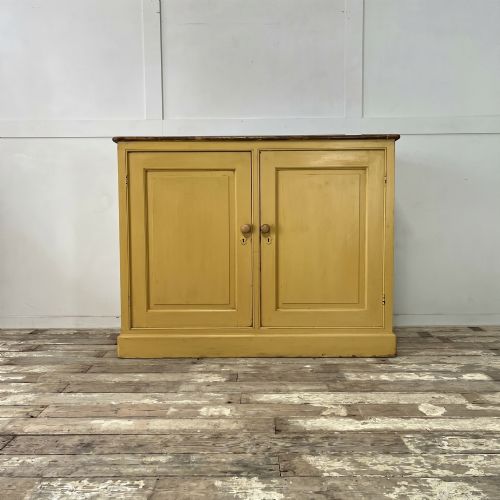
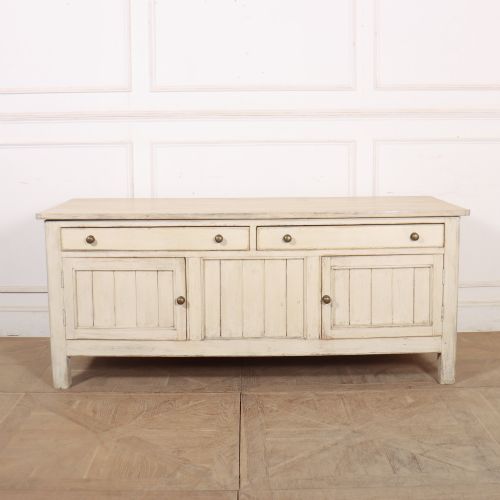


Vintage Pine Credenza
A vintage pine credenza offers utilitarian storage built from honest timber, spanning the functional forms of country houses and provincial workshops.
Vintage Pine Credenza
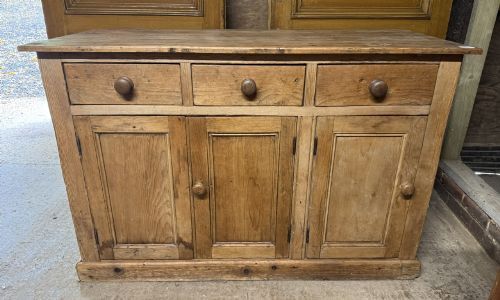
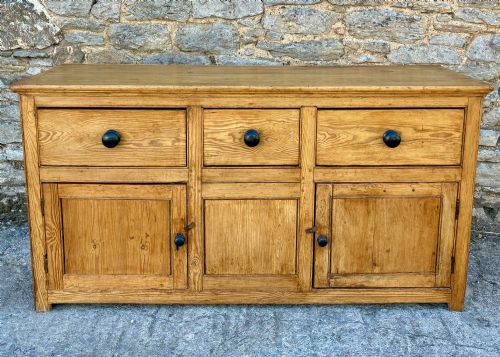
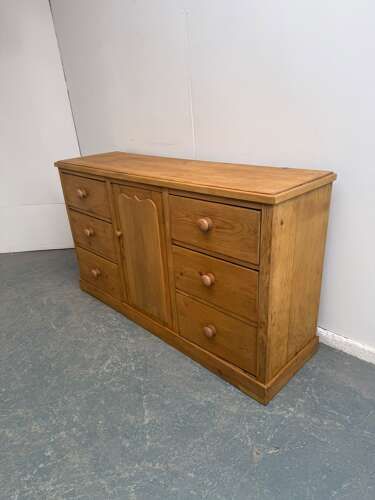
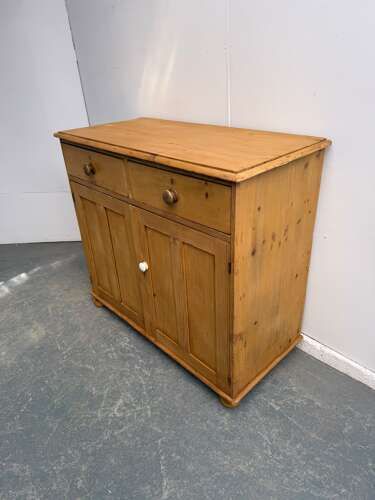
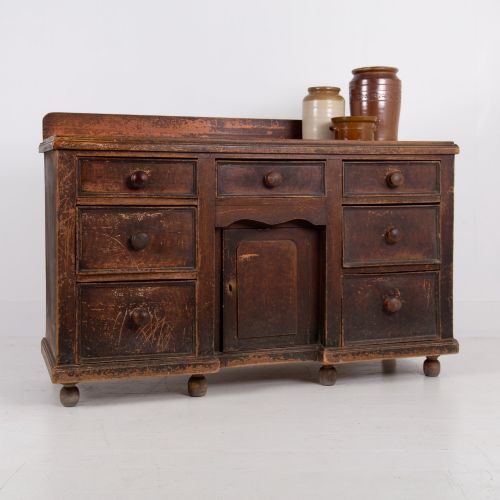
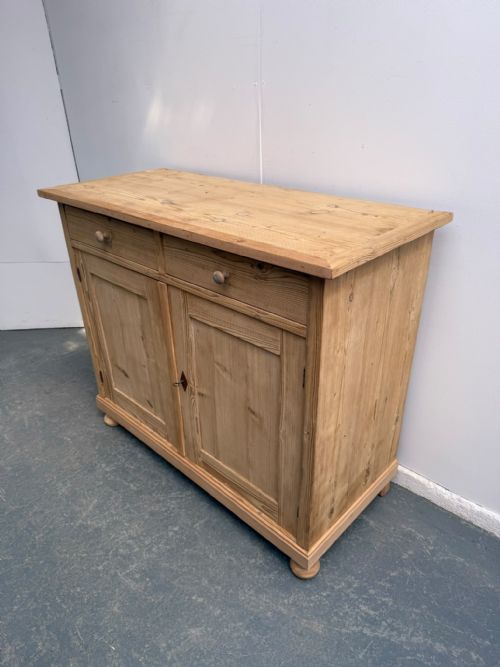
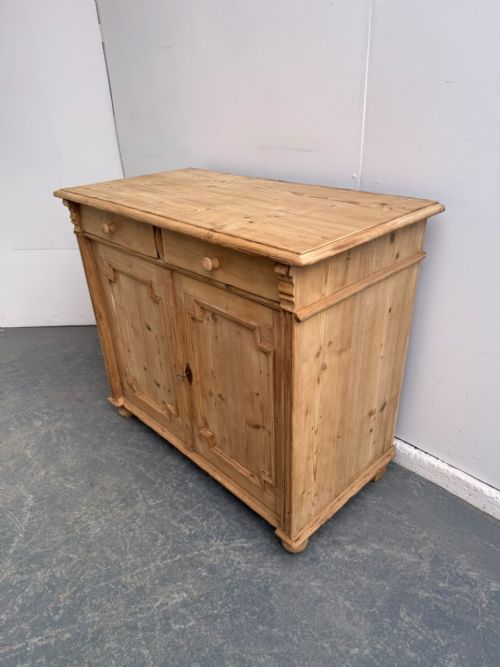
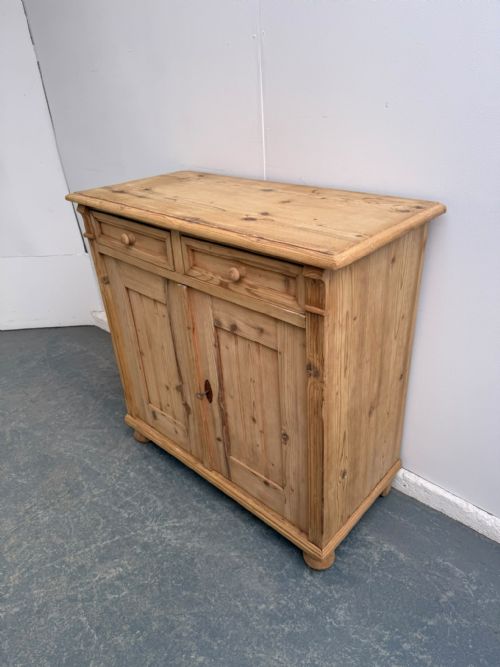
When searching for a vintage pine credenza, buyers encounter a diverse group of domestic storage furniture originating primarily from nineteenth-century kitchens, dairies, and country houses. These pieces bridge the gap between utilitarian workspace and decorative interior storage.
The selections available here manifest most commonly as kitchen dresser bases, cupboards, and sideboards rather than formal modern credenzas. Regional variations include English, Scottish, and Welsh vernacular pieces alongside Scandinavian painted examples.
Periods span from the eighteenth century through the Victorian era up to around nineteen hundred, providing robust carcases designed for daily household use.
Materials and Construction
Construction relies fundamentally on solid pine timber, often supported by secondary woods and assembled with traditional joinery suited to heavy domestic service. Structural stability comes from sturdy planking and panelled doors built to withstand daily opening and closing.
Surfaces divide between two distinct historical treatments: plain waxed timber that highlights the natural grain and knots, and applied coats of paint including original pigments, black finishes, and ragwork decoration. Iron and brass fittings such as hinges and drawer pulls complete the hardware.
Several pieces originate from Hungarian folk traditions and Scottish dairies, bringing unexpected regional character to standard kitchen storage.
Judging Quality
Quality rests upon the integrity of the original carcase and the preservation of authentic surface finishes rather than pristine factory standardisation. Pieces retaining their original paint layers or deep-patinated waxed pine hold greater integrity than those stripped down and overly modernised.
Proportion and domestic utility govern the appeal, where well-balanced drawer arrangements and sound structural timber distinguish better workshops from purely utilitarian farm furniture.
The Vintage Pine Credenza Glossary
- Dresser base
- The lower section of a kitchen dresser featuring cupboards and drawers, functioning independently as a sideboard or serving surface.
- Potboard
- An open lower shelf built into a dresser base, traditionally used for storing pots and heavy kitchen utensils.
- Ragwork
- A decorative paint technique involving cloths or rags to texture the surface glaze, seen on Scandinavian folk furniture.
- Breakfront
- A piece of furniture where the central section projects forward from the flanking outer wings.
- Chiffonier
- A compact sideboard or low cabinet equipped with drawers and enclosed shelving, popular during the nineteenth century.
Vintage Pine Credenza: Frequently Asked Questions
How do I use a pine sideboard in a modern room?
These versatile cupboards provide deep surface space and enclosed shelving suitable for dining room dinnerware or hallway storage. Their neutral timber or painted tones blend easily into contemporary living spaces.
Position them against large walls where their generous proportions and practical drawer configurations can support daily organisation.
What is the difference between a dresser base and a sideboard?
A dresser base originates from a kitchen context, often featuring potboards or heavily boarded timber tops designed for food preparation. Sideboards tend towards formal dining room service with more refined internal divisions.
Both serve similar storage functions in modern interiors, though dresser bases often display heavier vernacular construction.
Should I choose waxed pine or painted wood?
Waxed pine highlights the natural knots, grain variations, and warm amber tones accumulated through decades of handling. This finish suits rustic or traditional interior schemes.
Painted surfaces offer historical colour, ranging from muted English tones to decorative Scandinavian folk art, bringing distinct visual character to a room.
How do I identify a nineteenth-century piece?
Nineteenth-century items typically display hand-cut joinery, solid pine plank construction, and period hardware such as brass or cast iron pulls. Tool marks and timber shrinkage offer clues to their age.
Regional characteristics, such as Scottish dairy proportions or Welsh dresser base depths, further help place the furniture within its Victorian or earlier context.