



Vintage Pine Church Bench
A vintage pine church bench brings solid timber character and honest utility straight into a modern hallway or kitchen.
Vintage Pine Church Bench
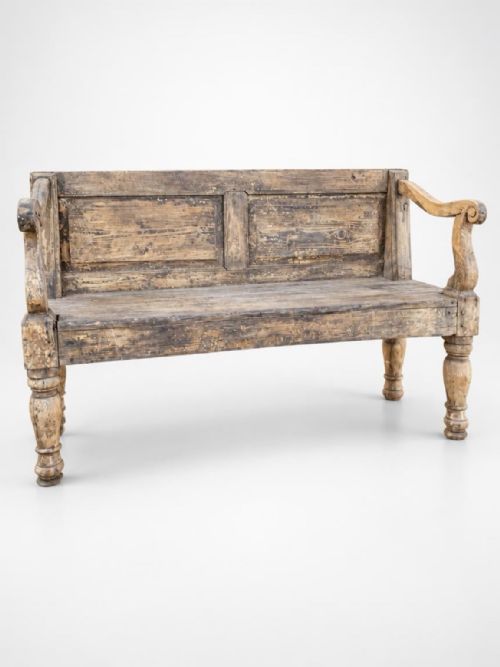
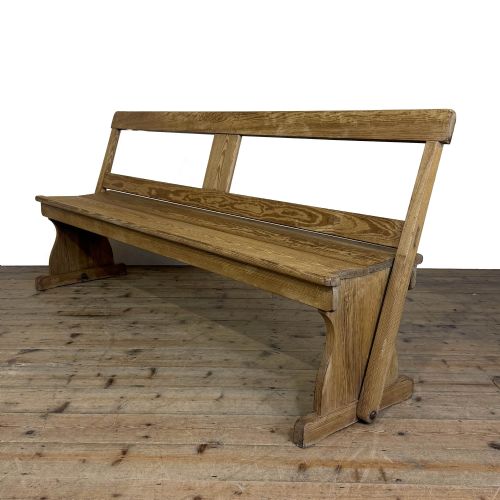
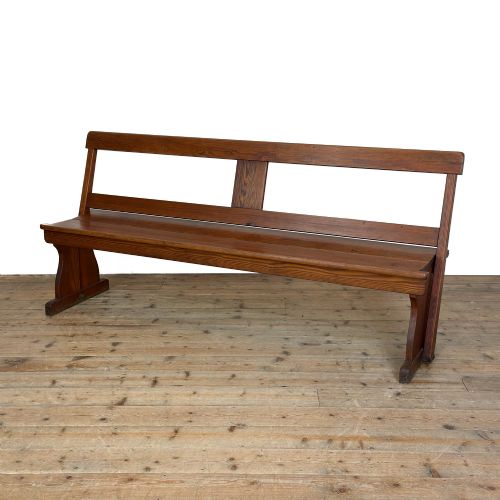
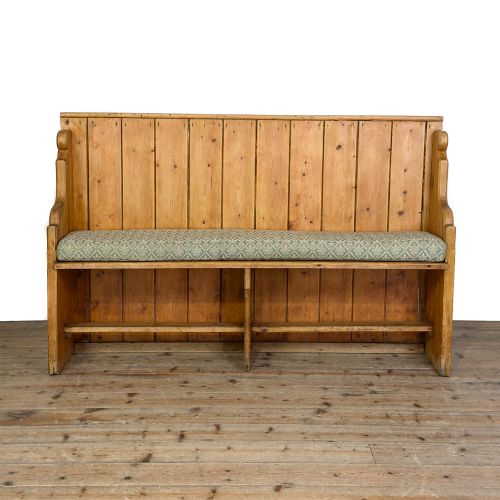
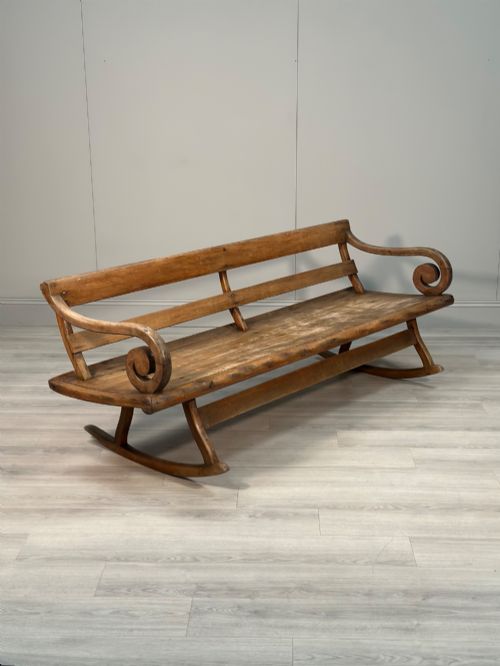
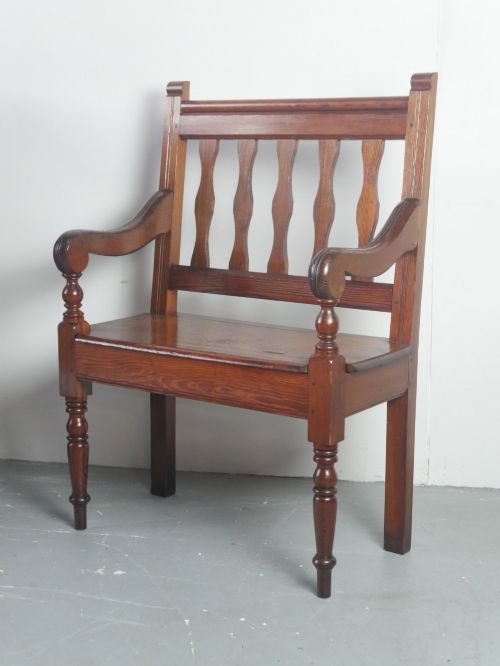
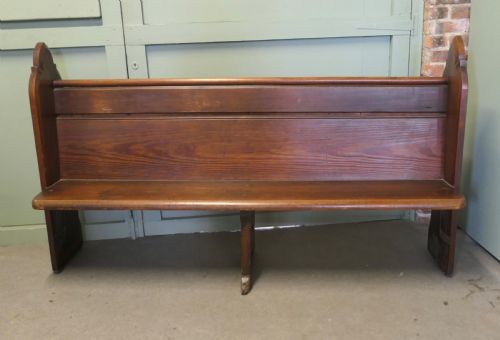
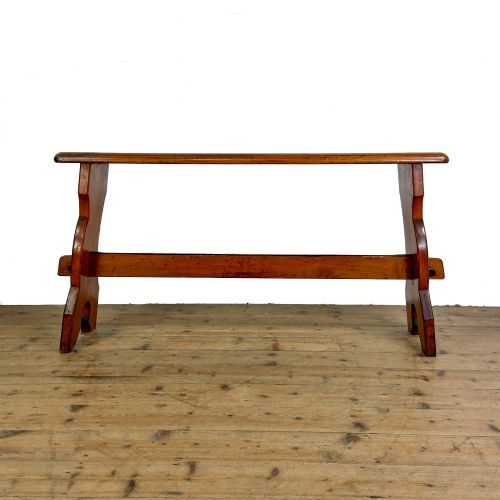
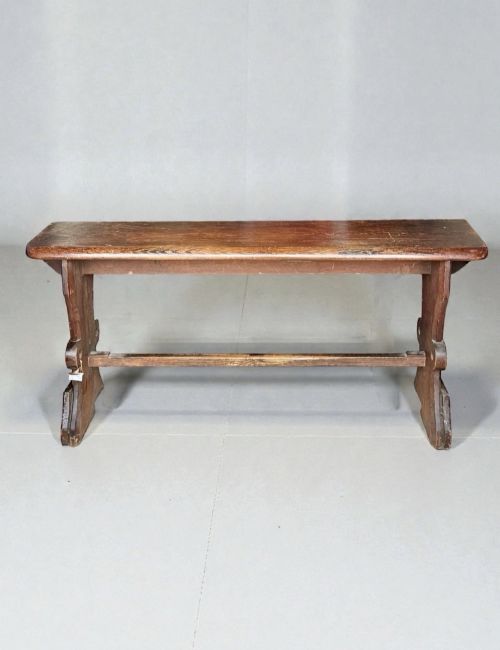
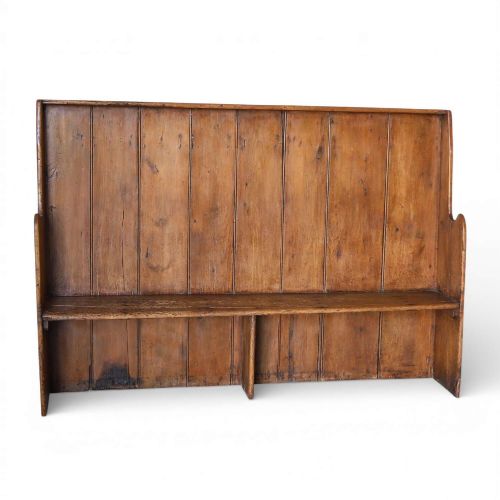
When searching for a vintage pine church bench, you are looking at substantial ecclesiastical and institutional seating designed for chapels, churches, and assembly halls. These pieces range from simple nineteenth-century chapel pews to clever flip-over designs and high-back settles meant to keep out drafts.
You are most likely to meet nineteenth-century and Victorian examples on this page, often built from sturdy pine or pitch pine. Many carry the honest marks of daily use in vernacular English, French, Austrian, or Scandinavian country styles.
The form adapts readily to domestic settings, functioning as long dining seating, narrow hallway benches, or even organist seats with integrated side tables. They offer a grounded architectural presence without the formality of polished mahogany or walnut.
How they were made
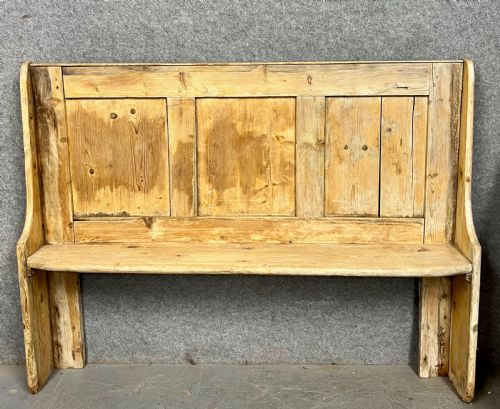
Joinery on these benches relies on robust tongue-and-groove construction, mortise and tenon joints, and heavy timber framing designed to withstand decades of congregational sitting. Cabinetmakers and local carpenters utilised dense pitch pine or standard softwood, selecting boards wide enough to form long solid seats and high backs.
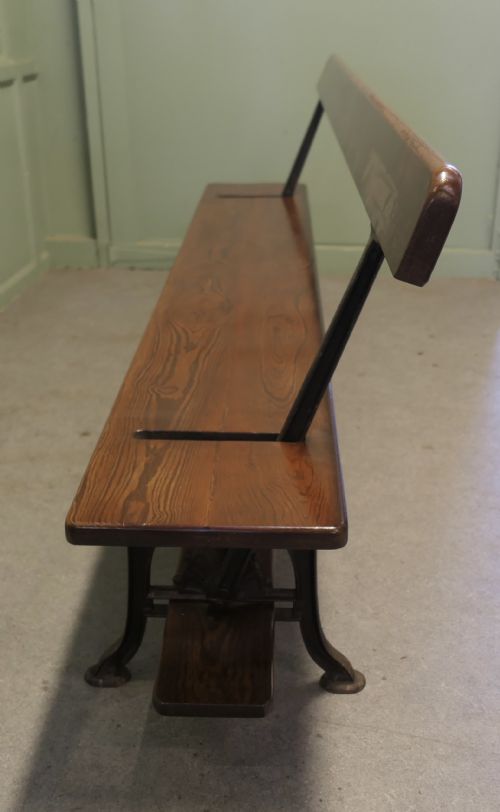
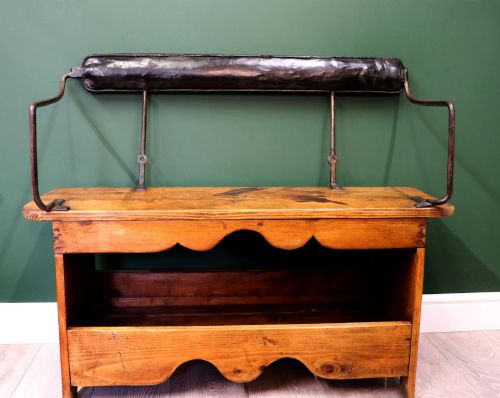
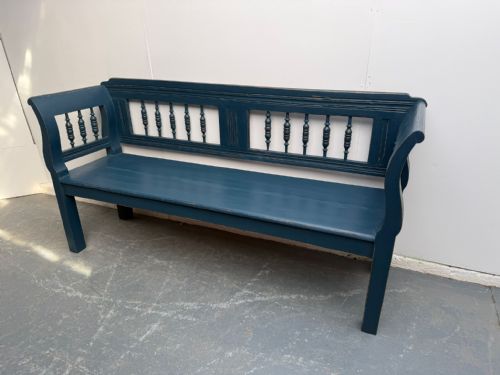
Surface treatments vary from untreated scrubbed timber to original layers of blue or painted finishes, alongside warm honey brown patinas developed through generations of handling. Occasional iron fixings, cast iron brackets, and clever reversible mechanisms provide the functional movement seen on tram or flip-over variants.
Vintage Pine Church Bench Retail Price Guide 2026
Typical asking prices for vintage pine church bench among the pieces listed under this phrase on Sellingantiques today, from the lower quarter to the upper quarter. They describe what is for sale here now, not the wider market.
Object forms span standard chapel pews, high-back settles, flip-over variants, and organist benches with integrated side tables.
What varies in quality
The distinction between standard utility seating and a finer piece rests in the integrity of the original timber and the cleverness of the mechanics on reversible or flip-over variants. Exceptional proportions matter greatly, separating standard heavy pews from neat hall benches designed with refined architectural mouldings or high panelled backs.
Survival of original painted surfaces or untouched honey brown patinas elevates a piece significantly compared to modern stripped or heavily altered timber. The weight and density of the pitch pine used also dictate durability and presence, with tighter grain patterns yielding a more satisfying finish.
The Vintage Pine Church Bench Glossary
- Settle
- A wooden bench with a high back, solid arms, and often a storage box beneath the seat designed to block cold drafts in older buildings. These pieces anchor a room with their enclosed architectural silhouette.
- Pitch pine
- A dense, resinous softwood originating mainly from North America that gained popularity for its durability and strong grain pattern during the nineteenth century. It resists wear far better than standard softwoods.
- Pew
- Long fixed or moveable wooden seating built for communal congregations in churches and chapels, usually featuring a straight back and a simple plank seat. They often retain numbering or markings from their original ecclesiastical home.
- Patina
- The surface sheen and colour acquired by wood through age, handling, and exposure to light over many decades. A good patina cannot be replicated artificially.
- Flip-over bench
- A dual-sided seating design with a movable backrest that pivots to face either direction, commonly associated with tram transport or specific chapel layouts. This mechanism required precise carpentry to function smoothly.
Vintage Pine Church Bench: Frequently Asked Questions
How do I fit a long church bench into a modern hallway?
Measure your hallway width carefully, keeping in mind that these benches often feature high backs and solid bases that project further than standard slim console tables. Placing one against a clear wall allows the timber grain and back panel details to provide a strong focal point.
Ensure you leave enough clearance for walking past, as nineteenth-century seating tends to be deeper and longer than modern mass-produced hallway furniture. Many buyers pair them with low baskets underneath for shoes to maximise their practical utility.
What is the difference between a pew and a settle?
A pew is typically an open-backed or straight-backed bench designed for rows in a chapel or church, focusing on linear seating capacity. They often feature book ledges on the reverse side for hymnals.
A settle incorporates high solid sides and arms designed specifically to shield the sitter from draughts in domestic farmhouses or taverns. Settles frequently include enclosed storage boxes beneath the hinged seat lid.
Can I use a church bench for a dining table?
These benches make excellent dining companions, particularly around rustic farmhouse or scrubbed pine tables where their long spans accommodate multiple guests easily. Check the seat height against your table clearance to ensure comfortable dining posture.
Keep in mind that most antique benches lack cushioning, so many owners add loose textiles or sheepskins for extended seating comfort during long meals.
How do I care for original painted pine surfaces?
Dust your bench regularly with a soft dry cloth and avoid harsh chemical cleaners that can lift historic paint layers or dry out the underlying pine. Keep the timber away from direct heat sources and strong sunlight to prevent warping or fading.
If the surface feels dry, a light application of traditional beeswax applied sparingly helps preserve the integrity of the old paint or bare wood without creating artificial gloss.
How can I tell a Victorian bench from an Edwardian one?
Victorian pieces from the nineteenth century generally feature heavier timber scantlings, deeper honey brown patinas, and more austere ecclesiastical Gothic influences. Construction tends to be exceptionally robust to handle heavy institutional use.
Early twentieth-century and Edwardian examples often display slightly lighter proportions, cleaner lines, and occasionally more domestic decorative touches influenced by the Arts and Crafts movement.