



Vintage Pin Cushion
A vintage pin cushion is a small sewing accessory, and collectors prize these charming pieces for their intricate figural designs and domestic history.
Vintage Pin Cushion
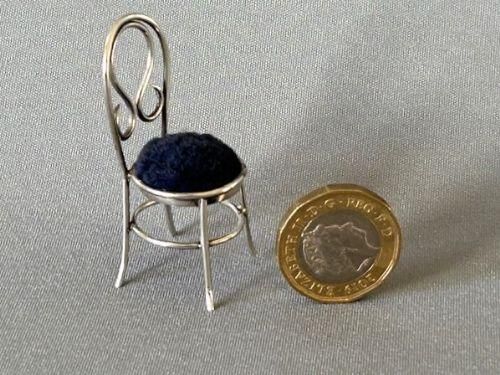
A vintage pin cushion serves as a decorative sewing accessory, with novelty figural forms dominating the selection alongside simpler geometric shapes. These small objects appear in various periods ranging from the Georgian era through to the mid-twentieth century.
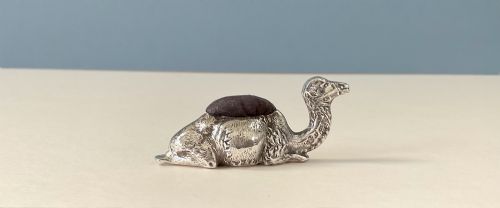
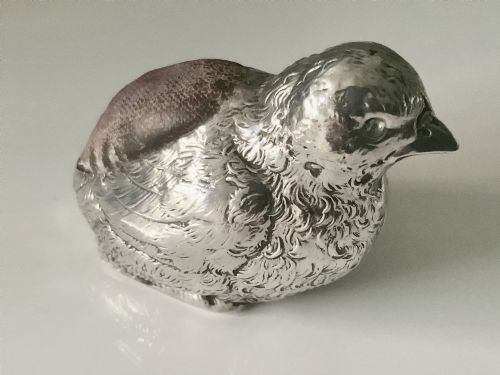
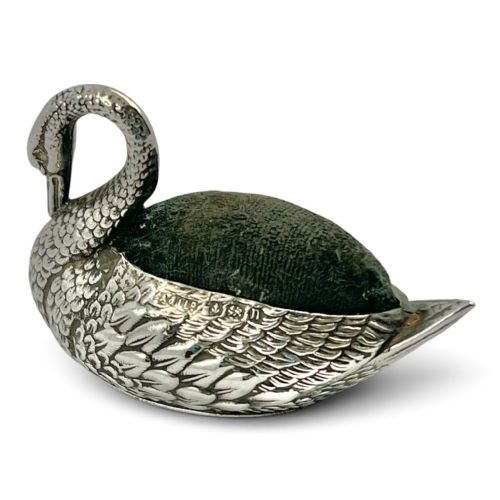
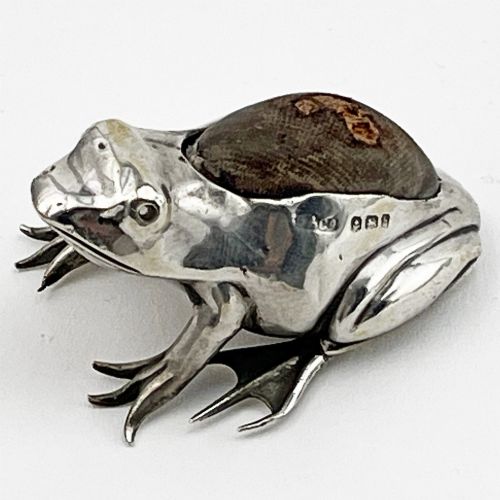
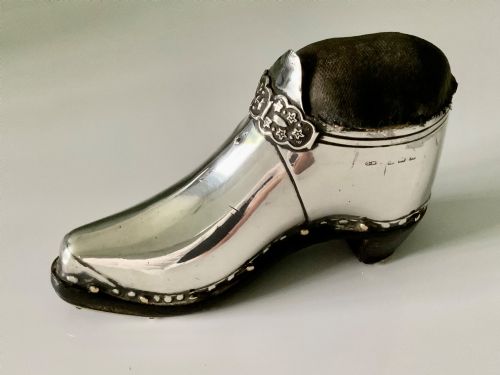
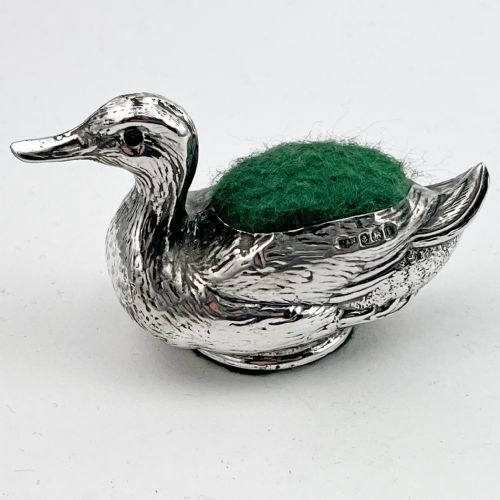
The most common examples on this page take the form of Edwardian novelty silver animals and everyday items such as shoes, birds, and vehicles. Collectors also encounter turned wood, porcelain, and fabric variations used on dressing tables.
Domestic sewing tools from these earlier decades often double as cabinet miniatures, reflecting the playful taste of Victorian and Edwardian makers. Each piece provides a tactile connection to historical needlework practices.
Materials and technique
Silversmiths shaped sterling silver into detailed figural moulds, frequently casting animals and boots to house the inner stuffing. These metal frames combine with fitted velvet or fabric pads designed to hold pins securely.
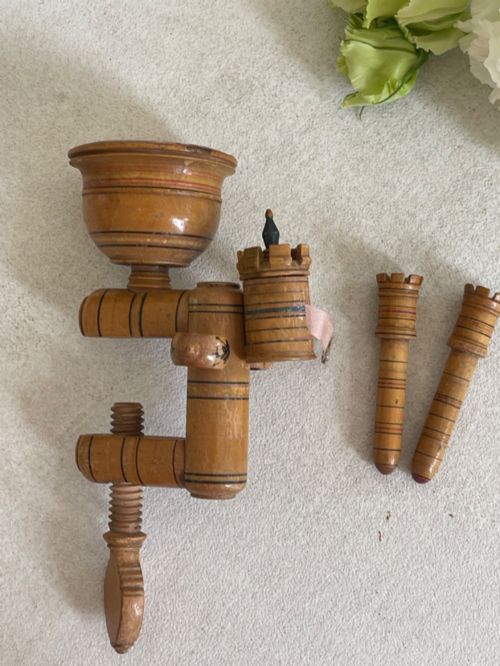
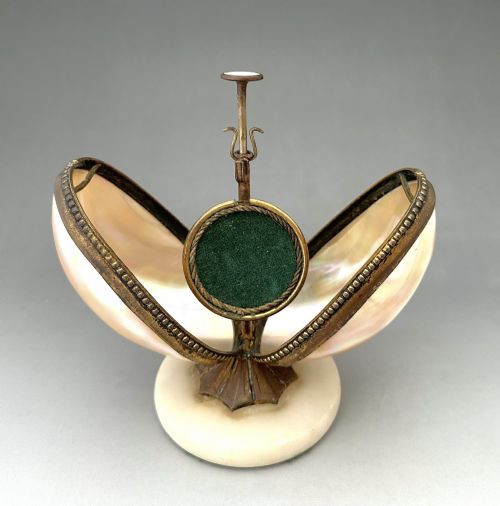
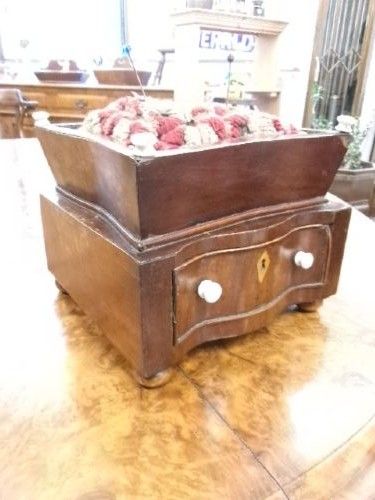
Alternative materials include glazed porcelain, turned wood, and mother-of-pearl, often associated with sewing clamps and etuis. Craftsmen utilised intricate techniques like Tunbridge Ware marquetry to decorate wooden surfaces.
Fabric inserts are typically packed tightly to withstand daily use on a dressing table. The integration of solid silver casings with soft textile cushions defines the construction of these sewing items.
Needlework enthusiasts once pinned their hopes on silver pigs, frogs, and railway lamps sitting quietly on the parlour table.
What varies in quality
Novelty forms with unusual subjects command attention through their sculptural precision and proportion. Pieces that retain their original velvet inserts without extensive replacement show better preservation.
Artificer's Guild·George W Shiebler
The Vintage Pin Cushion Glossary
- Novelty pin cushion
- A sewing accessory shaped to resemble an animal, vehicle, or familiar object rather than a standard geometric pad. These figural pieces were exceptionally popular during the Edwardian period.
- Treen
- Small domestic wooden objects made by turning on a lathe or through hand woodworking. Tunbridge Ware is a specific type of treen decorated with minute mosaic wood veneers.
- Etui
- A small ornamental box or case used to hold needles, scissors, and other sewing implements. They often appear on dressing tables alongside standalone pin cushions.
- Sewing clamp
- A vice-like device fixed to a table edge to hold fabric taut during embroidery or sewing. They frequently incorporate pin cushions and accessory hooks.
- Sterling silver
- An alloy consisting of silver and other metals, predominantly copper, standard in British silver manufacturing. It provides the durable structure for many figural cushions.
Vintage Pin Cushion: Frequently Asked Questions
What were vintage pin cushions used for?
These items held pins and needles close at hand during sewing, embroidery, and dressmaking tasks in the home.
They also served as decorative ornaments on dressing tables and sewing cabinets, reflecting the owner's personal taste.
How do I date a silver pin cushion?
Silver pieces often feature hallmarks stamped into the metal, indicating the assay office, standard, and year of manufacture.
Stylistic cues, such as Edwardian novelty designs or Georgian shapes, also help determine the period of origin.
Are the cushion pads original?
Many surviving pieces retain their early velvet or fabric pads, though some have been re-stuffed or recovered over time.
Close inspection of the stitching and fabric wear helps distinguish original textiles from later replacements.
How should I clean a silver pin cushion?
Silver casing requires careful polishing with a soft cloth to avoid damaging the surrounding fabric insert.
Moisture should be kept away from the textile pad to prevent staining or deterioration of the internal stuffing.