
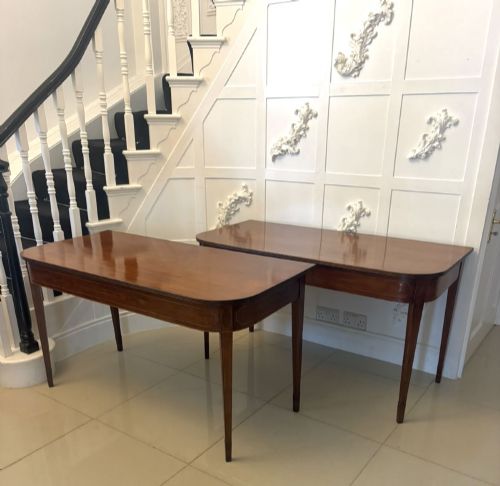
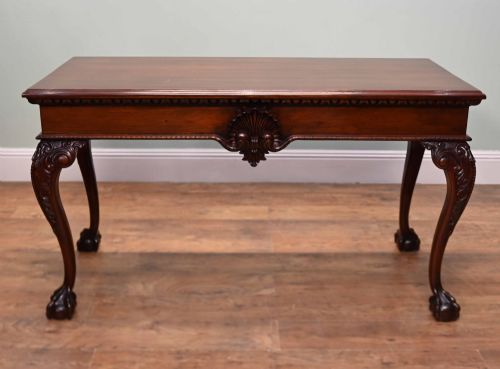
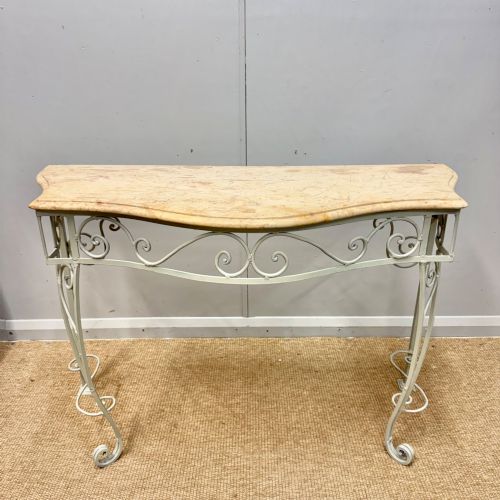
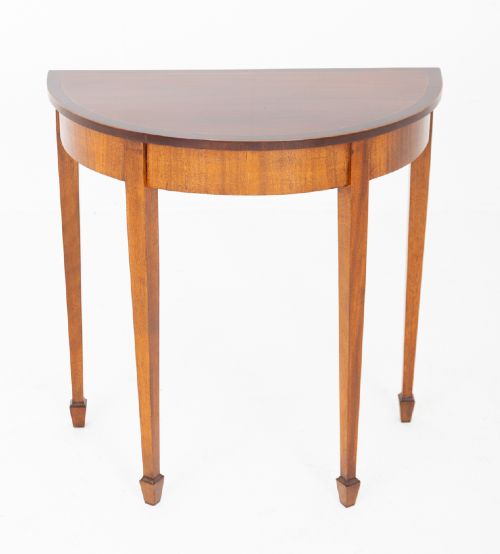
Vintage Pier Side Table
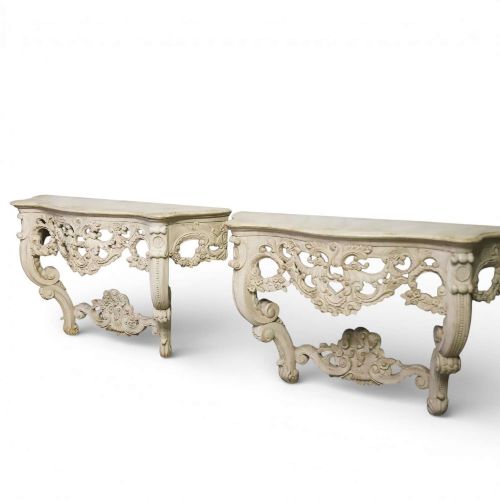
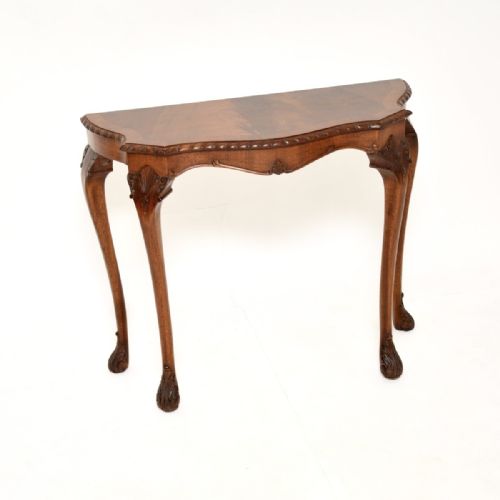
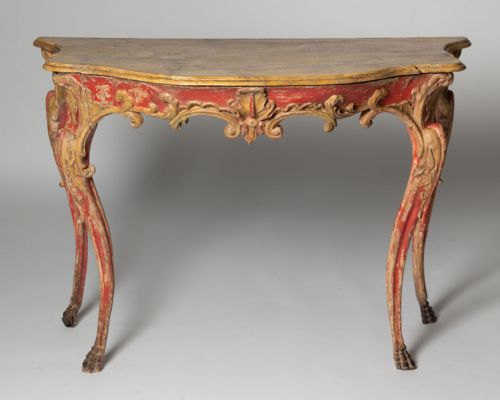
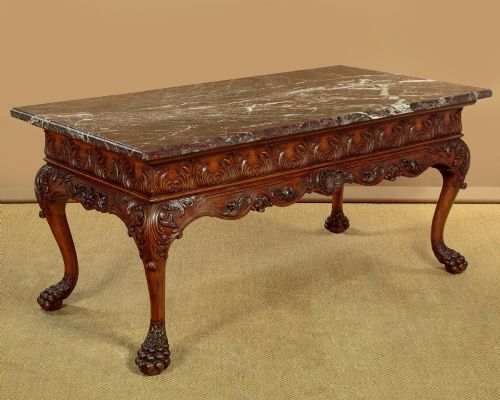
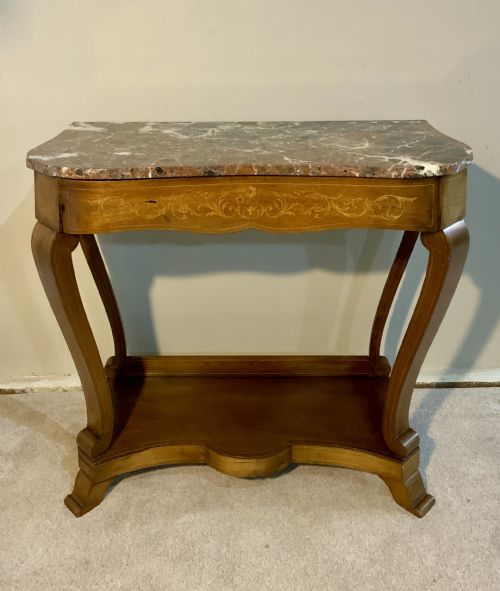
These vintage pier side table examples offer the narrow, architectural utility required for hallways and drawing rooms, pairing stone tops with timber frames.
Vintage Pier Side Table
A vintage pier side table typically manifests as a console or wall-fixed table designed to sit against narrow wall spaces between windows, drawing upon Georgian, Victorian, and French periods. The pieces appearing here span the eighteenth, nineteenth, and early twentieth centuries, encompassing styles from French Rococo and Louis XVI to Georgian and Victorian designs.
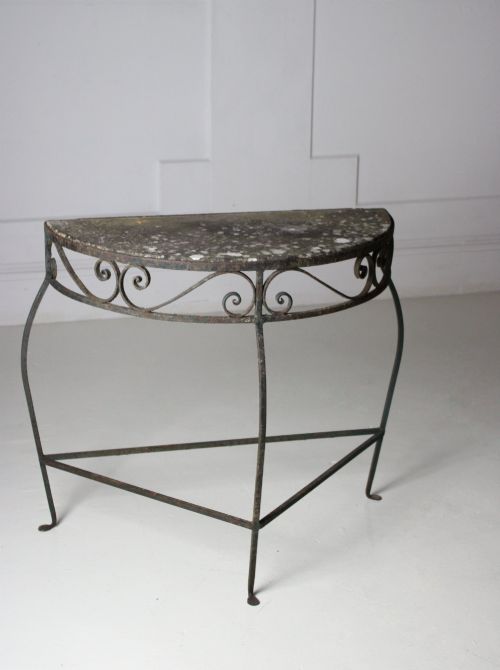
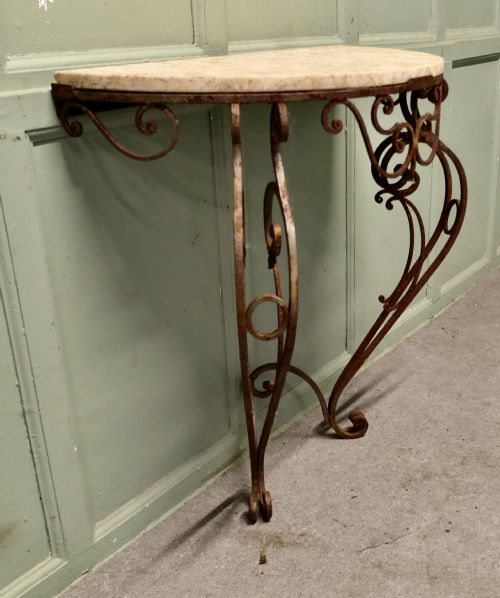
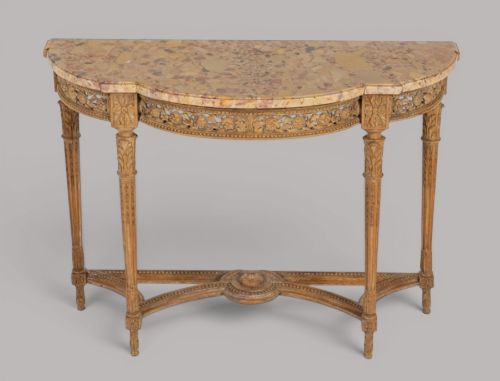
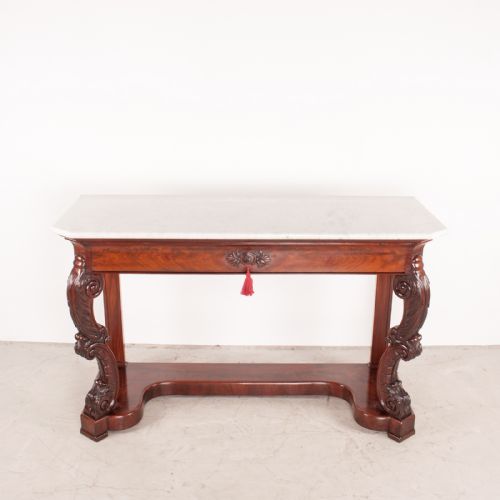
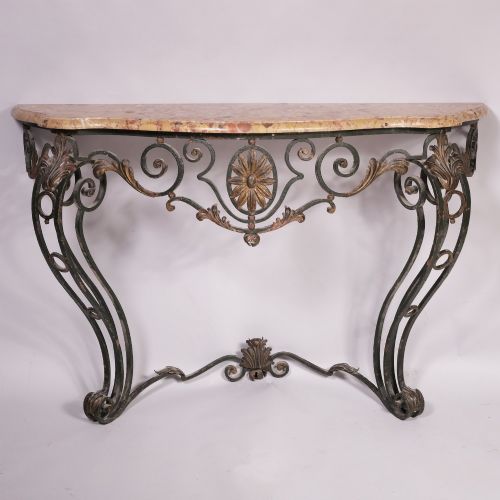
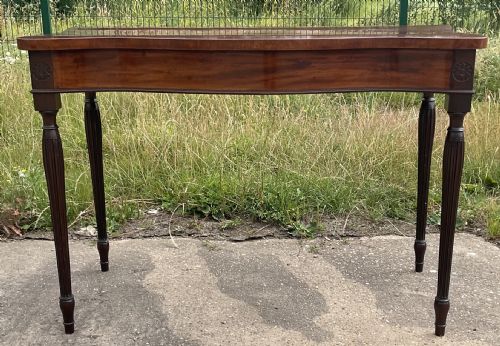
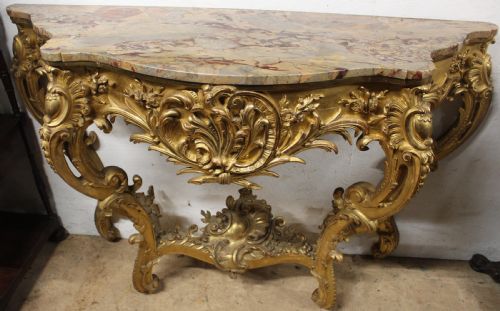
Console tables, demi-lune tables, and washstands dominate the forms, frequently featuring shaped serpentine or half-moon fronts. Buyers encounter varieties ranging from rustic wrought iron frameworks to carved giltwood and mahogany structures.
Origins stretch across English, French, and Italian workshops, reflecting both provincial domestic production and formal neoclassical aesthetics. Many examples combine the support of wall brackets or legs with heavy stone surfaces intended for display.
Materials and Construction
Makers utilised solid timbers including mahogany, walnut, rosewood, and oak for the structural frames, often shaping the wood into curved demi-lune or serpentine outlines. Hand-carved decorative elements, gesso, and painted or parcel gilt finishes are common across French and English pieces.
Heavy marble tops, including fossil varieties and plain white stone, provide the functional upper surface, frequently resting unattached or pinned onto the timber base. Wrought iron frameworks also appear, particularly in twentieth-century French items.
Joinery methods rely on period traditions, with hand-carved details and applied mouldings defining the ornamental surface work rather than machine-standardised components.
Listings feature woods such as mahogany, walnut, rosewood, oak, and satinwood alongside marble and wrought iron.
Determining Quality
The sophistication of the timber carving and the weight and figuring of the marble top establish the primary tier of craftsmanship. Pieces featuring hand-carved giltwood or detailed mahogany joinery outclass simpler painted pine or basic wrought iron versions.
The integrity of the structural frame, particularly where narrow console legs meet heavy stone tops, determines the physical stability. Genuine period examples retain original surface patination and authentic stone slabs rather than modern replacements.
Epstein and Co·Gillows
The Vintage Pier Side Table Glossary
- Demi-lune
- A half-moon shape used for table tops and frames to fit flush against a wall. This form allows the table to occupy minimal floor space in narrow hallways.
- Serpentine
- A gently undulating line featuring a convex centre flanked by concave curves. This profile adds visual movement to the front edge of a table top.
- Giltwood
- Timber coated with gold leaf or metallic paint for a decorative finish. It appears frequently on formal French console frames.
- Gesso
- A plaster-like material applied to wood surfaces to form a smooth base for gilding or painting. It accepts intricate low-relief moulding before finishing.
- Console table
- A table supported by wall brackets or legs, designed to stand against a vertical surface. These items often carry heavy marble slabs.
Vintage Pier Side Table: Frequently Asked Questions
Where should I place a pier table?
These tables suit narrow architectural spaces such as hallways, landings, or the wall real estate between tall windows. Their shallow depth prevents them from obstructing walkways while offering a surface for decorative objects.
Pairing a table with a matching wall mirror replicates traditional drawing room arrangements where the console reflected light and anchored the room's symmetry.
Are marble tops original to the tables?
Many period tables were designed specifically to carry heavy stone slabs, which simply rest upon the wooden frame to distribute weight evenly. Inspecting the underside reveals whether the timber rebate matches the thickness of the stone.
Replacement marble occasionally occurs due to historical breakage, so matching the stone type and age to the frame remains important for period accuracy.
How do I identify a French console table?
French examples often display characteristic stylistic markers such as Rococo curves, Louis XVI neoclassical straight fluted legs, or giltwood finishes. The carving tends to be more flamboyant than English equivalents of the same era.
Timber choices also offer clues, with walnut and oak frequently appearing in French provincial pieces alongside painted and parcel gilt surfaces.
Can these tables support heavy lamps?
The structural strength depends heavily on whether the table relies on wall-fixing brackets or freestanding legs. Marble-topped consoles inherently possess substantial weight at the top, requiring stable placement.
Tables secured directly to the wall or featuring robust four-leg frames handle lighting and decorative objects securely, whereas delicate wall-mounted consoles require careful weight distribution.