



Vintage Pewter Jug
A vintage pewter jug carries the quiet weight of centuries past, bringing substance and utility to any room.
Vintage Pewter Jug
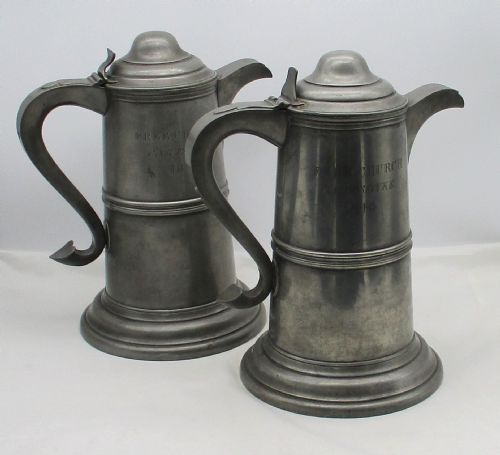
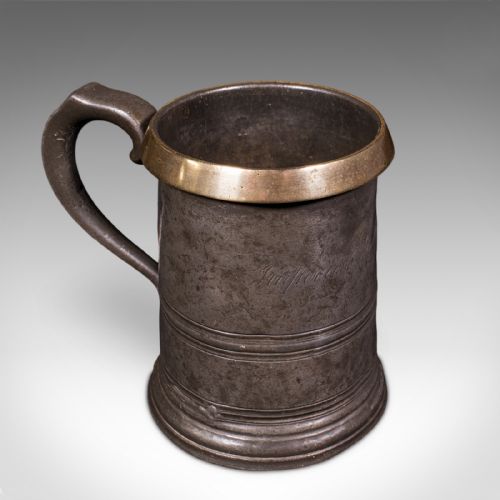
A vintage pewter jug encompasses a broad range of vessels designed for serving, measuring, and storing liquids. Collectors encounter forms spanning from eighteenth-century English flagons and Scottish tappit hens to nineteenth-century Victorian measures and early twentieth-century Arts and Crafts designs.
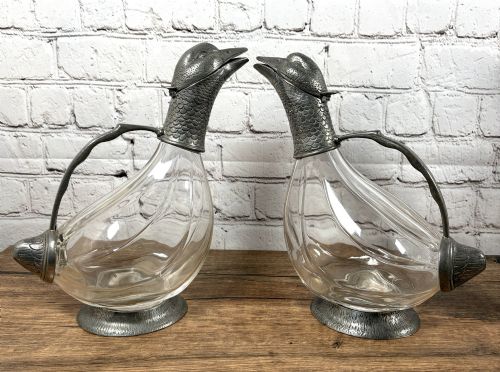
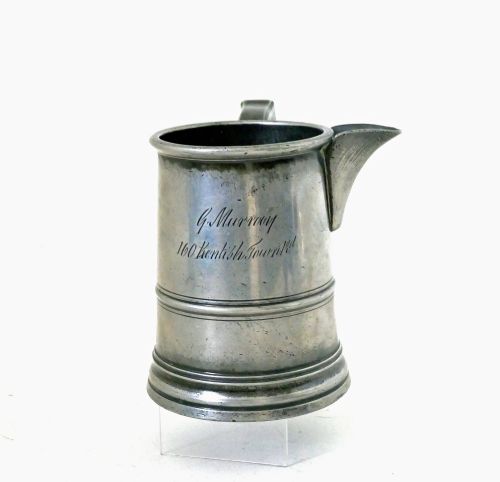
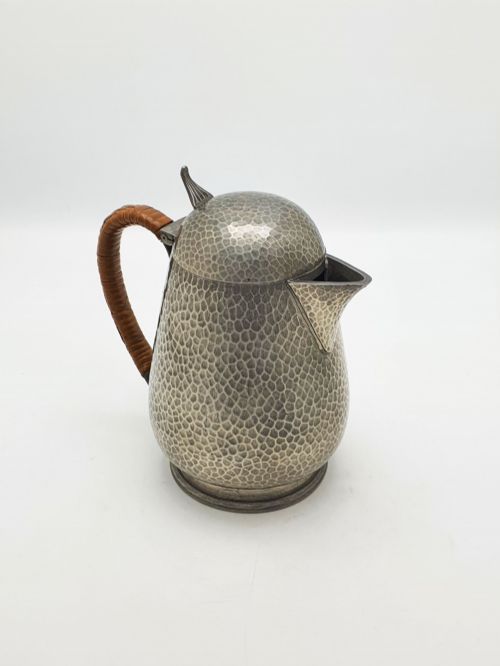
The selection on this page ranges across multiple decades and centuries, capturing utilitarian public house tankards alongside decorative Art Nouveau and Art Deco tablewares. These pieces display the evolution of metalware from heavy tavern service to artistic domestic display.
Origins vary across English, Irish, Scottish, German, and Austrian workshops, reflecting distinct regional standards of capacity and form. Buyers find everything from simple lidded measures to elaborate relief-moulded and enamel-accented pitchers.
How they were made
Makers shaped these vessels primarily from metal alloys rich in tin, sometimes combining pewter with supplementary materials such as cane handles, brass mounts, and enamel insets. Artisans utilised casting, hammering, and soldering techniques to construct bodies, handles, and lids.
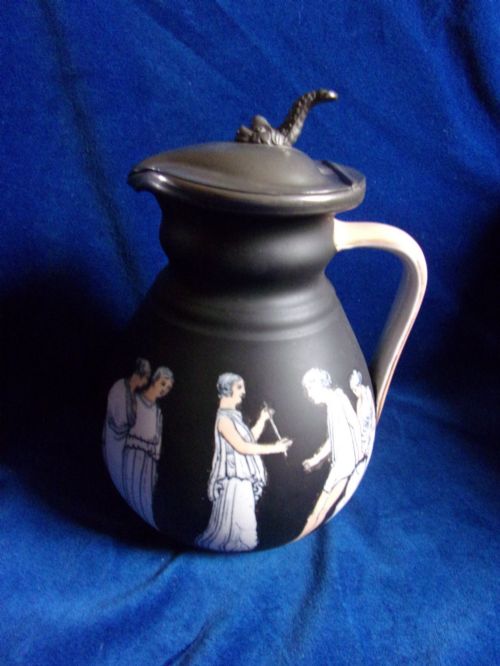
Surface finishing involved careful polishing or engraving, while later twentieth-century examples incorporated decorative motifs like hops, mermaids, and crests. Some forms paired metalwork with glass or ceramic bodies, reflecting the shifting aesthetic preferences of the nineteenth and twentieth centuries.
Vintage Pewter Jug Retail Price Guide 2026
Typical asking prices for vintage pewter jug among the pieces listed under this phrase on Sellingantiques today, from the lower quarter to the upper quarter. They describe what is for sale here now, not the wider market.
Several jugs arrive ready to serve a mermaid or a handful of hops straight from the nineteenth century.
What varies in quality
The calibre of a piece rests upon the crispness of its casting, the integrity of its joints, and the distinction of its design. Works associated with notable designers and prominent retail houses display superior proportional balance and refined surface detail.
Original components dictate value, meaning that intact lids, authentic handles, and legible touchmarks elevate a vessel. Pieces retaining clear regional capacity stamps or distinct maker attribution demonstrate greater historical integrity.
Archibald Knox for Liberty and Co·Armada Pewter·Charles Meigh·WMF
The Vintage Pewter Jug Glossary
- Flagon
- A large drinking vessel with a handle and usually a lid, often used for ale or ecclesiastical purposes. Early examples frequently display generous capacities and sturdy thumbpieces.
- Tappit hen
- A traditional Scottish measure of capacity with a distinctive lid and knob, used primarily for wine or ale. These vessels carry a weighty, utilitarian presence.
- Haystack measure
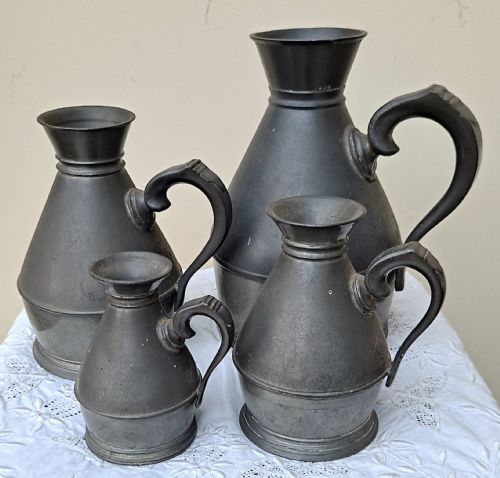
- An Irish or English liquid measure featuring a bulbous body tapering toward the top, resembling a hayrick. Sets of these measures were standard for public house service.
- Tudric pewter
- A trade name used by Liberty and Co for pewter wares produced during the Arts and Crafts period. These items often feature organic motifs and cabochon enamels.
- Touchmark
- A stamp or hallmark impressed into metalware by a maker or guild to denote standard and origin. These marks provide vital clues for dating and attribution.
Vintage Pewter Jug: Frequently Asked Questions
What is a vintage pewter jug used for?
These vessels originally served practical functions such as measuring ale, pouring wine, or boiling water in domestic and tavern settings. Today, collectors utilise them as decorative table centrepieces or display items.
Their robust construction and varied forms allow them to integrate easily into traditional and modern interiors alike.
How do I clean a pewter jug?
Pewter requires gentle cleaning with warm soapy water and a soft cloth to preserve its historic surface. Avoid harsh abrasive cleaners and commercial metal polishes that strip away desirable patination.
Dry the vessel thoroughly after washing to prevent water spots and maintain the dull lustre characteristic of the metal.
How can I date an old pewter jug?
Dating relies heavily on style, capacity marks, touchmarks, and construction methods. Earlier pieces often display regional capacity stamps, while twentieth-century examples reflect Art Nouveau or Art Deco aesthetics.
Comparing handle attachments and lid hinges against known stylistic periods helps narrow down the decade of manufacture.
Are pewter jugs safe for drinking?
Vintage and antique pewter frequently contains lead, making older vessels unsuitable for modern food and beverage consumption. Modern pewter alloys are lead-free, but historical pieces are best reserved for display.
Using antique jugs strictly for decorative purposes avoids any potential health risks associated with historic metal compositions.