




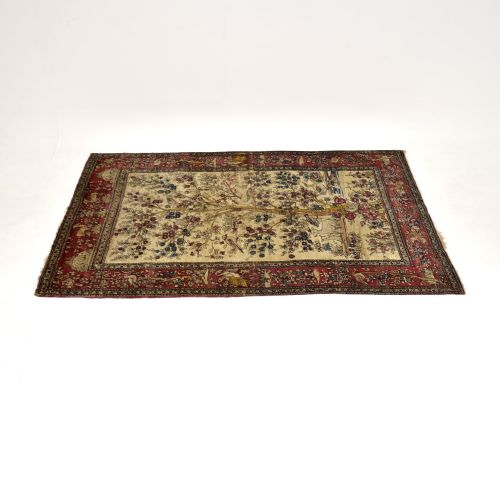

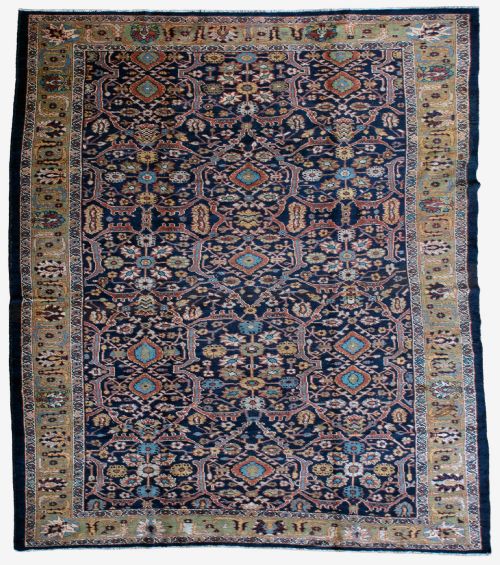
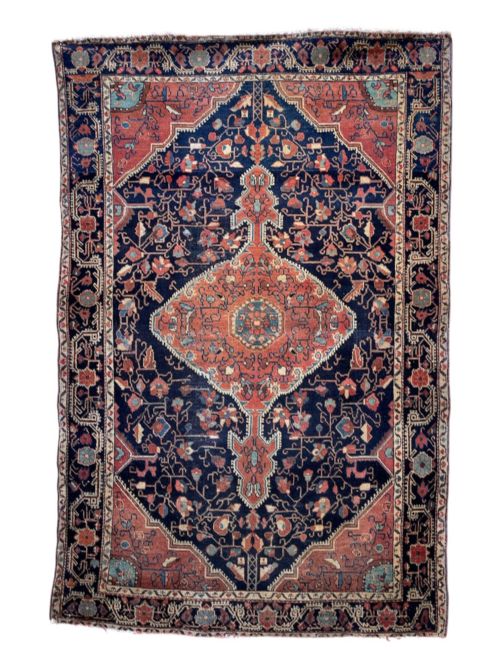
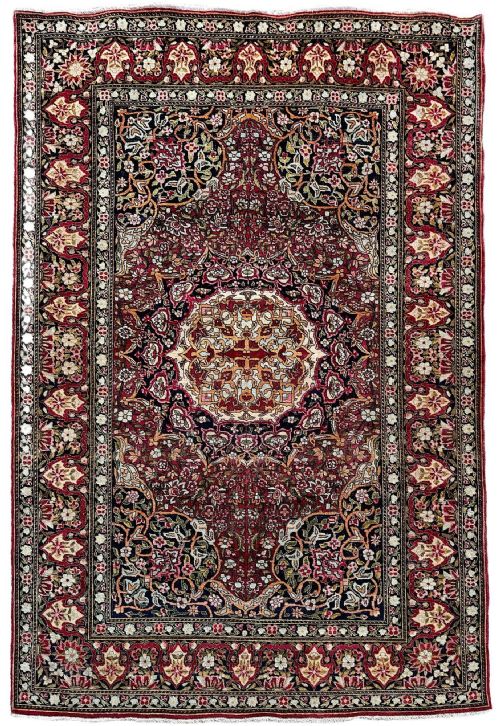
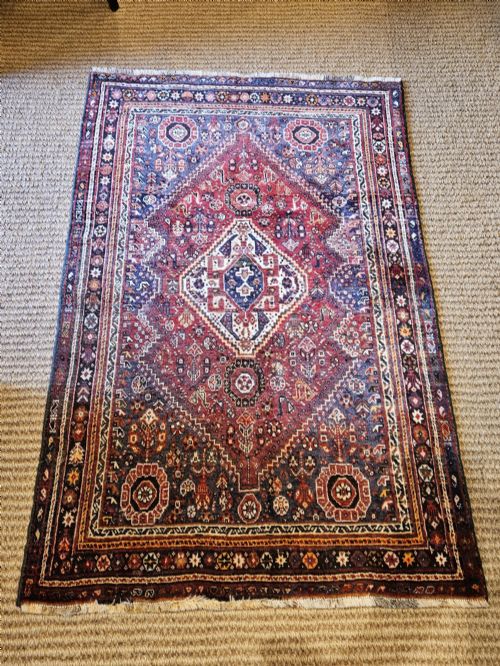
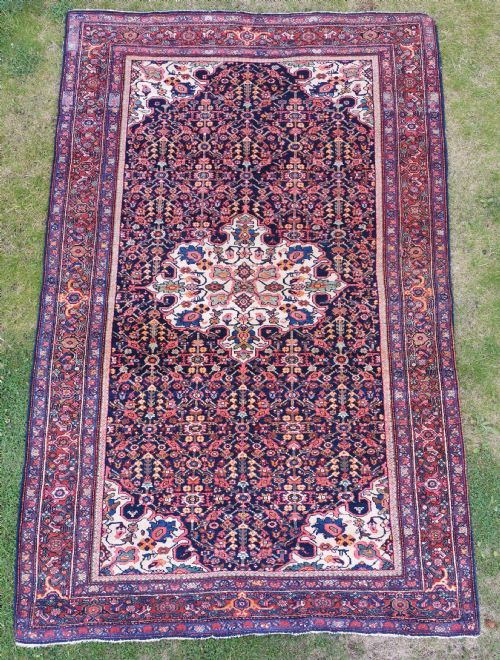
Vintage Persian Floor Carpet
These heavy floor coverings bring warmth and intricate pattern underfoot, spanning eras from the mid-nineteenth century to the mid-twentieth century.
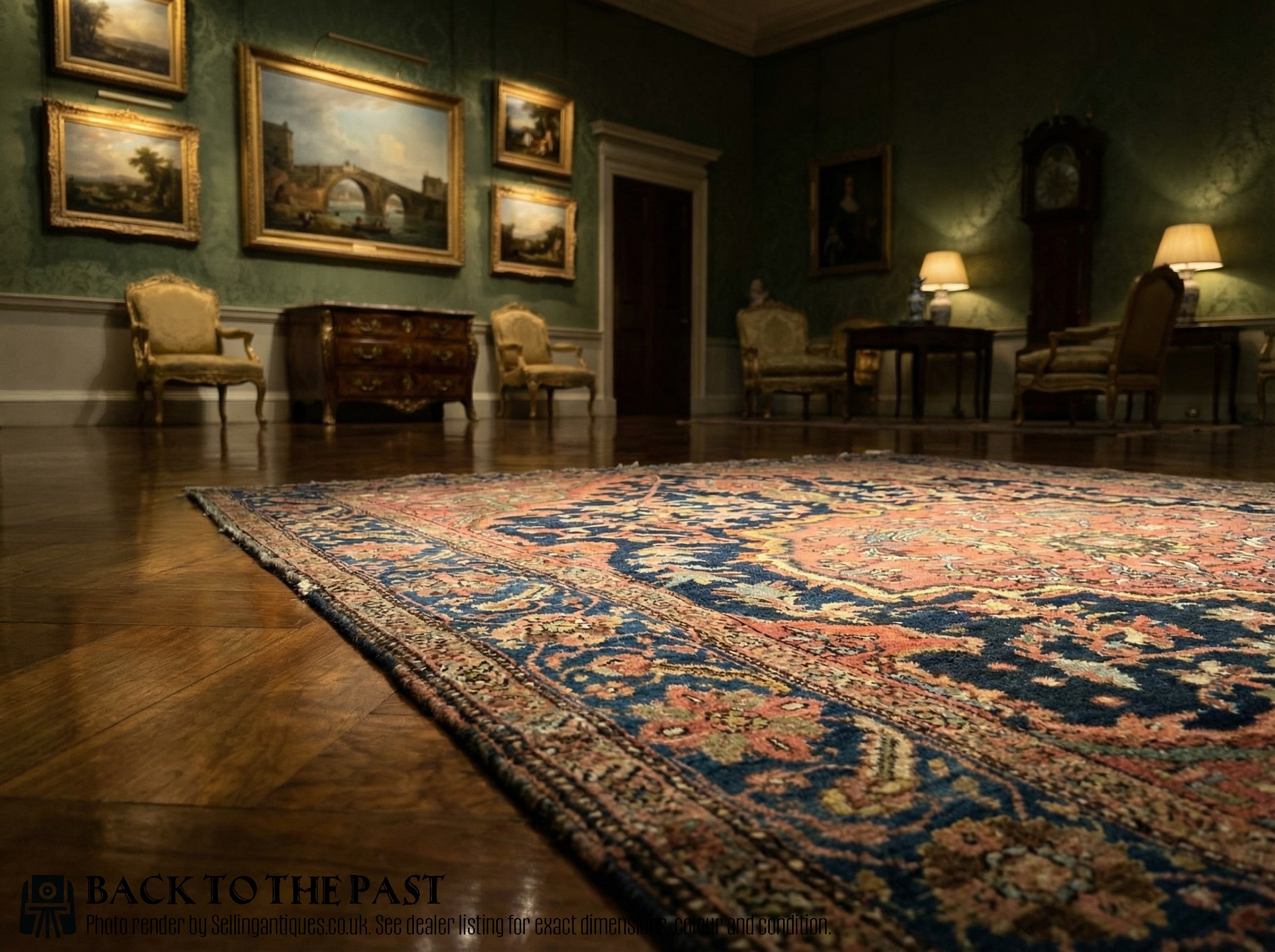
Vintage Persian Floor Carpet
A vintage persian floor carpet brings together knotted wool, cotton and occasionally silk textiles created across diverse villages, towns and tribal regions of Persia and surrounding areas. These pieces serve primarily as substantial floor coverings, ranging from small area rugs and long hallway runners to large room-sized carpets.
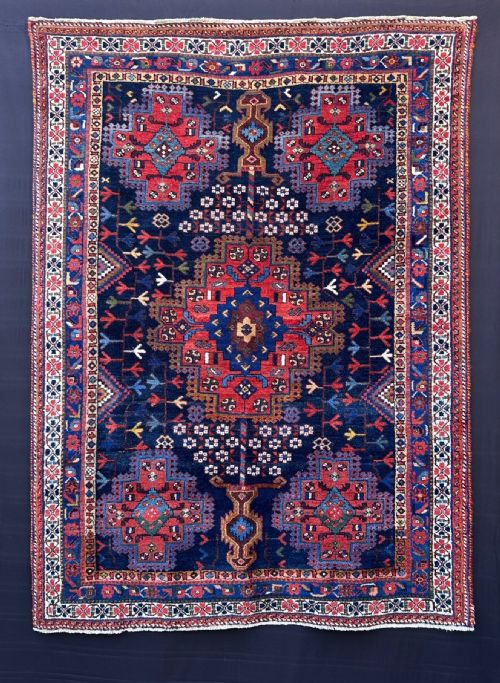
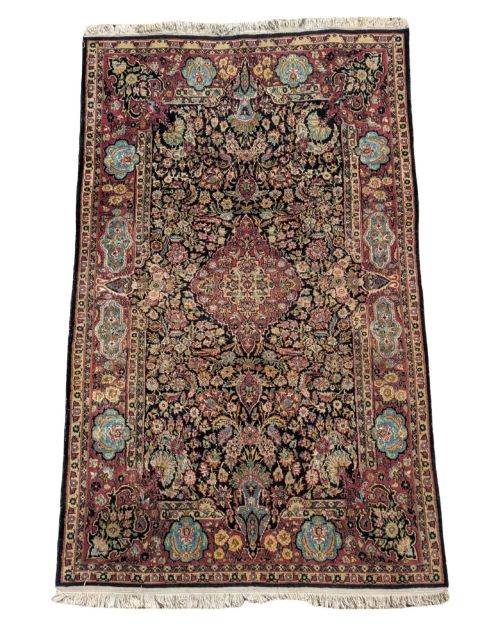
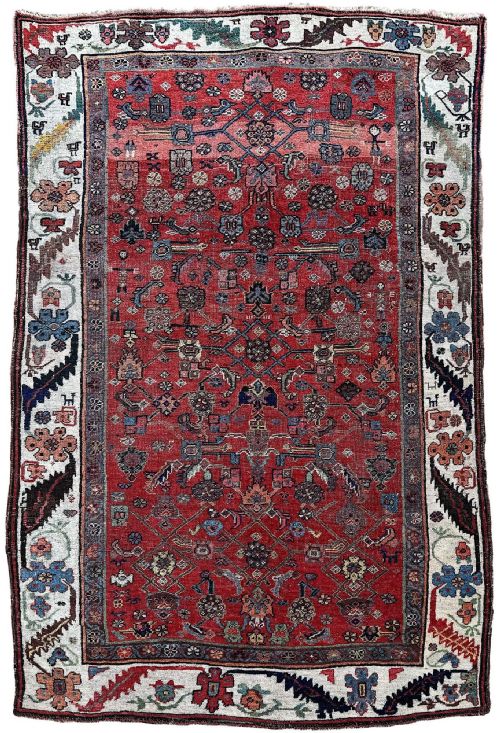
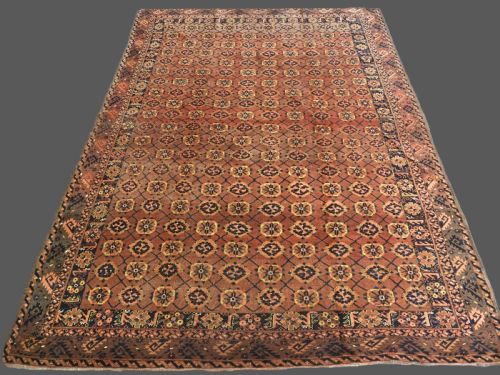
The most common examples on this page date from the late nineteenth century through the 1930s, reflecting traditional weaving centres such as Heriz, Saroukh, Bidjar, Tabriz and Kashan. Buyers encounter both finely knotted urban workshop pieces and geometric tribal floor coverings from groups including the Bakhtiar, Afshar, Khamseh and Timuri.
Forms vary from compact scatter rugs measuring under two metres to expansive carpets exceeding four metres in length. Regional patterns dictate the overall aesthetic, moving from medallion designs in city carpets to repeating tribal motifs and village symbols.
Materials and construction
Weavers built these floor carpets using wool pile knotted onto cotton foundations, with occasional silk highlights deployed to accentuate floral details in city pieces. Natural dyes provided the foundational palette of warm reds, navy blues and multicoloured accents.
The density of the knots and the preparation of the wool dictated the handling of each floor carpet, whether woven on nomadic horizontal looms or stationary upright frames in urban workshops.
Vintage Persian Floor Carpet Retail Price Guide 2026
Typical asking prices for vintage persian floor carpet among the pieces listed under this phrase on Sellingantiques today, from the lower quarter to the upper quarter. They describe what is for sale here now, not the wider market.
Early weavers occasionally embedded stray animal hairs or asymmetric tribal symbols directly into the wool pile as a personal touch.
Assessing quality and character
Quality rests in the precision of the knotting, the handling of the wool pile and the depth of the natural dyes used across the field and borders. Finer urban carpets achieve intricate curvilinear detail, whilst robust tribal floor coverings rely on bold geometry and saturated colour.
Wear across the wool foundation shifts the character of a floor carpet, transforming bright tones into muted patinas that collectors value for historic depth.
The Vintage Persian Floor Carpet Glossary
- Pile
- The vertical or diagonal loops of yarn that form the soft surface of a carpet. This wool or silk layer absorbs foot traffic and displays the woven design.
- Warp
- The stationary threads stretched lengthwise on the loom before knotting begins. Cotton or wool warp strings form the structural skeleton of the rug.
- Weft
- The horizontal threads passed across the warp strings between rows of knots to secure the pile. Beating the weft tightly creates a firm, stable textile.
- Medallion
- A large central ornamental design motif placed in the middle of the carpet field. Many Persian city carpets position this symmetrical shape as a focal point.
- Natural dye
- Colour extracted from plant, insect or mineral sources rather than synthetic chemicals. These traditional dyes age gracefully and develop rich secondary tones over decades.
Vintage Persian Floor Carpet: Frequently Asked Questions
How do I choose the right size carpet?
Measure the room dimensions and leave a uniform border of exposed floorboards around the perimeter of the rug. Large room-sized carpets anchor main living spaces, while runners suit hallways.
Consider furniture placement to ensure the front legs of seating rest comfortably on the wool surface rather than half-on and half-off.
Are these carpets durable for daily use?
Hand-knotted wool floor carpets tolerate everyday walking when paired with a quality underlay to prevent sliding and reduce friction. Regular gentle vacuuming without the rotating brush bar keeps grit from cutting the fibres.
Rotate the carpet periodically to ensure even exposure to foot traffic and sunlight over the years.
What causes colour variation in old carpets?
Natural dyes react to sunlight, cleaning and decades of use by mellowing into softer hues across different sections of the wool pile. This process, often called abrash, creates subtle tonal shifts that signal traditional dyeing methods rather than chemical uniformity.