
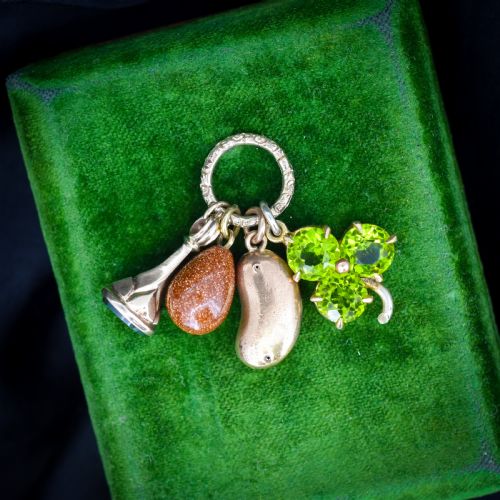


Vintage Peridot Jewellery
These vintage peridot jewellery pieces bring together bright green gems and golden settings, offering a distinctively warm palette that collectors prize.
Vintage Peridot Jewellery
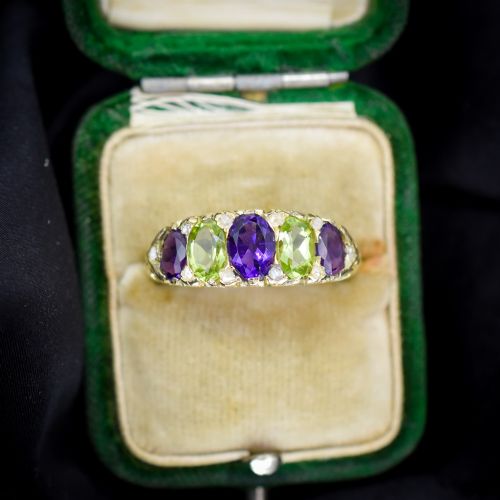
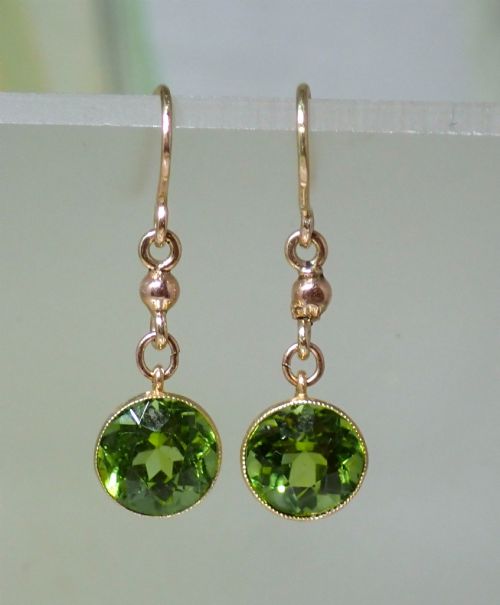
Vintage peridot jewellery encompasses rings, pendants, necklaces, brooches, drop earrings, and bracelets originating from periods including the Victorian era, the Edwardian years, and the mid-twentieth century. The phrase covers everything from delicate seed pearl cluster rings to elaborate garland necklaces set with rich green stones.
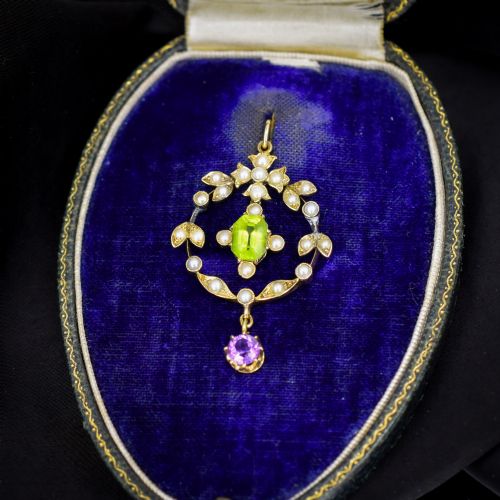
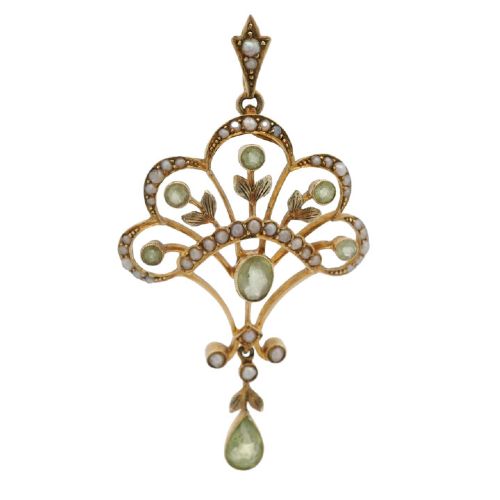
The version a buyer meets most frequently on this page is the Edwardian pendant or necklace, often pairing peridot with seed pearls in fifteen-carat yellow gold. These pieces draw on Arts and Crafts influences as well as traditional jewellery designs from around nineteen hundred to nineteen ten.
Beyond pendants, the selection includes nineteenth-century rings, multi-gem bracelets, and conversational brooches featuring motifs like turtles alongside amethyst, garnet, and diamond accents.
How they were made
Makers set vibrant peridots into nine-carat yellow gold, fifteen-carat yellow gold, and occasionally silver or platinum, building sturdy yet delicate mounts to display the distinctive olive-green stones. Seed pearls are frequently incorporated as fine borders or hanging accents, secured by tiny pins or strung tightly within the metalwork.
Techniques from the Edwardian and Victorian eras rely on intricate wirework, hand engraving, and prong or bezel settings that frame the gemstone clusters. Garland styles and lavalier drops demonstrate the detailed soldering and stone-cutting skills typical of workshops operating at the turn of the twentieth century.
Listings feature peridots combined with seed pearls, diamonds, amethysts, and garnets across Victorian, Edwardian, and mid-century periods.
What varies in quality
Quality in these pieces rests upon the depth and clarity of the peridot stones, alongside the weight and purity of the gold mountings. Higher-tier examples utilise fifteen-carat gold rather than nine-carat settings, pairing larger central gems with perfectly matched seed pearls or clean diamonds.
The fineness of the metalwork also separates standard items from exceptional ones. Delicately pierced galleries, hand-engraved split rings, and balanced garland arrangements demonstrate superior craftsmanship that endures across the decades.
The Vintage Peridot Jewellery Glossary
- Peridot
- A yellowish-green gemstone utilised extensively in Edwardian and Victorian jewellery. Its bright olive hue distinguishes it from other green stones.
- Seed pearl
- A very small, natural or cultured pearl used in clusters and borders around peridots. These tiny gems add a delicate luminescence to pendants and brooches.
- Lavalier
- A pendant that drops from a chain, often featuring a secondary swinging stone or dangle. This style gained immense popularity during the Edwardian period.
- Garland style
- A jewellery design mimicking floral wreaths and ribbons, typical of Edwardian pieces. It relies on symmetrical gemstone arrangements and flowing metal lines.
Vintage Peridot Jewellery: Frequently Asked Questions
How do I date Edwardian peridot pieces?
Edwardian pieces generally date between nineteen hundred and nineteen ten, identifiable by their light platinum-on-gold settings, garland motifs, and frequent pairing with seed pearls.
Makers of this era favoured graceful, airy designs that contrast sharply with heavier Victorian jewellery.
What gold carats should I expect?
These pieces appear most commonly in nine-carat or fifteen-carat yellow gold, alongside silver and platinum elements.
Higher caratages like fifteen-carat indicate earlier or more substantial pieces from the Victorian and Edwardian periods.
Are peridots fragile to wear daily?
Peridots have a moderate hardness, meaning they require a degree of care during regular wear to avoid scratches on the facets.
Setting types like bezels offer more protection to the stone edges than high-set prongs in rings and bracelets.
How do I clean vintage pearl jewellery?
Seed pearls are sensitive to moisture, chemicals, and ultrasonic cleaners, meaning they need very gentle wiping with a soft, dry cloth.
Immersion in water can weaken the inner threading or damage the organic nacre of the pearls.