


Yellow Gold Pearl Earrings
Yellow gold pearl earrings bring together warm metal and lustrous gems in designs spanning the Victorian era to the mid-century.
Yellow Gold Pearl Earrings
When buyers search for yellow gold pearl earrings, they encounter a range of historical periods including the Victorian, Edwardian, and mid-century eras. The forms vary from drop earrings and cluster designs to studs and screw-back clips, reflecting diverse aesthetic preferences over time.
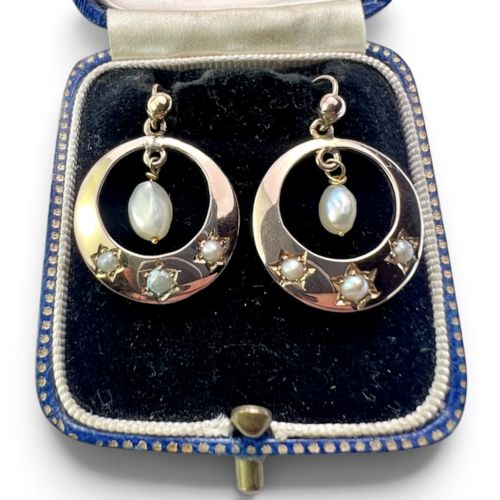
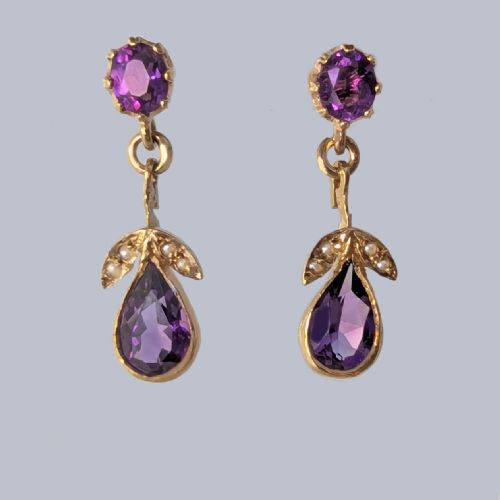
Victorian examples frequently pair pearls with garnet, amethyst, turquoise, or diamonds in star-set, crescent, and floral cluster motifs. Mid-century and later pieces introduce mabe pearls with omega backs, alongside styles drawing inspiration from earlier Victorian and Art Deco movements.
Materials and construction
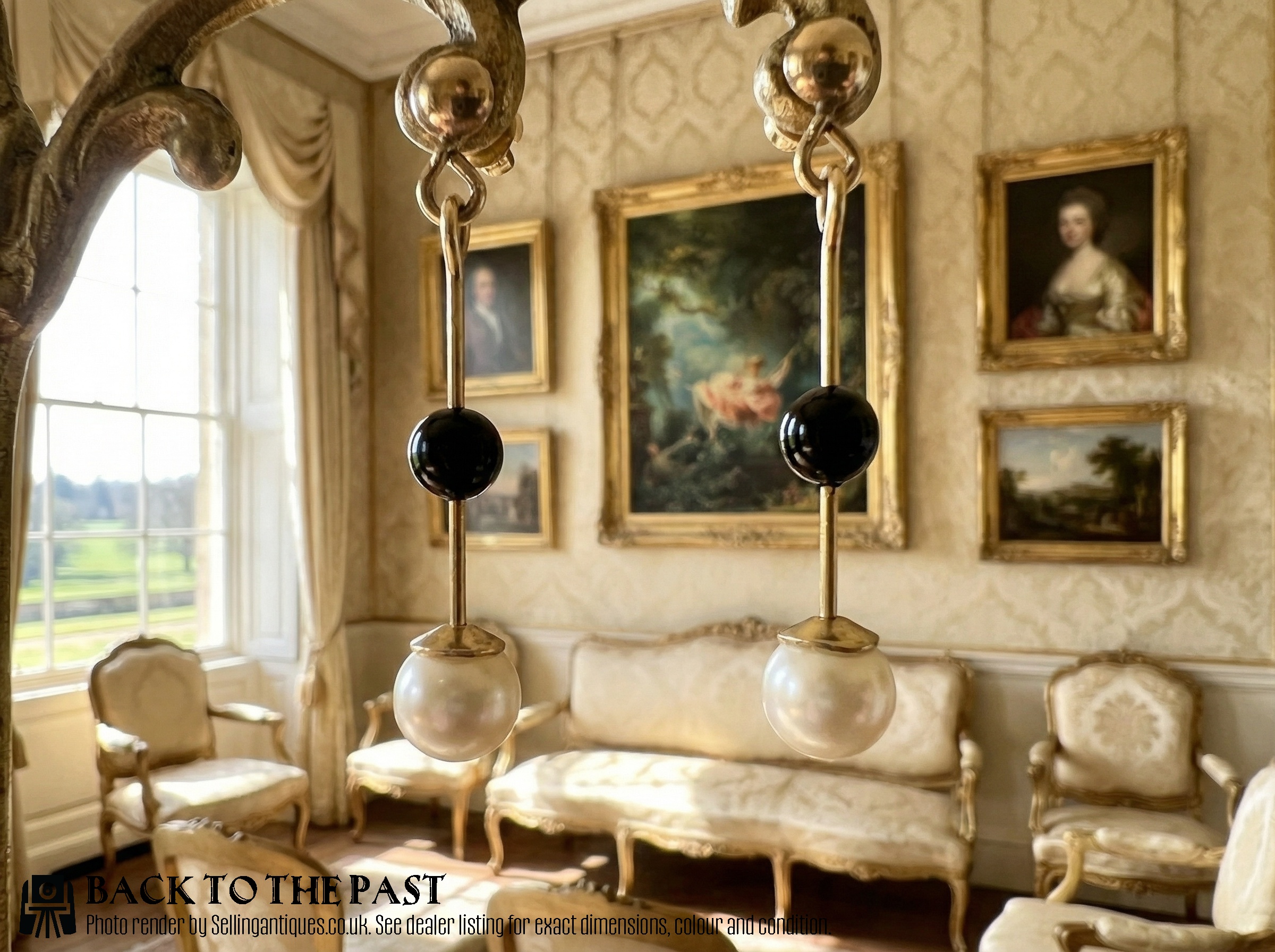
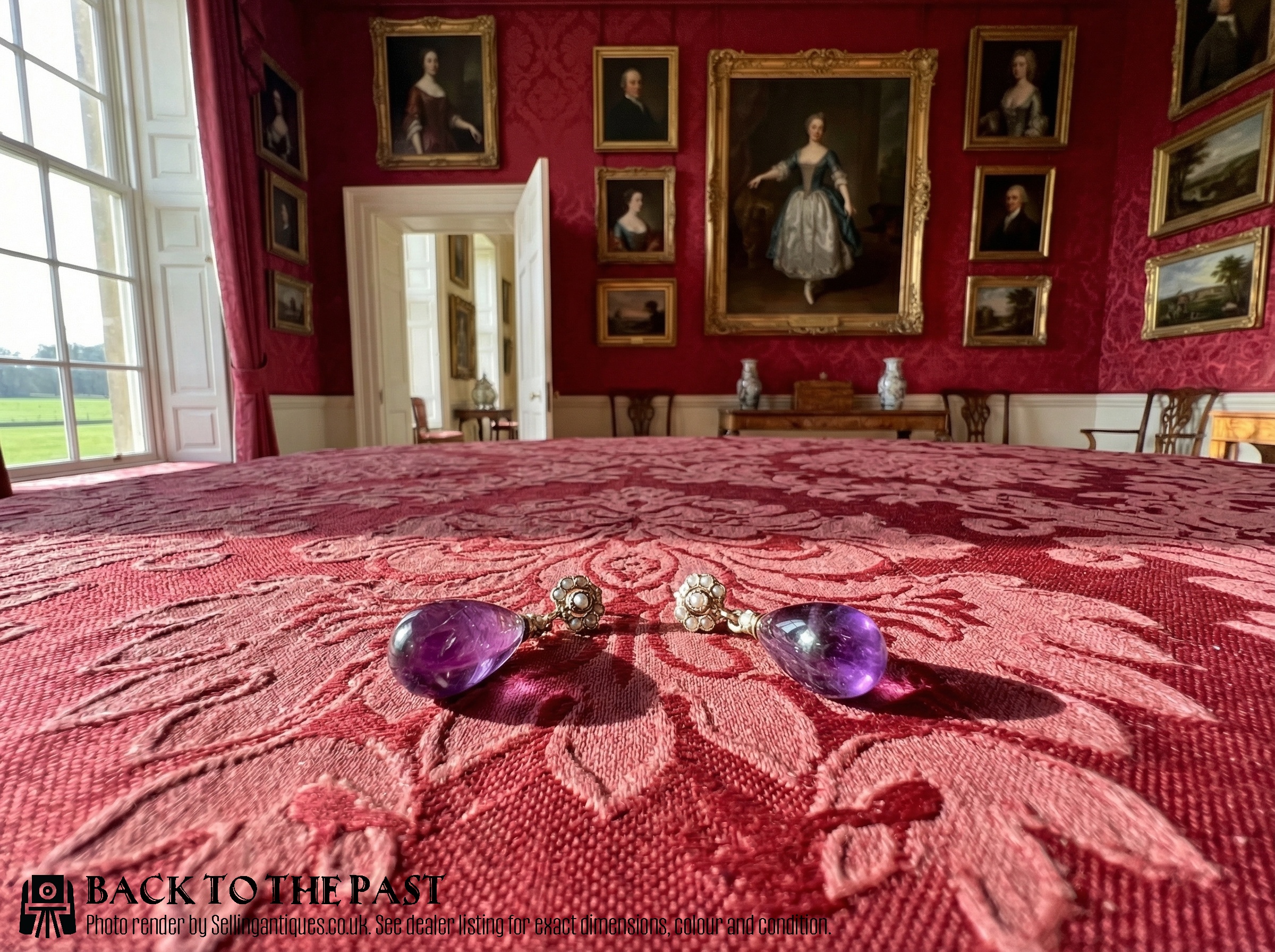
The construction relies primarily on yellow gold in various purities, ranging from 9ct and 14ct to 15ct and 18ct, often shaped into intricate settings, drops, and clusters. Gemstones such as diamond, garnet, amethyst, coral, and blue zircon are frequently integrated alongside natural, cultured, seed, and mabe pearls.
Techniques span traditional hand-setting for old cut diamonds and rose cut stones, secure bezel and prong arrangements, and specialised closures like omega backs, screw backs, dormeuse hooks, and standard butterfly clips.
The listings span eight distinct periods, from Victorian and Edwardian through the 1930s, 1940s, 1950s, and 1960s.
Quality differences
The standard of execution depends on the precision of the metalwork, whether in the delicate engraving of a floral cluster or the secure integration of secondary gems like diamonds and amethysts. Higher-grade pieces exhibit harmonious proportions between the gold mount and the central pearl.
The condition and lustre of the pearl itself, alongside the integrity of the original fastenings such as screw backs or omega clips, dictate the overall standing of an individual pair.
The Yellow Gold Pearl Earrings Glossary
- Mabe pearl
- A cultured blister pearl grown against the inside shell of an oyster rather than within its tissue. These appear as large domed hemispheres with flat backs.
- Seed pearl
- Very small natural pearls, often pierced and threaded or glued into tight clusters. They gain prominence in intricate Victorian floral and crescent designs.
- Dormeuse
- A type of secure French earring fastening designed originally for comfortable wear during sleep. They feature a hinged wire closure.
- Omega back
- A hinged clip mechanism shaped like the Greek letter omega, used on non-pierced or heavy earrings. It provides adjustable tension against the earlobe.
Yellow Gold Pearl Earrings: Frequently Asked Questions
How do I care for antique pearl earrings?
Pearls are organic gems that require gentle handling, as harsh chemicals and cosmetics can damage their nacre. Wipe them down with a soft cloth after wearing and store them separately to avoid scratching.
Check the security of the gold settings periodically, particularly on older screw-back or drop designs where the mountings undergo regular stress.
What periods do these earrings cover?
The pieces span from the late nineteenth century through the Edwardian period and into the mid-twentieth century. Victorian examples often feature rich cluster work, while later mid-century items embrace mabe pearls and clean yellow gold surrounds.
Design influences cross over significantly, with later decades frequently reviving Victorian motifs and Art Deco symmetry.
Are these earrings for pierced ears?
The selection includes options for both pierced and non-pierced ears, depending on the decade of manufacture. Many Victorian and Edwardian examples utilise traditional hooks or posts.
Mid-century and later variants frequently incorporate screw backs, clips, or omega backs to accommodate lobes without standard piercings.
What stones accompany the pearls?
Yellow gold pearl earrings frequently incorporate coloured gemstones and diamonds to accent the central pearls. Common companion stones include garnets, amethysts, turquoise, coral, and old cut or rose cut diamonds.
These additions appear in clusters, halos, and elaborate multi-stone jewellery suites typical of nineteenth and twentieth-century workshops.