





Vintage Pastoral Landscape Picture
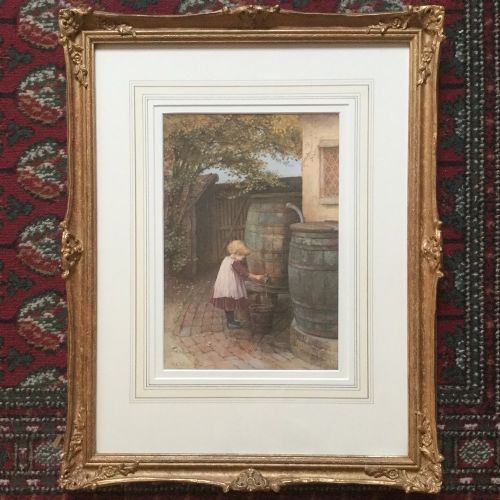
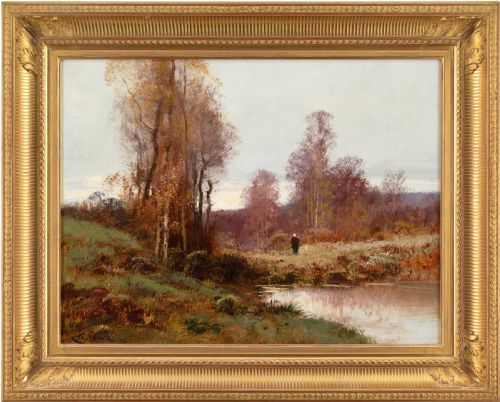
When you search for a vintage pastoral landscape picture, you are looking at rustic scenes of rural life, cattle and farming rendered in oil or watercolour.
Vintage Pastoral Landscape Picture
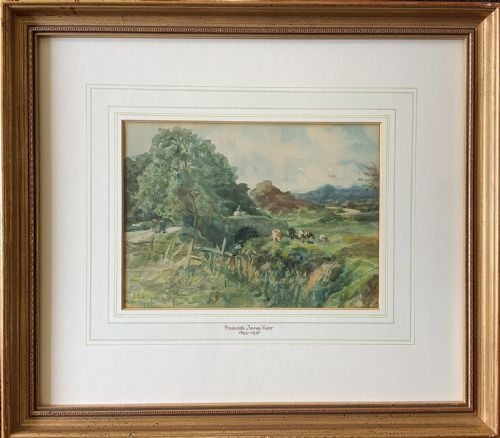
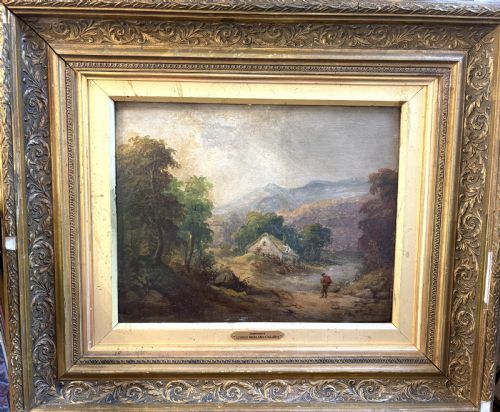
A vintage pastoral landscape picture captures the rural charm of the countryside, featuring depictions of farmland, cottages, and agricultural labour. These works often centre on livestock such as cattle, sheep, and poultry, set against woodland, riverbanks, or mountainous backdrops.
The selections available span from the Georgian and Victorian eras into the twentieth century, encompassing British Realism, English School, and British Impressionism. Buyers will frequently encounter framed watercolours and oil paintings on canvas or board, alongside textile art and needlework pictures.
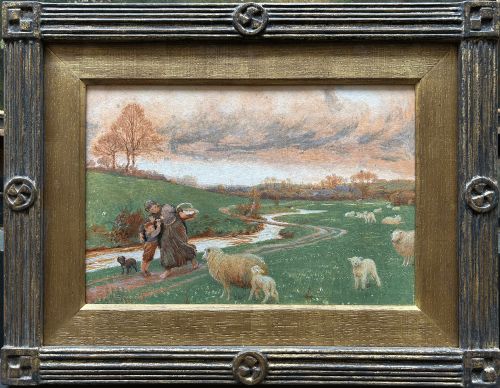
Many of these rural depictions record traditional ways of country life, such as harvesting, tending to animals, or driving sheep along lanes. They offer a window into historic British and European rural environments through the eyes of academic painters and naive artists alike.
How They Were Made
Artists relied primarily on oil paints on canvas or board, and watercolours on paper, utilising traditional pigments to build up natural light and earthy tones. Many works incorporate original wooden frames, sometimes enhanced with gesso and gilt detailing or burr wood finishes.
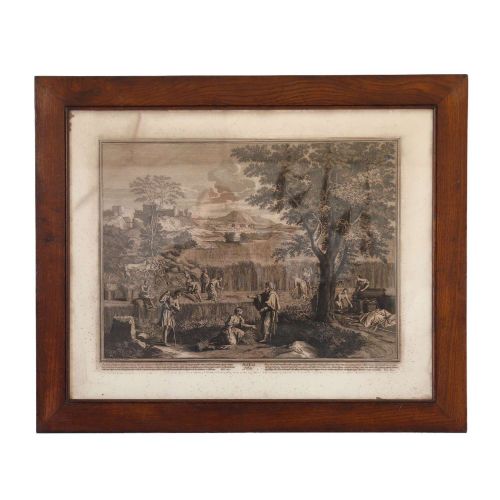
Beyond standard painting techniques, the material evidence includes needlework pictures, silkwork embroidery, and textile art requiring meticulous hand-stitching. Engravings, lithographs, and textured prints also appear, alongside delicate enamel oval plaques.
Several hardworking collies, sheep, and disgruntled hens share these pastures with wandering poets and divine creatures.
What Varies in Quality
The standard of a vintage pastoral landscape picture rests upon the confidence of the brushwork, the handling of natural light, and the anatomical accuracy of any animals or figures depicted. Finer pieces demonstrate a deliberate compositional balance that draws the eye naturally through the rural scene.
The integrity of the original materials also distinguishes the works, such as the preservation of delicate watercolours under glass, the stability of oil on canvas, or the intricacy of historic needlework and textile art. Original period framing contributes significantly to the overall integrity of the piece.
William H Myers·Frederick Walker·Frederick James Kerr·George Morland·Charles Edward Wilson·John Emms·A M Gauci·Charles Clair·Margaret Maitland Howard·Henry Charles Fox·Frederick Septimus Lewis·Henry John Boddington·Willem Anton Alexander Knip·Eugene Joseph Verboeckhoven·Giulio Cecchini·John Atkinson·J C Grey·George Soper·Maud Raphael Jones·John Inigo Richards·Claude Cardon·Gudrun Sibbons·George Turner·A Winter Shaw·J L Van Leemputten
The Vintage Pastoral Landscape Picture Glossary
- Pastoral
- Relating to the countryside, rural life, and agricultural scenes involving shepherds, cattle, and farms. These depictions romanticise agrarian simplicity.
- Gouache
- An opaque water-based paint that dries to a matte finish, allowing artists to achieve vivid colour blocks and solid highlights.
- Gesso
- A plaster-like mixture applied to wooden frames or panels as a base for paint or gilding, often moulded into decorative relief patterns.
- Needlework picture
- A piece of textile art created by stitching threads onto a canvas or fabric ground, frequently depicting pictorial landscapes or rural figures.
- Lithograph
- A print made from a flat stone or metal plate treated to retain ink where required, reproducing an original artwork.
Vintage Pastoral Landscape Picture: Frequently Asked Questions
What periods do these rural pictures cover?
The available artworks span several centuries, beginning with eighteenth-century needlework, enamel plaques, and gouache studies. Pieces from the Victorian and Edwardian eras feature prominently alongside early twentieth-century oil paintings and watercolours.
Later examples extend into the mid-twentieth century, offering a broad chronological sweep of how artists have interpreted the countryside over time.
How were these landscape scenes originally displayed?
Most of these works were framed for domestic interiors, frequently housed in their original wood, gilt, or gesso surrounds. They traditionally hung in parlours, studies, and drawing rooms of country houses and town homes.
Today, they suit similar residential spaces, adding warmth and a sense of historic rural tranquility to modern or traditional walls.
Are these works all hand-painted originals?
While the majority comprise original oil paintings on canvas or board and watercolours on paper, the category also includes historic textile art, silkwork embroidery, and needlework pictures.
Additionally, collectors will encounter period engravings, lithographs, and textured prints after original paintings by notable artists.
How do I identify a naive school painting?
Naive school paintings are typically characterised by a charming lack of formal academic perspective and a direct, unpretentious approach to form and colour. Artists working in this tradition prioritised narrative storytelling and local character over strict anatomical or spatial rules.
Such works often display flat planes of colour and earnest depictions of farm animals and domestic pets.