

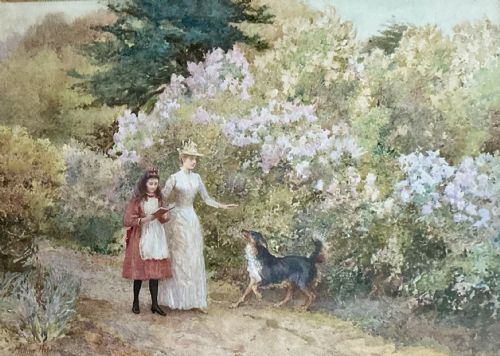


Antique Garden Watercolour Painting
When you search for an antique garden watercolour painting, you are looking at paper, pigment, and glass capturing quiet paths and flowering borders from past centuries.
Antique Garden Watercolour Painting
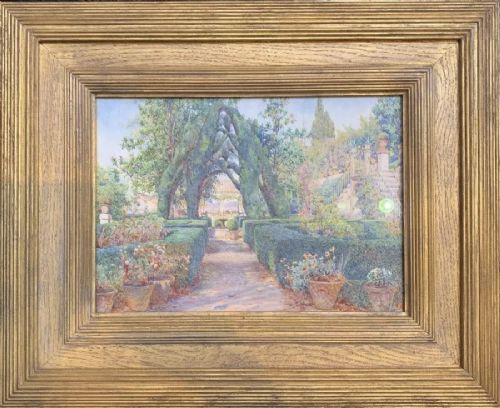
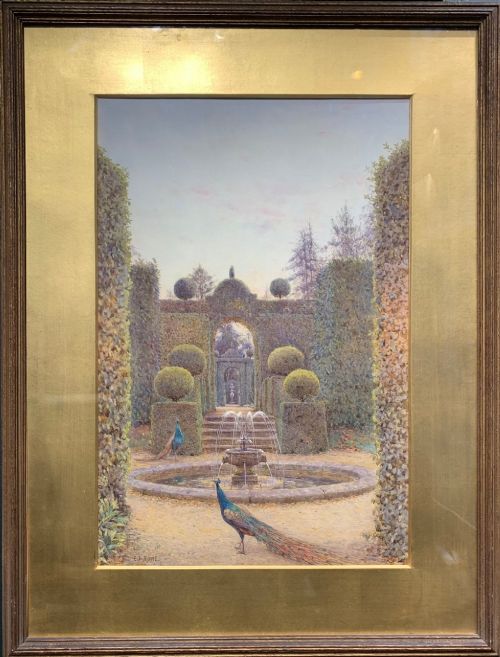
An antique garden watercolour painting brings domestic floriculture, country cottages, and park landscapes onto paper through transparent pigments applied by British and European artists. These works record outdoor spaces from the nineteenth century up to the middle of the twentieth century, focusing heavily on Victorian and Edwardian scenes.
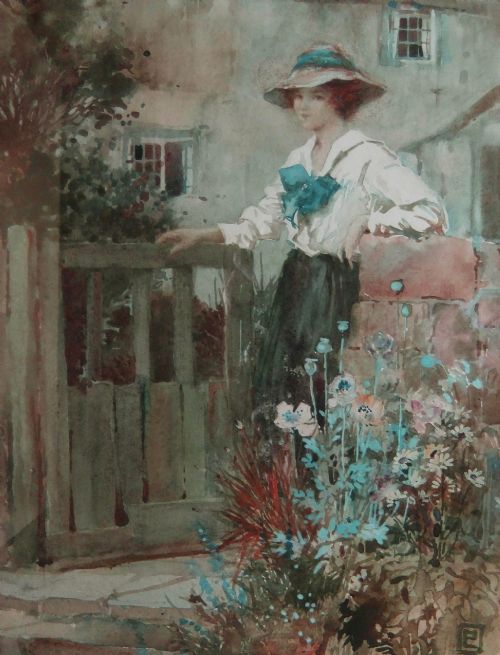
The most common version met on this page is the cottage garden view, often depicting thatched roofs, herbaceous borders, and figures engaged in quiet rural tasks. Painters favoured structured plots, walled gardens, and park lawns, translating living flora into lasting paper works.
Compositions range from intimate studies of flower beds and garden seats to wide vistas including manor houses, abbeys, and London parks. Each piece offers a preserved window into historical landscape design and botanical illustration.
What varies in quality
Quality rests on the artist's handling of light, brushwork precision, and the preservation of pigment vibrancy against fading over time. Stronger examples display confident draughtsmanship and careful tonal control, distinguishing master hands from standard amateur works.
The condition of the paper and the integrity of the original frame also determine the standing of a piece. Works retaining their initial gilt wood surrounds and clear, unfaded watercolour pigment occupy the upper end of the range.
Hens, rabbits, and pets frequently share the garden path with humans in these pastoral scenes.
Ernest Arthur Rowe·Percy Lancaster·Ralston Gudgeon·Harry Wanless·Arthur Hopkins·Rowland Henry Hill·Theresa Stannard·Owen Bowen·Martinetti·Lilian Stannard·Arturo Orselli·David Woodlock·Arthur Claude Strachan·John Abernethy Lynas-Gray·Jane Utley·Lester Sutcliffe·Henry John Sylvester Stannard·Benjamin D. Sigmund·Beatrice Parsons·Belisario Gioja·George Frederick Nicholls·Karl Feiertag·Minnie Smythe·Mary Stevens·William James Boddy
The Antique Garden Watercolour Painting Glossary
- Watercolour pigment
- The finely ground colour substance mixed with a water-soluble binder used by artists on paper.
- Gilt wood
- Timber frames coated with a thin layer of gold leaf or metallic gilt, commonly used in period framing.
- Victorian Rural Genre
- A nineteenth-century artistic style focusing on country life, cottages, and agricultural labour.
- Edwardian Pastoral
- An early twentieth-century artistic style celebrating idealized rural scenes and manicured country gardens.
- British Impressionism
- A late nineteenth and early twentieth-century movement emphasising light, loose brushwork, and outdoor subjects.
Antique Garden Watercolour Painting: Frequently Asked Questions
How do I date an antique garden watercolour painting?
Dating relies on artist signatures, framing styles, and the clothing or architecture depicted within the scene. Victorian and Edwardian works often carry specific stylistic markers associated with their decade of creation.
Paper watermarks and gallery labels on the reverse also help establish a reliable timeline for undated pieces.
How should I care for a watercolour painting at home?
Watercolours are sensitive to direct sunlight, which can fade pigments and discolour paper over decades. Hang them on interior walls away from direct windows and sources of dampness.
Maintaining stable room temperatures prevents the paper support from buckling inside its wooden frame.
What subjects besides cottages appear in these paintings?
Artists painted public green spaces, botanical glasshouses, formal walled gardens, and abbey ruins. Views of London parks and foreign gardens also feature among nineteenth and twentieth-century works.
These varied subjects reflect contemporary interests in landscape architecture, travel, and horticulture.