


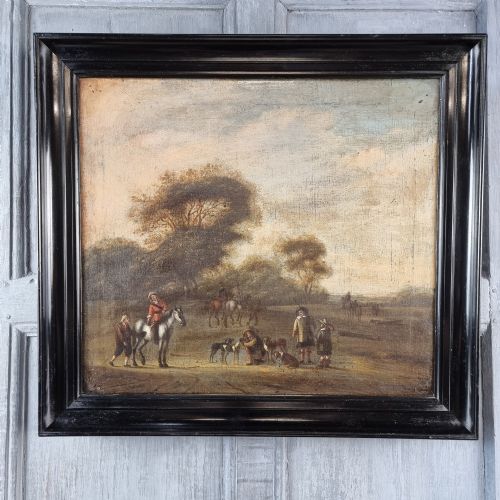
Vintage Pastoral Art
Vintage pastoral art captures rural idylls, domestic animals and working landscapes across centuries of painting, tapestry and needlework.
Vintage Pastoral Art
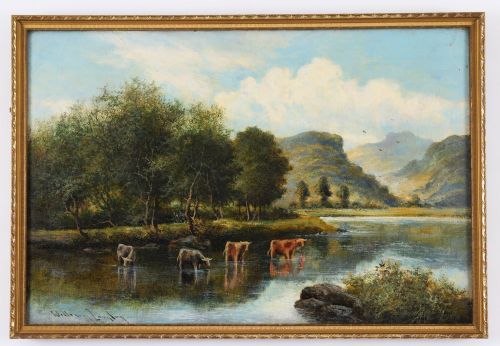
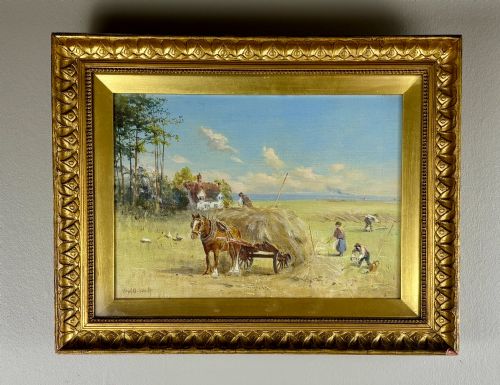
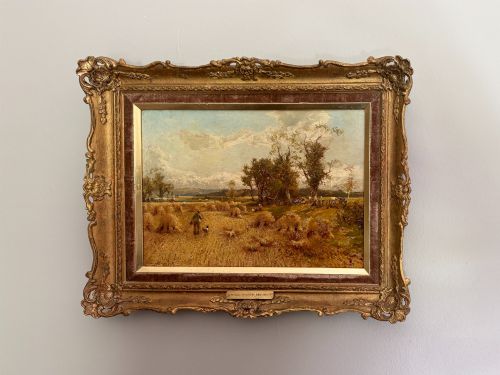
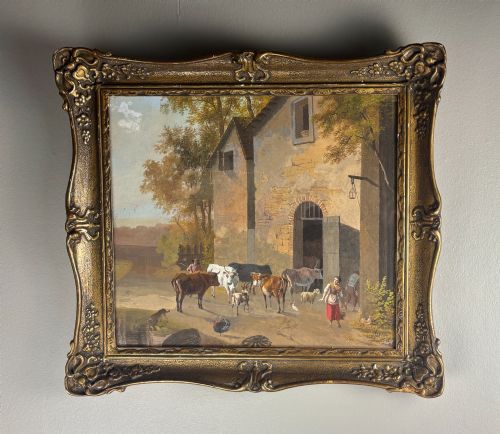
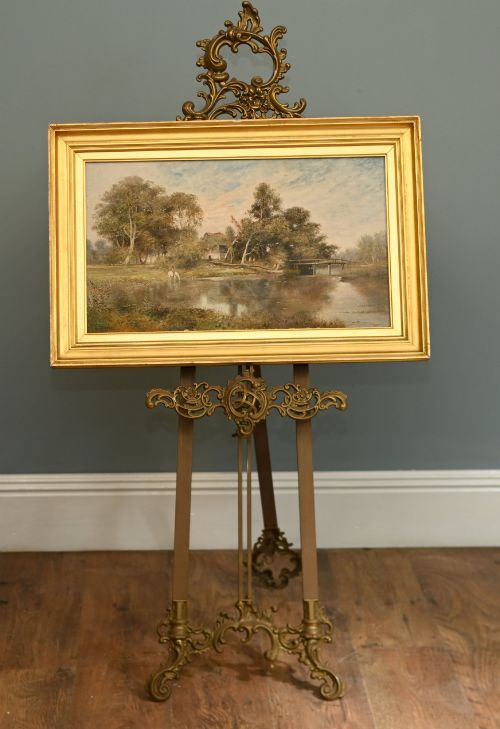
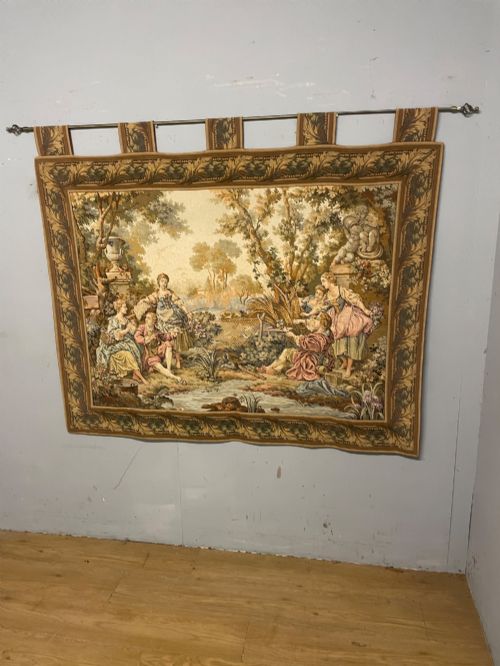
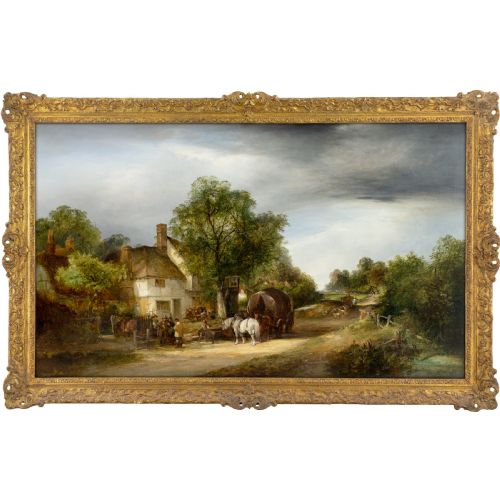
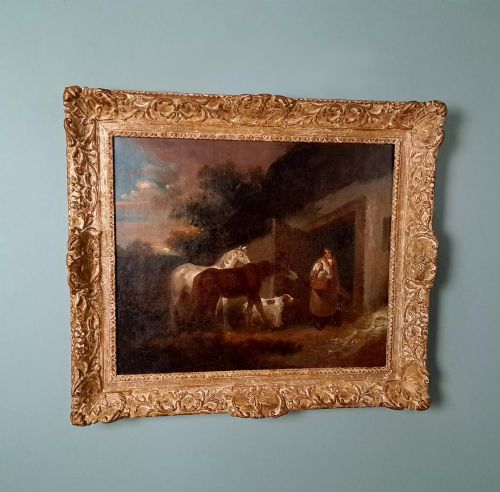
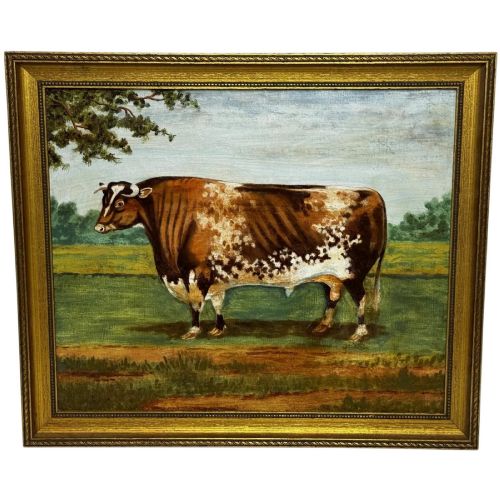
When you search for vintage pastoral art, you encounter oil paintings, watercolours, tapestries and needlework pictures celebrating rural life. These works depict cattle, sheep, shepherds, rivers and cottages, spanning periods from the late seventeenth century through the Victorian era and into the early twentieth century. British Impressionism and Edwardian countryside scenes feature prominently alongside French tapestries and Italian landscape studies.
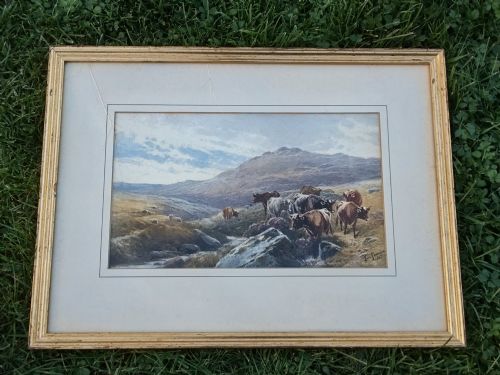
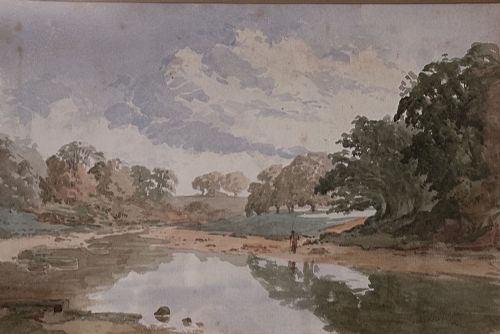
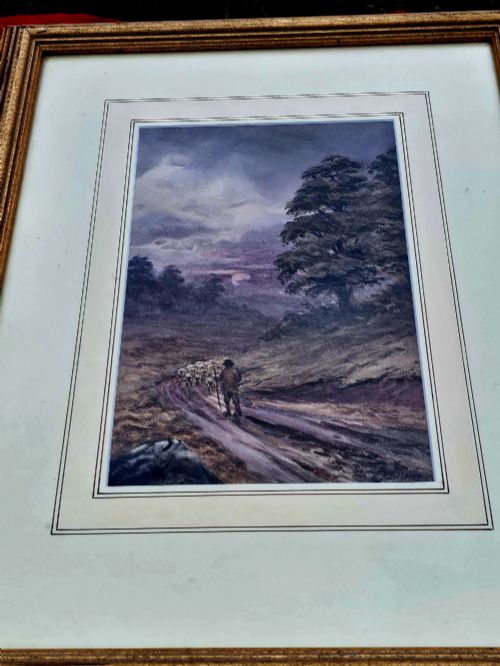
The pieces most frequently met on this page range from nineteenth-century oil paintings on canvas and wood panel to early twentieth-century watercolours. Artists recorded livestock such as shorthorn bulls and working horses within woodlands, riversides and Highland terrain. Alongside original paintings, you find wall tapestries, engravings and needlework pictures that preserve traditional rural themes.
Materials and methods
Makers utilised oil paint on canvas, wooden boards and wood panels to build rich textures and deep colour in landscape scenes. Watercolours on paper provide lighter, translucent depictions of riverbanks and open moors, frequently preserved within original frames. Gilding often accents the wooden frames housing these works.
Textile pieces rely on weaving and needlework techniques. Large wall tapestries utilise verdure designs depicting foliage and landscape, while framed needlework pictures and Berlin silk works employ detailed thread stitching on fabric grounds to render pastoral figures and animals.
Listings feature works spanning the 17th, 18th, 19th and early 20th centuries, executed in oil, watercolour, wool and silk.
Differentiating quality
Quality rests upon the confidence of the brushwork and the precision with which artists render light, atmosphere and anatomical detail in animals and figures. Works by accomplished painters display assured handling of woodland light and river reflections, whereas lesser examples rely on formulaic compositions.
Material preservation also defines the standard of the piece. Intact original framing, stable canvas or wood panel supports, and well-preserved pigments or textile dyes without heavy restoration elevate the standing of a work.
Tom Campbell·Frederick Walker·Ernest Higgins Rigg·John Emms·George Morland
The Vintage Pastoral Art Glossary
- Verdure tapestry
- A type of woven wall hanging featuring plant motifs, foliage and landscape elements as the primary subject. These textiles often originate from historical French workshops such as Aubusson.
- Berlin silk
- A detailed type of needlework utilising dyed silk threads, popular during the nineteenth century for creating intricate pictorial scenes. These works were often framed for wall display.
- British Impressionism
- A painting style emerging in the late nineteenth and early twentieth centuries characterised by loose brushwork and a focus on natural light in outdoor settings. Artists often applied this approach to rural and coastal landscapes.
- Gilt
- A thin layer of gold leaf applied to wood frames or decorative objects to provide a lustrous metallic finish. This treatment enhances the visual prominence of antique paintings.
Vintage Pastoral Art: Frequently Asked Questions
What subjects appear in vintage pastoral art?
These works depict rural life, agricultural animals like cattle and sheep, shepherds, cottages, rivers and woodland scenes.
Artists across the seventeenth through early twentieth centuries focused on documenting traditional countryside labours and tranquil natural landscapes.
How do I distinguish oil paintings from watercolours here?
Oil paintings utilise heavy pigments on canvas, wood panels or boards, offering thick texture and deep colour depth.
Watercolours employ translucent washes on paper, presenting a lighter, softer finish usually displayed under glass within a framed mount.
Where were these tapestries and needlework pieces made?
Tapestries frequently originate from European weaving centres like Aubusson in France, known for producing large verdure wall hangings.
Needlework pictures and Berlin silk works were typically created domestically by skilled makers using imported yarns and canvas.
How do I care for vintage paintings and textiles?
Paintings require stable indoor humidity away from direct sunlight to prevent canvas slackening and pigment fading.
Tapestries and needlework need protection from bright light and dust accumulation, avoiding direct moisture or heavy cleaning agents.