


Vintage Paste Brooch
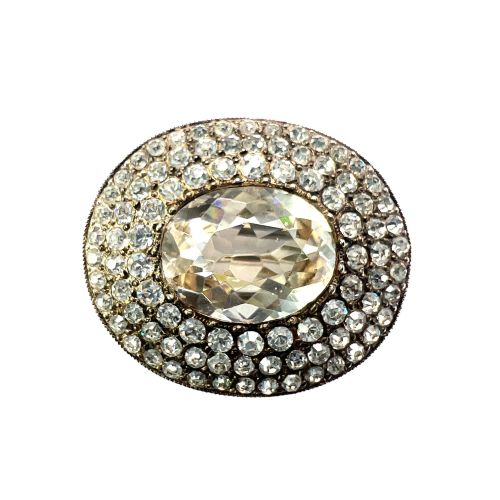
A vintage paste brooch offers the brilliance of fine gemstone jewellery through hand-set glass, capturing centuries of lapidary skill in silver settings.
Vintage Paste Brooch
A vintage paste brooch is a decorative garment fastener set with faceted lead glass designed to imitate precious gems like diamonds, rubies, emeralds and garnets. The pieces encountered here span from the Georgian and Victorian eras through the Edwardian period and the Art Deco and 1940s decades.
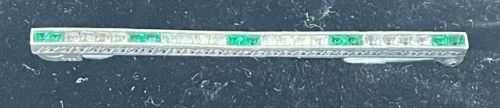
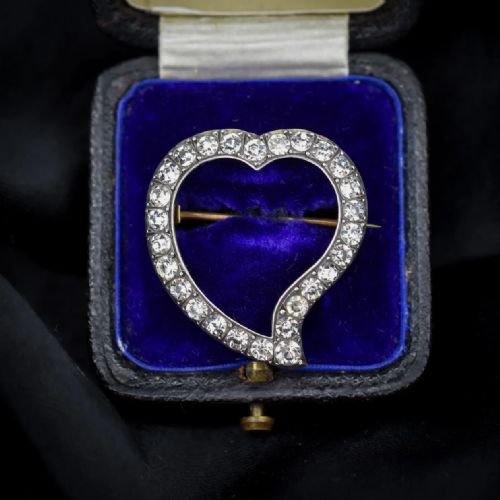
The forms vary widely, including bar brooches, witches hearts, flower baskets, crescents, lizards and bows, alongside larger dress clips and matching demi-parure sets. Silver and sterling silver form the primary foundation for these mounts, frequently complemented by silver gilt.
Buyers seeking a vintage paste brooch will find both early hand-cut stones in regional silver settings and geometric Art Deco designs from the 1920s and 1930s. The selection reflects changing stylistic tastes from ornate Victorian revivalism to streamlined modernist lines.
How they were made
The fabrication relies on silver, sterling silver and silver gilt settings into which hand-faceted glass paste stones are carefully secured. Metalwork techniques range from cast and chased Victorian mounts to fine Edwardian pin mechanisms and structured Art Deco frames.
Early stones are often foil-backed to enhance their internal reflection and depth of colour within the silver housing. Master jewellers shaped the glass by hand to mimic the old cuts of genuine diamonds and coloured gemstones before modern machine faceting took over.
Lizards and reptiles proved surprisingly popular subjects for sparkling paste glass during the Art Deco period.
What varies in quality
The standard of a vintage paste brooch depends on the precision of the stone cutting and the integrity of the foil backing where present. Finer examples display crisp facet junctions and secure collet settings that hold every glass paste stone firmly in alignment.
The artistry of the metalwork itself distinguishes finer pieces, whether through delicate wirework on Victorian floral designs or precise geometric symmetry on Art Deco bar brooches and duette clips. Superior pieces maintain matching stones throughout without replacement pastes.
Charles Horner
The Vintage Paste Brooch Glossary
- Paste
- Faceted lead glass used in historic jewellery to imitate gemstones. It is hand-cut and polished to capture light much like a genuine diamond or precious stone.
- Silver Gilt
- Silver that has been coated with a thin layer of gold. This technique provides the warmth of gold while utilising a silver base metal.
- Collet Setting
- A collar of metal that surrounds the girdle of a paste stone to hold it in place. It represents a traditional method of stone setting in antique jewellery.
- Demi Parure
- A matching set of jewellery consisting of two or three pieces, commonly a brooch paired with earrings or a dress clip. These sets were designed to be worn together for formal occasions.
- Giardinetti
- An antique jewellery motif depicting a small garden in a pot or basket. These pieces use colourful paste stones to represent blooming flowers.
Vintage Paste Brooch: Frequently Asked Questions
How do I date a vintage paste brooch?
Dating relies on stylistic clues and metal construction, such as the heavy mounts of the Victorian era versus the geometric symmetry of Art Deco pieces from the 1920s and 1930s. Pin mechanisms and clasp types also offer reliable indicators of period manufacture.
Examining the cut of the glass paste stones helps narrow the timeframe. Earlier pieces feature hand-cut facets with irregular proportions, while later twentieth-century examples display more uniform machine faceting.
Were paste brooches worn daily?
In past centuries, paste jewellery was created as a high-status accessory to be worn at court and evening events rather than everyday attire. The sparkling glass caught candle and gas light effectively during formal gatherings.
Over time, these pieces transitioned into daytime wear as fashions casualised during the mid-twentieth century. Today they serve as versatile dress ornaments for lapels, hats and scarves.
How should I care for my brooch?
Gentle maintenance is essential because glass paste stones are softer than natural gemstones and can scratch easily. Cleaning should involve only a soft, dry cloth rather than liquid immersion, which can damage historic foil backings behind the stones.
Storage in a dedicated jewellery box prevents friction against other metal pieces. Keeping the brooch away from moisture preserves both the sterling silver mounts and the fragile paste settings.
What is a duette fur clip?
A duette is a versatile piece of jewellery comprising two matching dress clips that lock together onto a central frame to form a single brooch. This ingenious design allowed the wearer to transform one large ornament into a pair of smaller accessories.
Popularised during the Art Deco period, these pieces demonstrate the mechanical ingenuity of twentieth-century jewellers. They secure firmly to heavy fabrics like coat collars and furs.