



Vintage Partition Screen
A vintage partition screen divides a room and shapes light, bringing historic craftsmanship and flexible privacy into an interior.
Vintage Partition Screen
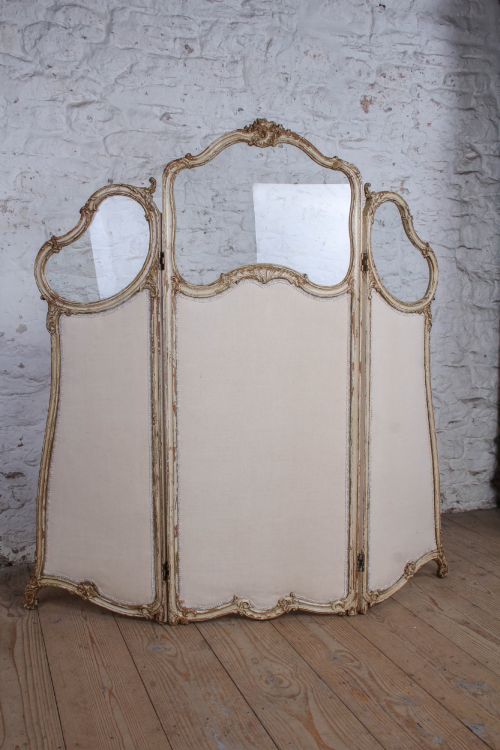
A vintage partition screen organises interior space through multi-panel folding structures that span from three to eight folds. These pieces serve as room dividers, dressing screens, and privacy barriers across domestic and institutional settings.
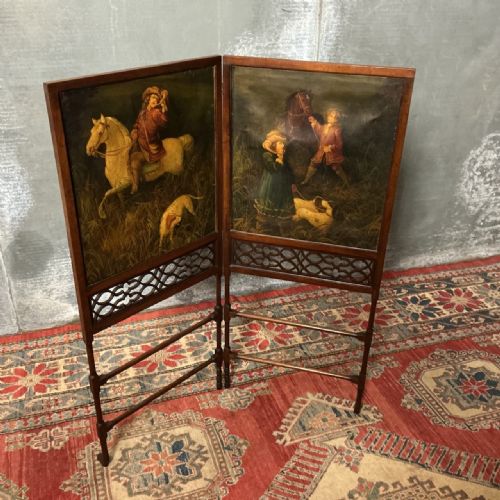
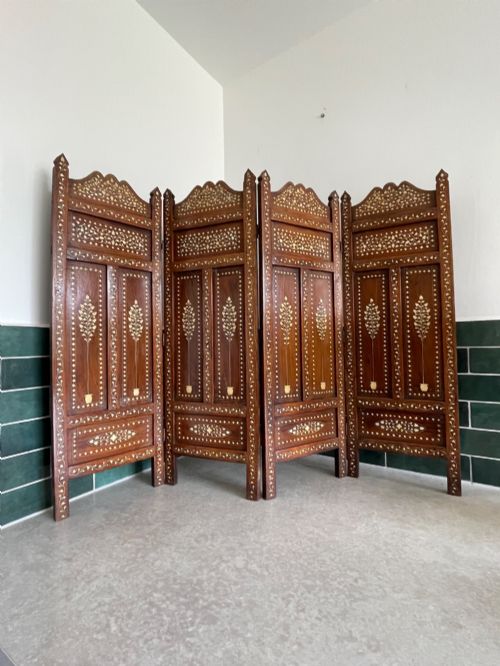
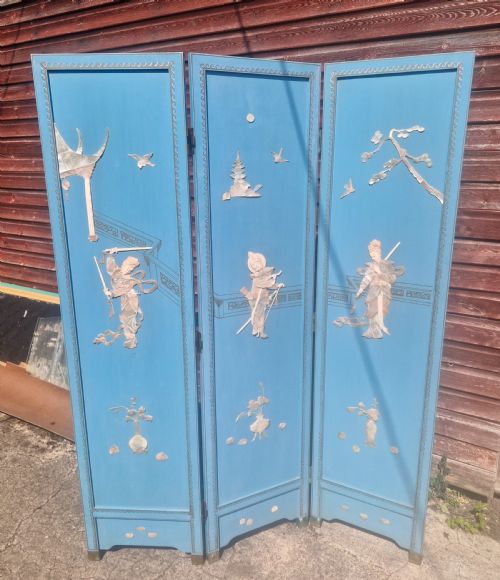
The selection ranges from Victorian and Edwardian mahogany frames to nineteenth-century Chinese lacquer and Anglo-Indian carved panels. Smaller variants include table screens and fire screens designed for specific domestic placement.
Dated examples extend from the eighteenth century through the 1930s, encompassing styles such as Art Nouveau, Chinoiserie, Arts and Crafts, and Persian Revival.
Materials and construction methods
Timbers such as mahogany, oak, walnut, padauk, and assorted hardwoods form the structural frames, often combined with brass hinges and fittings. Joinery supports multi-fold mechanics that allow full reversibility and stability across tall panels.
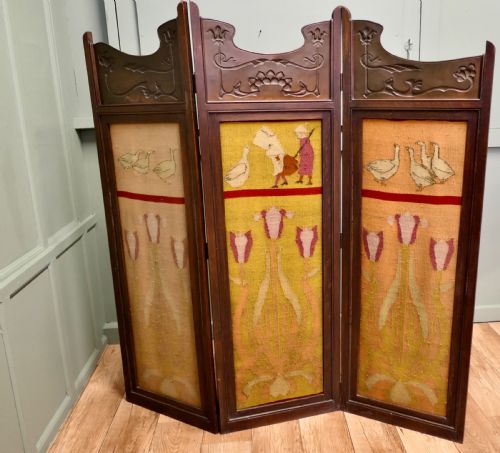
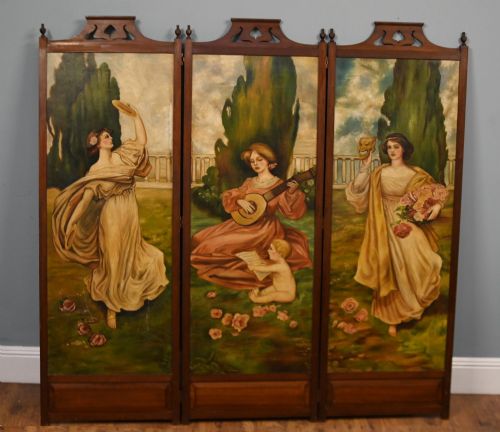
Surfaces receive decorative treatments including hand-painted leather, oil paintings, lacquer, gilt embellishments, needlepoint, decoupage, and naive wool panels. Glazed sections, leaded glass, and fretwork carving introduce transparency and texture within the wooden frameworks.
Vintage Partition Screen Retail Price Guide 2026
Typical asking prices for vintage partition screen among the pieces listed under this phrase on Sellingantiques today, from the lower quarter to the upper quarter. They describe what is for sale here now, not the wider market.
One robust institutional entry records service within the Eton College debating and political society before entering the screen market.
Distinctions in craftsmanship and finish
Quality rests in the execution of the frame joinery, the stability of the folding hinges, and the preservation of decorative surfaces. Hand-carved detail, intricate fretwork, and hand-painted or lacquered panels separate standard production from superior examples.
The integrity of integrated elements such as oil paintings, needlepoint fabric, silk panels, and leaded glass dictates the refinement of a piece. Original upholstery and textile inserts, including William Morris velvet, add specific historical depth to the construction.
The Vintage Partition Screen Glossary
- Folding screen
- A movable piece of furniture consisting of two or more panels connected by hinges. These panels stand upright and adjust to alter the geometry of a room.
- Chinoiserie
- European interpretations of Chinese and East Asian artistic traditions, frequently applied to lacquered and painted screen surfaces. This style appears on eighteenth and nineteenth-century panels.
- Fretwork
- Ornamental design created by cutting patterns through wood or metal using a fretsaw. It provides ventilation and visual lightness on Indian and Oriental screens.
- Table screen
- A miniature version designed to sit on a desk or table rather than standing on the floor. Hoshiarpur examples demonstrate this compact scale.
- Decoupage
- The art of decorating a surface by applying paper cutouts and sealing them with varnish. Country house screens often employ this technique across multiple panels.
Vintage Partition Screen: Frequently Asked Questions
What styles are common in vintage partition screens?
The inventory records Victorian, Edwardian, Art Nouveau, Arts and Crafts, Chinoiserie, and Persian Revival styles.
Geographic influences span from British country house pieces to Chinese, Japanese, Burmese, and Anglo-Indian workshops.
What materials make up these screens?
Frames employ woods such as mahogany, oak, walnut, and hardwood, frequently paired with brass hardware.
Infill materials include lacquer, glass, fabric, needlepoint, leather, and hand-painted panels.
How do I date a folding screen?
Dating relies on stylistic markers, construction techniques, and materials characteristic of specific periods like the eighteenth century or the 1920s.
Art Nouveau whiplash lines, Arts and Crafts ebonised oak, and Victorian needlepoint each point to distinct eras of manufacture.