

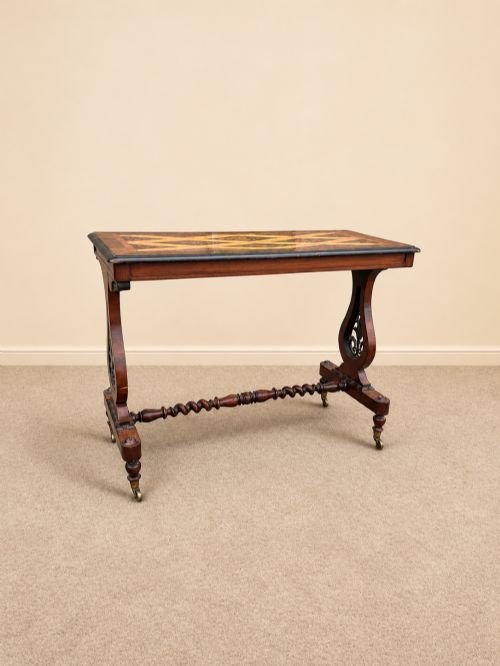
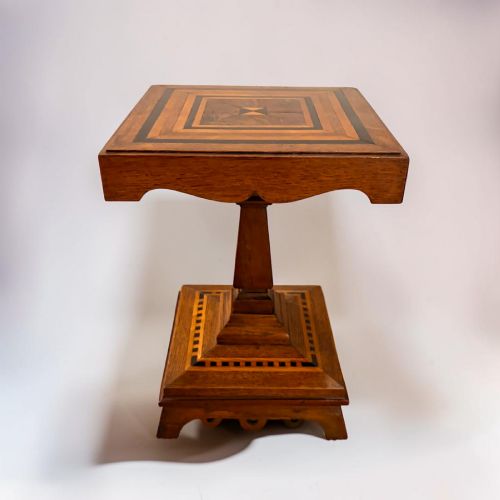
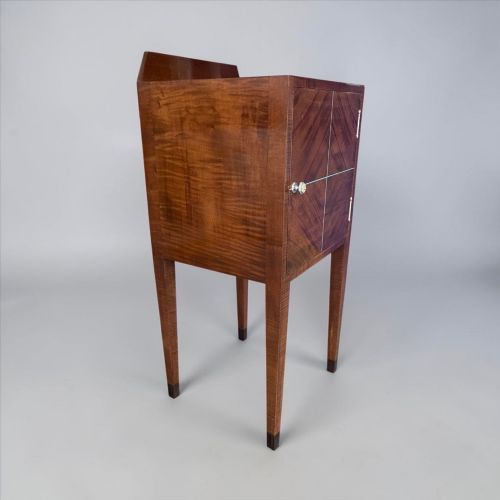
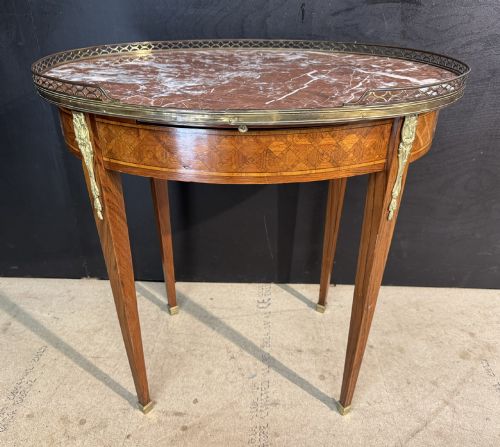



Vintage Parquetry Side Table
A vintage parquetry side table brings geometric timber work and French revival styling into a room, offering a functional surface with distinct decorative depth.
Vintage Parquetry Side Table
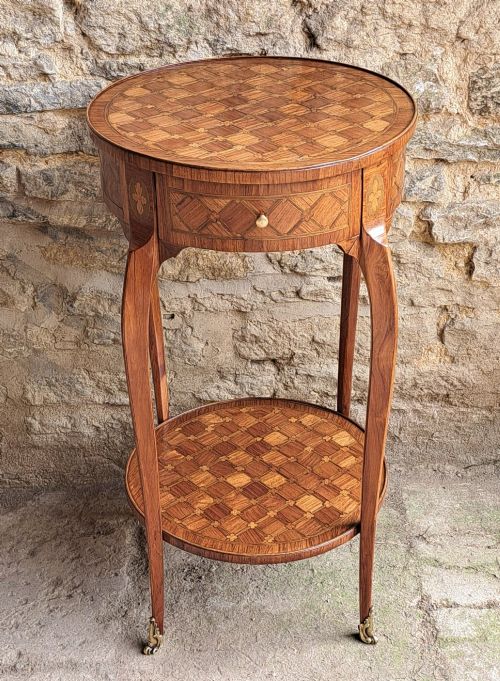
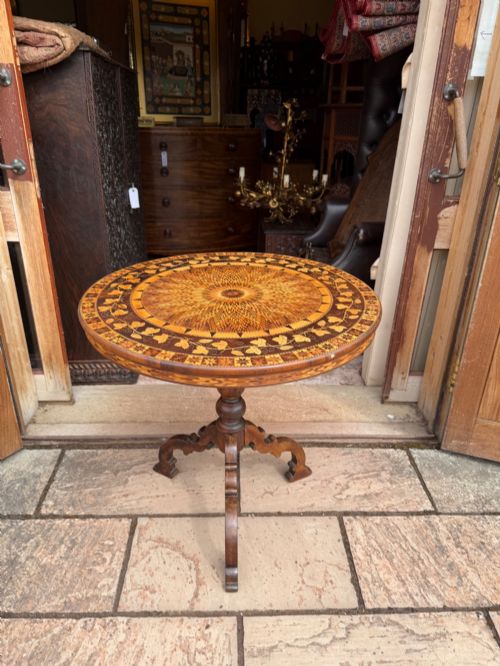
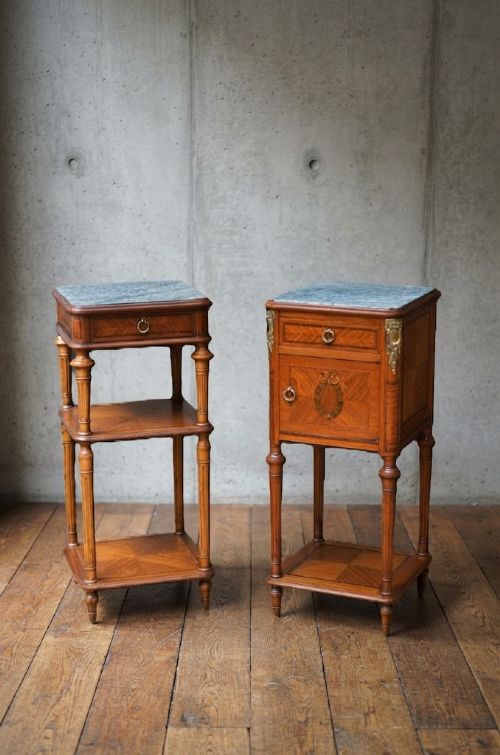
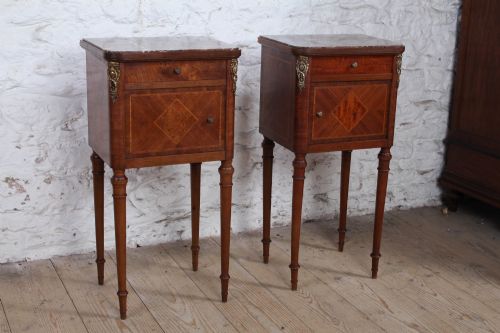
When searching for a vintage parquetry side table, buyers encounter a diverse selection spanning the late nineteenth century through to the Art Deco period. These pieces appear primarily as compact bedside cabinets, lamp tables, and occasional tables with distinct French influences.
French origins dominate the selection, often pairing intricate wood veneers with marble surfaces and cast brass mounts. Buyers are most likely to find pieces dating from around nineteen hundred and the nineteen-thirties.
Materials and construction methods
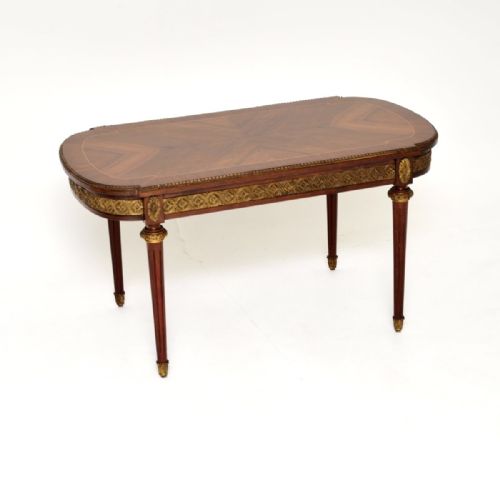
Cabinet makers utilised exotic and native hardwoods including kingwood, walnut, satinwood, and rosewood, sliced thinly into veneers to form geometric patterns across the table tops. These decorative veneers are laid onto solid secondary timbers.
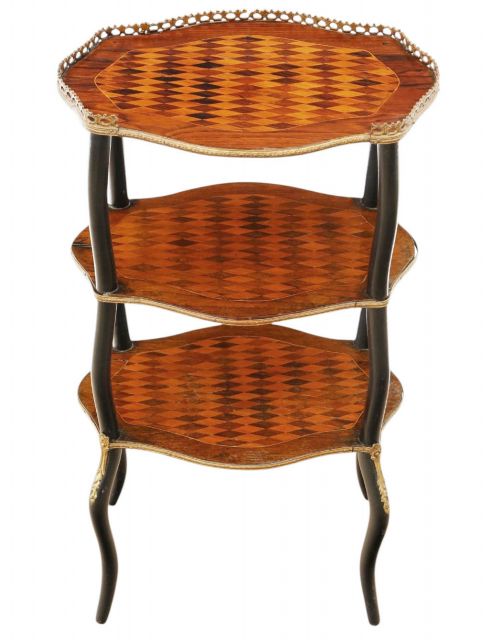
Ormolu mounts, cast in brass or bronze, edge the tabletops and frame the legs, adding weight and metallic contrast to the timber surfaces. Marble inserts, particularly in white and veined varieties, provide durable, smooth surfaces for bedside and lamp tables.
Parquetry construction involves painstaking hand-cutting of small wood blocks to create repeating geometric motifs such as cubes, diamonds, and chequers. This technique requires precise joinery to ensure the timber surface remains stable over decades of use.
Vintage Parquetry Side Table Retail Price Guide 2026
Typical asking prices for vintage parquetry side table among the pieces listed under this phrase on Sellingantiques today, from the lower quarter to the upper quarter. They describe what is for sale here now, not the wider market.
Combination tables occasionally integrated smokers' cabinets directly beneath the tea surface for efficient parlor relaxation.
Distinguishing quality in parquetry
The standard of a piece rests largely on the precision of the timber alignment and the complexity of the geometric pattern. Superior examples display seamless joints between individual wood blocks without visible filler or gaps.
The choice of secondary materials marks the distinction between standard production and high workshop output. Heavy, finely chased ormolu mounts and thick, slab-cut marble tops indicate elevated craftsmanship compared to pressed brass plating and thin stone.
Structural integrity and the retention of original surface polishes govern the standing of individual tables. Pieces retaining their crisp veneer edges and original mounts hold greater visual coherence than those with replacement elements.
Bath Cabinet Makers
The Vintage Parquetry Side Table Glossary
- Parquetry
- Geometric mosaic woodwork formed by fitting small pieces of veneer together to create repeating patterns such as cubes or triangles. This technique decorates tabletops and cabinet doors.
- Ormolu
- Gilded bronze or brass mounts applied to furniture for decorative effect and edge protection. These metallic elements are typically cast and chased by hand.
- Etagere
- A piece of furniture consisting of a set of open shelves for displaying small objects or books. These tiers are often supported by slender columns.
- Satinwood
- A durable, lustrous timber with a yellowish sheen used for fine cabinet work and inlay. It provides a bright contrast against darker woods like rosewood.
Vintage Parquetry Side Table: Frequently Asked Questions
What is parquetry?
Parquetry is a woodworking technique where small, precisely cut pieces of wood veneer are arranged into geometric patterns. Craftsmen use contrasting timbers to create visual depth on flat surfaces like tabletops.
Unlike marquetry, which depicts pictorial scenes using curved lines and organic motifs, parquetry relies on straight-edged shapes such as squares, triangles, and diamonds.
How were bedside cabinets used?
Bedside cabinets served practical functions in nineteenth and early twentieth-century bedrooms by concealing chamber pots, night linens, and personal items within enclosed cupboards or drawers. The flat upper surfaces held oil lamps, candles, or glasses of water before electric lighting became standard.
Many examples feature marble tops specifically chosen for their resistance to liquid spills and ease of cleaning.
How do I clean marble tops?
Marble surfaces require gentle cleaning with a soft cloth and warm water, avoiding acidic substances like lemon juice or vinegar that etch the stone. Mild, neutral soap can be used for stubborn marks, followed by thorough drying.
Applying a specialised stone sealer helps protect the polished surface from moisture rings and stains over time.
How do I identify Louis XV style?
Louis XV style furniture is characterised by flowing serpentine lines, cabriole legs, and asymmetrical floral or rococo ornamentation. These pieces avoid straight lines in favour of organic, curved silhouettes.
Ormolu mounts on these tables typically mimic plant scrolls and foliage to accentuate the naturalistic contours of the frame.