
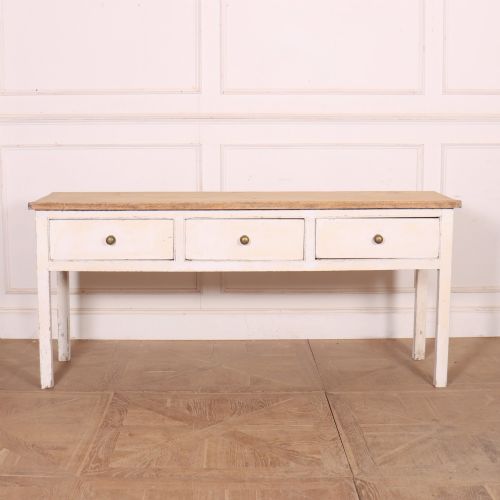
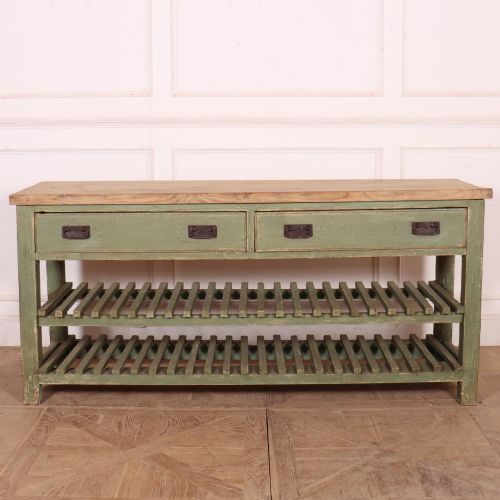
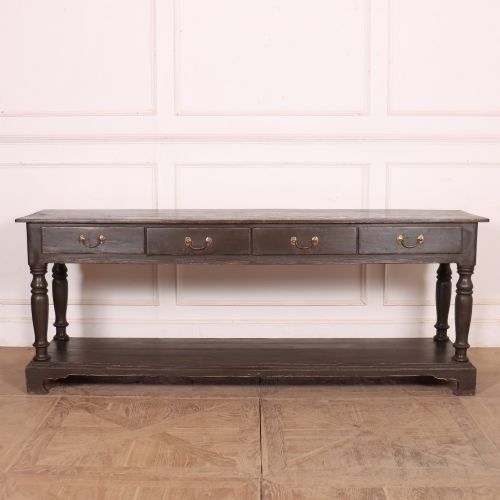
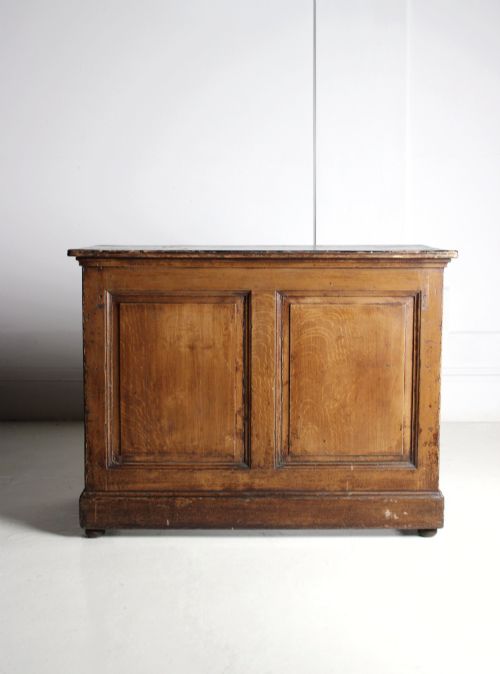
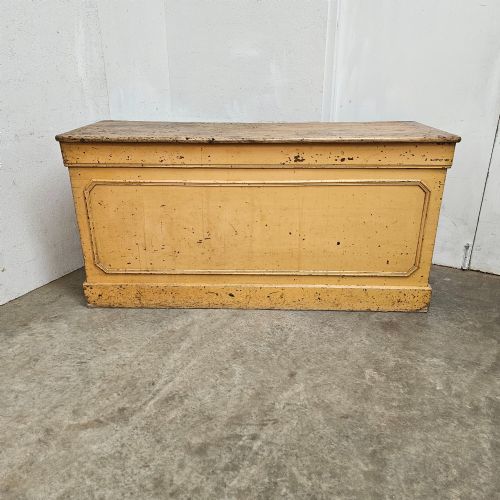
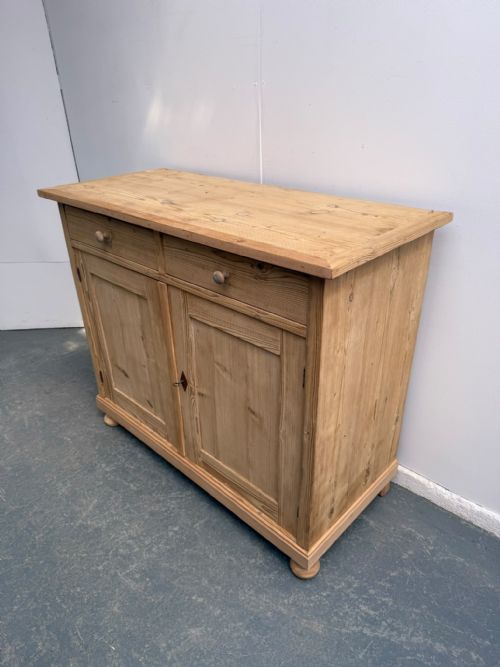

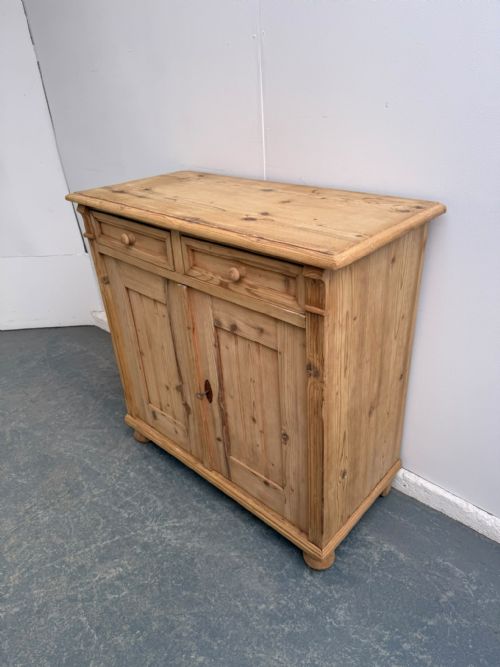


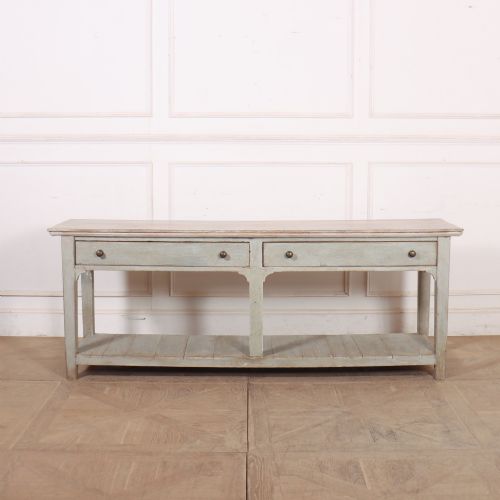
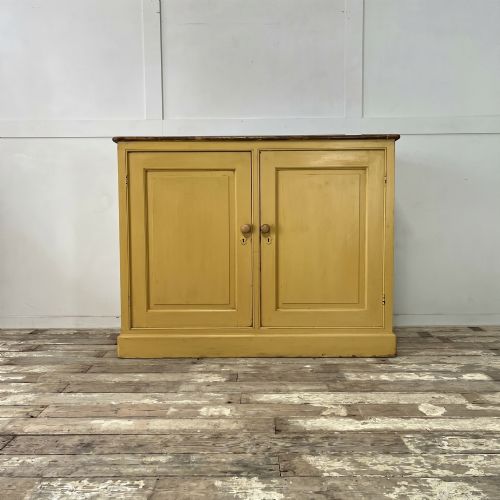
Vintage Painted Pine Sideboard
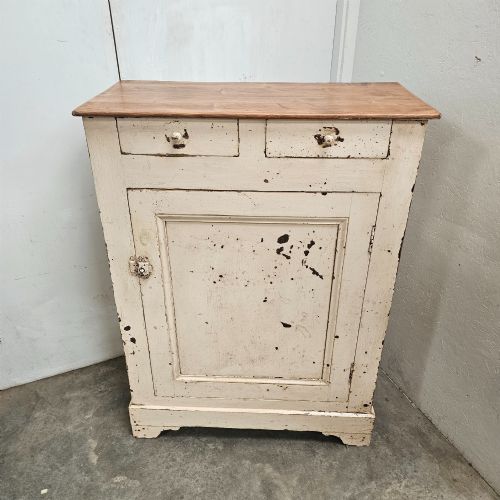
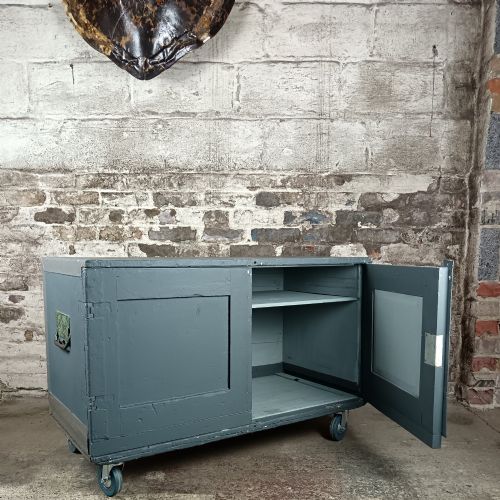
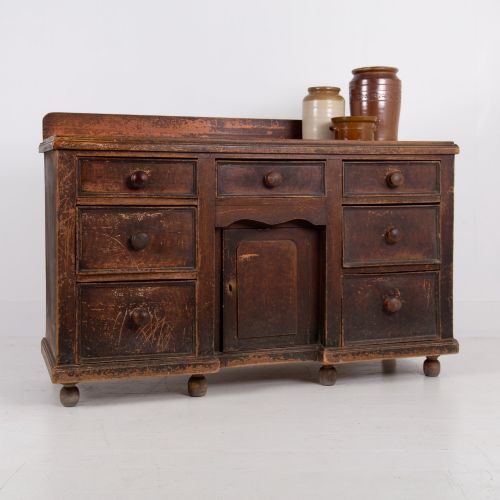
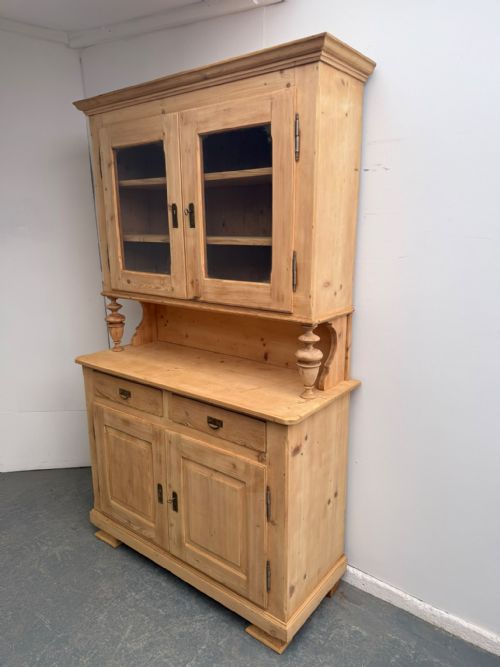
A vintage painted pine sideboard brings honest utility and heritage character to a room through practical storage and time-worn surface colour.
Vintage Painted Pine Sideboard
A vintage painted pine sideboard encompasses practical storage furniture built from softwood and finished with colour, serving domestic spaces with cupboards, drawers and serving surfaces. When searching for a vintage painted pine sideboard, buyers encounter items originating from nineteenth century rural workshops and domestic kitchens across England, France, Scandinavia and Hungary.
The forms span low dresser bases, kitchen cupboards, shop counters and serving tables rather than formal dining furniture. These pieces reflect regional vernacular traditions, from English potboard bases to French confituriers and Scandinavian cupboards.
Most examples date from the nineteenth century or the Victorian era, constructed to serve heavy daily use in farmhouses, dairies and country houses. Their surfaces often display layers of original or historic paint that record decades of domestic life.
How they were made
Makers built these pieces primarily using solid pine, a durable and accessible softwood that took paint readily and withstood heavy kitchen or dairy tasks. Carpenters joined the timber using traditional methods, incorporating boarded backs, pegged joints and hand-cut dovetails for drawer construction.
Hardware typically included brass or iron handles, hinges and latches chosen for utility rather than display. Surfaces received coats of paint, often applied in flat oils or distemper, which protected the wood and defined the regional aesthetic of the piece.
Materials documented in these listings include pine, painted wood, brass, iron, metal, wood and glass.
What varies in quality
Quality rests upon the integrity of the original construction and the survival of the early painted surface. Pieces retaining their initial unstripped finish and untouched regional hardware hold greater integrity than those altered or stripped down over time.
Proportion and utility also separate standard utility items from finer vernacular examples. Well-proportioned drawer arrangements, sound structural timber and clean interior framing distinguish better workshops from basic utilitarian work.
The Vintage Painted Pine Sideboard Glossary
- Dresser base
- A low storage unit featuring drawers and cupboards below a serving surface, historically used in kitchens for food preparation and storage. These pieces form the core of sideboard selections.
- Potboard
- An open slatted lower shelf beneath a dresser base designed for storing heavy pots and pans off damp stone floors. This feature appears frequently on English country furniture.
- Confiturier
- A small French cupboard originally utilised for storing confits and preserves in stoneware jars. They offer compact storage with a single door and drawer.
- Distemper
- A water-based paint medium utilising chalk or pigment bound with size, common on early vernacular furniture before modern emulsions. It produces a matte, chalky surface finish.
- Dog kennel dresser
- A dresser base featuring a central open recess situated between two banks of drawers or cupboards. This unusual central void originally accommodated working dogs indoors.
Vintage Painted Pine Sideboard: Frequently Asked Questions
Where were painted pine sideboards used?
These pieces served practical roles in domestic kitchens, dairies, farmhouses and rural shops where durable storage was essential.
They stood against walls to hold tableware, dry goods, linens and provisions, doubling as preparation surfaces during busy household tasks.
How do I care for original paint?
Historic painted surfaces require gentle treatment using a dry microfiber cloth or a very softly dampened duster to remove surface dirt.
Avoid chemical cleaning agents, modern waxes or harsh scrubbing that might lift or dissolve fragile distemper and early oil paints.
Are these pieces strictly English?
The selection includes British examples alongside pieces originating from France, Scandinavia, Hungary and other European regions.
Regional differences appear in the hardware, construction methods, proportions and the specific tones of the historic paint finishes.
What is a dresser base?
A dresser base is the lower portion of a traditional kitchen dresser built without the upper shelving superstructure.
It provides a flat timber top above rows of drawers and enclosed cupboard doors for everyday household storage.