
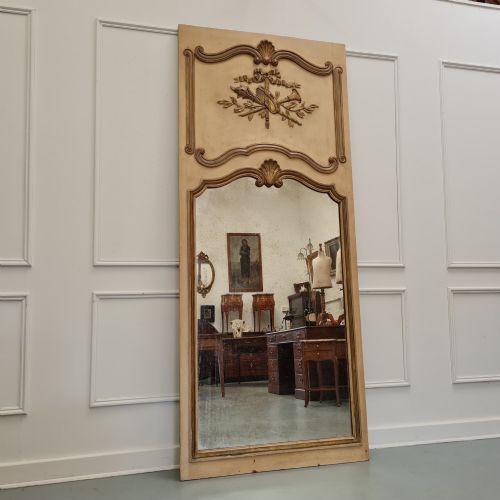
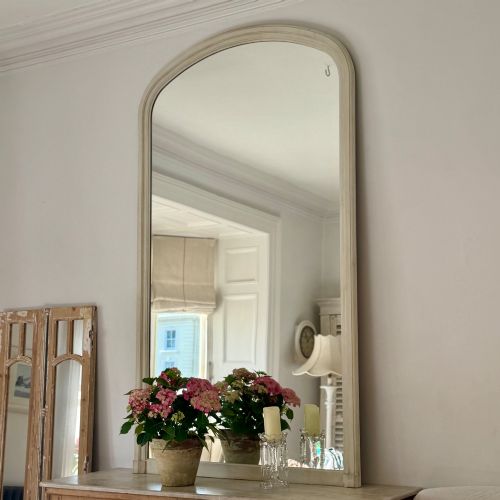


Vintage Painted Mantel Mirror
A vintage painted mantel mirror brings architectural presence and reflected light to a room, drawing the eye with its layered surface and generous proportions.
Vintage Painted Mantel Mirror
A vintage painted mantel mirror is typically designed to sit above a fireplace, anchoring the chimney breast with substantial scale and decorative framing. These pieces span the nineteenth century and the Edwardian era, drawing heavily on French and English design traditions.
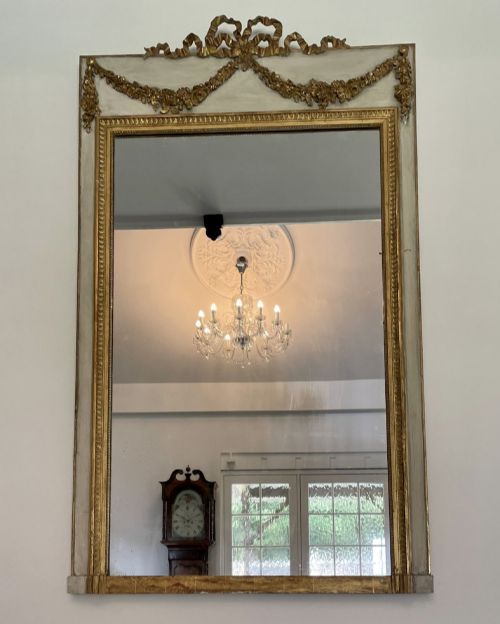
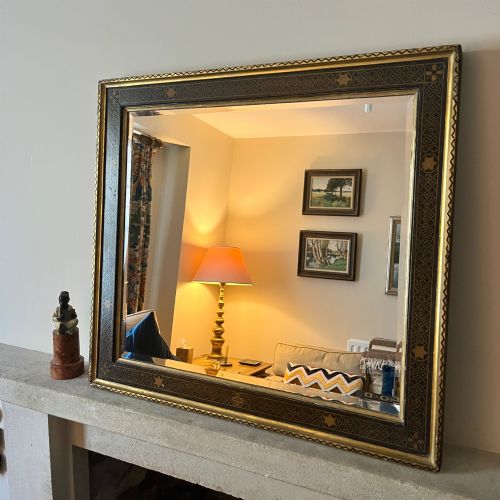
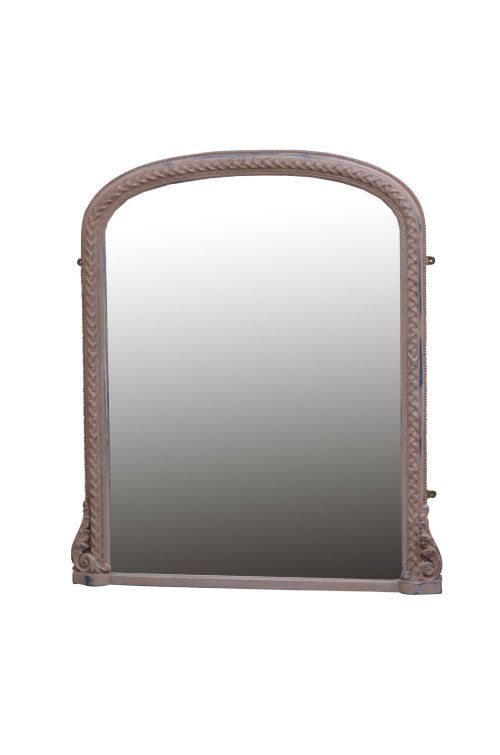
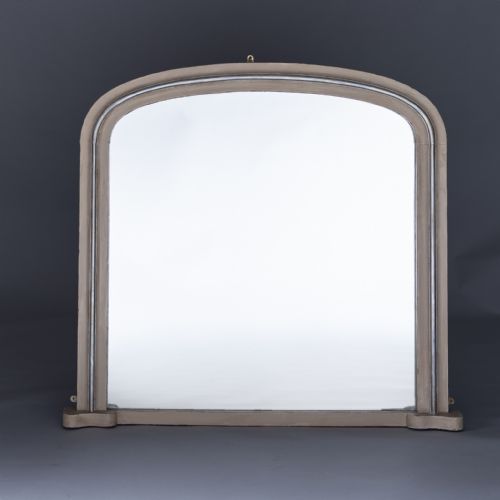
The most common forms on this page include overmantel mirrors with arched tops, rectangular wall formats, and trumeau designs. Many examples originate from French provincial or chateau contexts, alongside English Victorian interpretations.
Makers and artisans employed varied stylistic idioms, ranging from Louis Philippe restraint to Rococo Revival curves and Adam neoclassical symmetry. The resulting objects function both as mirrors and as primary decorative foci for a wall.
Materials and construction
Frames are constructed primarily from carved wood, often built up with layers of gesso to create crisp architectural mouldings and relief decoration. This foundation provides the stability needed for large-scale mantel pieces.
Surfaces are finished with paint, sometimes combined with gold leaf or parcel-silvered details to highlight the carved elements. Over time, the paint layers develop natural distressing and subtle craquelure across the wood and gesso.
Some mirrors carry the quiet echo of past drawing rooms, holding reflections of centuries gone by within their distressed painted frames.
Judging quality and craftsmanship
Quality rests in the depth and crispness of the wood carving beneath the painted surface, distinguishing hand-shaped relief work from simpler applied composition ornament. The handling of the gesso layer determines how cleanly the mouldings hold their profile over decades of use.
The sophistication of the painted finish separates standard decorative mirrors from exceptional pieces, particularly where original layered palettes, ebonised sections, or genuine gilt accents survive. Superior mirrors maintain a harmonious proportion between the heavy frame and the central glass plate.
The Vintage Painted Mantel Mirror Glossary
- Overmantel mirror
- A large mirror specifically proportioned to be hung or placed upon the mantelpiece above a fireplace. These pieces often feature horizontal emphasis or arched tops to complement chimney breast architecture.
- Gesso
- A plaster-like material applied to wood frames to create a smooth surface for painting or gilding. Artisans carved and moulded this substance to achieve intricate relief decoration.
- Trumeau
- A decorative wall mirror or panel historically fitted into the space between windows or above a mantel. It frequently incorporates painted scenes or carved woodwork within a unified architectural scheme.
- Louis Philippe
- A mid-nineteenth century French style characterised by restrained curves, rounded top corners, and simpler ornamentation than earlier Rococo revivals. This aesthetic prioritises functional elegance.
- Parcel-silvered
- A technique where selective areas of a frame are coated with silver leaf to contrast with the primary painted surface. This adds subtle metallic highlights under changing room light.
Vintage Painted Mantel Mirror: Frequently Asked Questions
How do I hang a heavy overmantel mirror?
These substantial frames require secure fixing directly into masonry or heavy wall studs using appropriate brackets suited to the weight of wood and glass. Professional installation is recommended to support the load safely.
Position the mirror at a height that reflects the room rather than the ceiling, usually leaving a small gap above the mantelpiece itself.
Are the mirror plates original?
Many nineteenth-century frames retain their original glass, which often exhibits characteristic foxing, light oxidation, and minor silver speckling accumulated over time. These age marks confirm the authenticity of the piece.
Replacement glass is occasionally fitted during restoration, so inspecting the silver backing helps determine the age of the plate relative to the frame.
How do I clean a painted and gilt frame?
Dust the carved gesso surfaces gently with a soft, dry brush to prevent dirt accumulation within the intricate recesses of the wood. Avoid liquid cleaners and chemical solvents that can strip original paint or lift fragile gilt layers.
Glass plates can be cleaned with a mild glass cleaner applied to a cloth rather than sprayed directly onto the mirror, protecting the surrounding frame edge.
How do I distinguish French and English styles?
French pieces often display flowing Rococo Revival curves, Louis Philippe rounded corners, or lighter painted palettes in white, cream, and subtle blues. These designs emphasise decorative wall presence.
English Victorian and Edwardian examples tend toward darker ebonised finishes, heavier architectural mouldings, and structured archtop proportions suited to domestic hearths.