
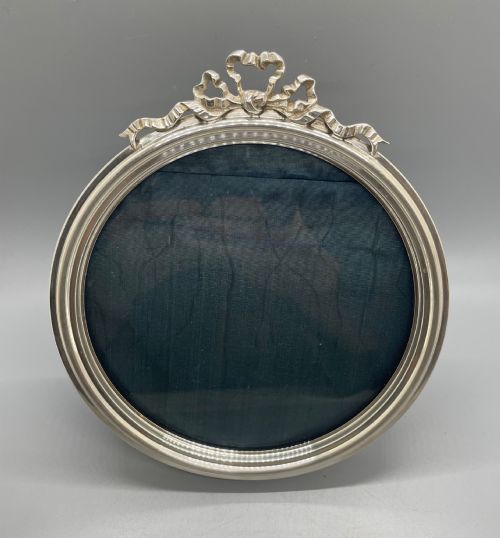
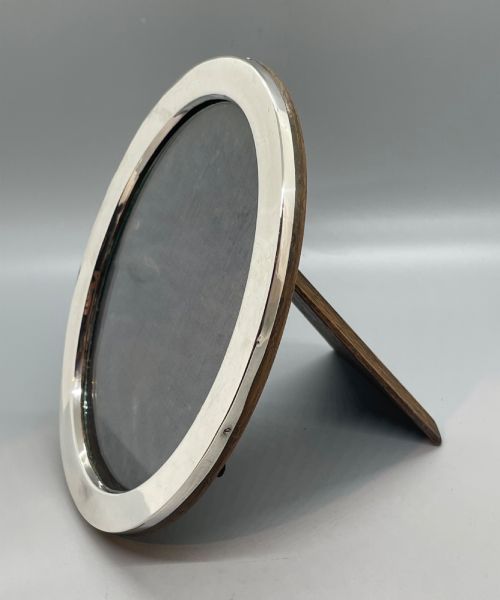
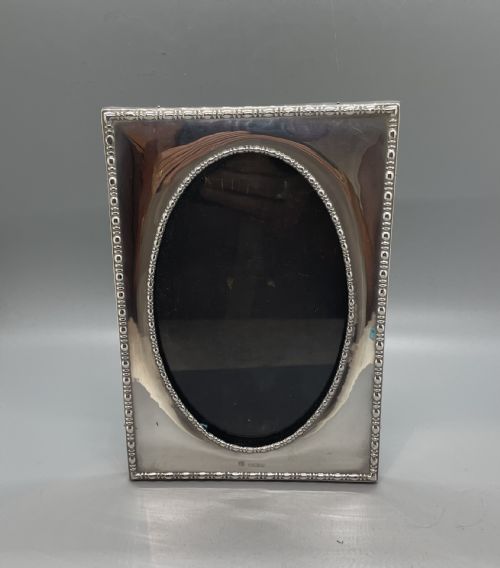
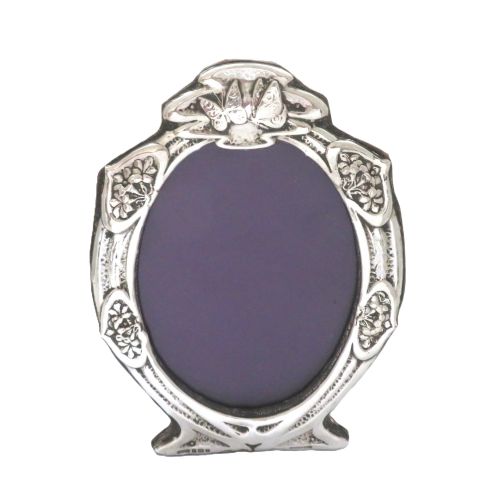


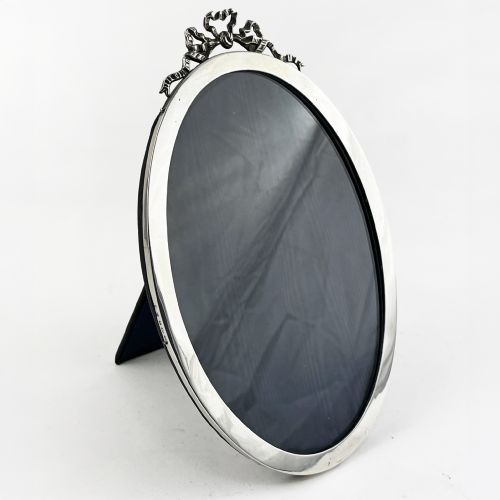


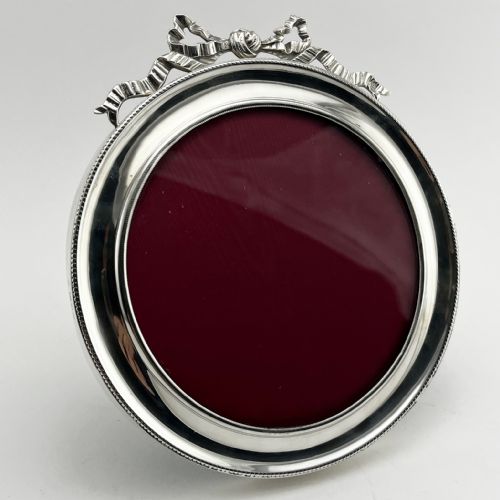

Vintage Oval Silver Frame
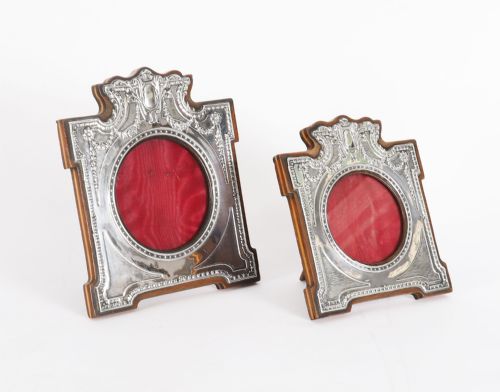
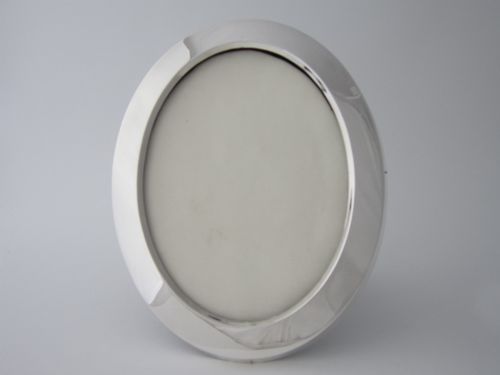
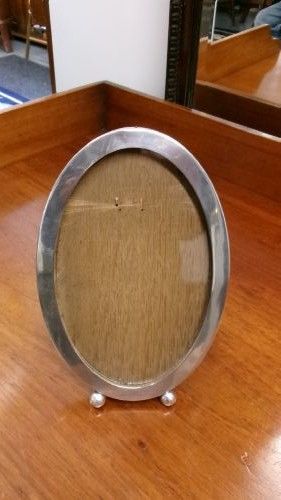
A vintage oval silver frame holds a portrait with unmistakable poise, bringing a tactile sheen of sterling or plated metal to a tabletop.
Vintage Oval Silver Frame
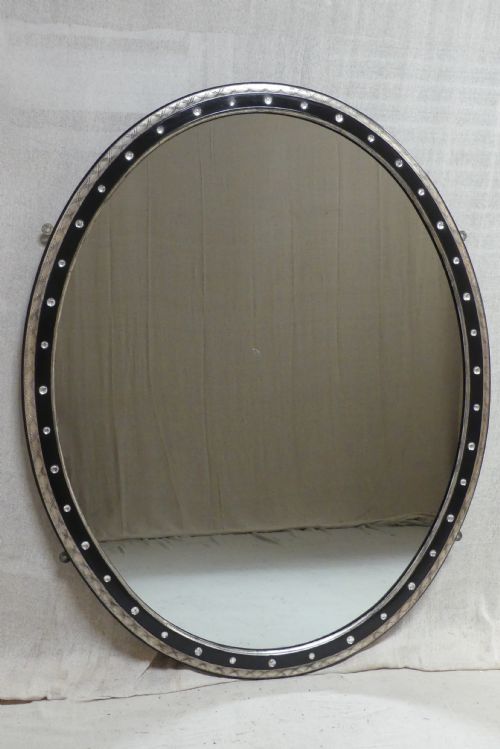
A vintage oval silver frame sits as either a standing photograph holder or a wall mirror, shaped to soften the corners of a room. When hunting for a vintage oval silver frame, the buyer encounters Edwardian and George V pieces most frequently, alongside Art Deco chrome and French silver examples.
The selection spans from small portrait miniatures to large wall-hanging mirrors, often backed in wood and lined with velvet or fabric. Makers such as Mappin Bros and Emile Langlois appear among the sterling items, while other pieces rely on unmarked metal, parcel gilt, or silver plate.
Mouldings range from plain borders to embossed Art Nouveau flourishes and geometric Art Deco lines. These objects served to preserve family likenesses or reflect light in period interiors, remaining functional decorative items today.
Indicators of Quality
The weight and thickness of the silver or metal plating dictate the structural integrity of the border, separating sturdy examples from thin, easily dented pressings. Crispness in the embossed motifs or hand-chased details reveals the skill of the original silversmith.
The condition of the original glass, the integrity of the wooden backing, and the survival of the fabric or velvet lining all contribute to the overall standard. Maker stamps and clear town hallmarks add a layer of documented provenance that elevates certain pieces above unmarked equivalents.
Periods represented span from the seventeenth century through the Victorian, Edwardian, and Art Deco eras up to the mid-twentieth century.
Mappin Bros·Emile Langlois
The Vintage Oval Silver Frame Glossary
- Sterling silver
- A silver alloy containing 92.5 percent pure silver by mass, frequently found in British hallmarked frames.
- Parcel gilt
- Silver or another metal partially coated with a thin layer of gold, adding warmth to the embossed highlights.
- Portrait miniature
- A small, highly detailed painting of a person, often housed within an intimate silver desk frame.
- Assay office
- A body that tested precious metals and stamped official hallmarks, such as those from Birmingham, Sheffield, or Chester.
- Foxed
- Refers to mirror glass showing brown spots or patches of oxidation caused by age and dampness.
Vintage Oval Silver Frame: Frequently Asked Questions
How do I date a silver frame?
British silver pieces carry hallmarks that include a date letter, a town mark, and the standard mark for sterling silver. Comparing these stamps against historical hallmarking charts reveals the exact year of assay.
Style also provides a reliable guide. Pieces showing flowing organic lines point to the Edwardian and Art Nouveau eras, while geometric shapes belong to the 1930s Art Deco period.
What is inside the back of these frames?
Most standing items use a wooden easel back covered in velvet, watered silk, or fabric. These backing boards slide or hinge into place to secure the glass and photograph.
Older examples may feature leather or paper linings behind the wooden support. Replacements are common in these hidden structural areas due to wear over decades of use.
Can I polish the silver?
Light cleaning with a soft microfibre cloth removes surface dust without harming the metal. Avoid abrasive dips or heavy chemical polishes that strip away subtle patination and wear down embossed details.
Take care near mirrored glass or fabric backings, as moisture and cleaning agents can seep behind the bezel and cause staining.
Where were most of these frames made?
British pieces often bear hallmarks from assay offices in Birmingham, Sheffield, or Chester. Continental makers in France and Italy also produced distinctive silver and chrome variants during the early twentieth century.
Import marks appear on pieces brought into Britain from abroad, showing compliance with domestic hallmarking laws of the period.