

Vintage Outdoor Urns
These vintage outdoor urns bring architectural presence to a garden, offering planted focal points shaped by nineteenth-century foundry work and twentieth-century weathering.
Vintage Outdoor Urns
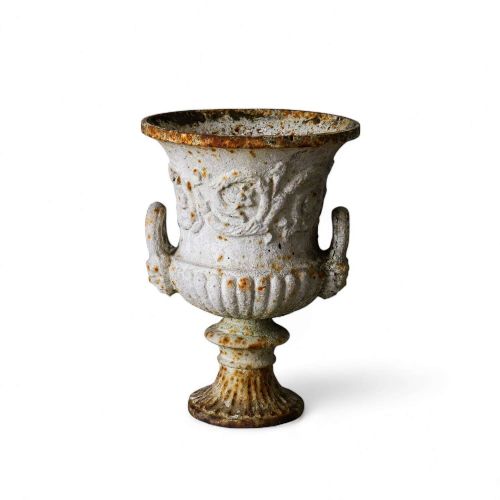
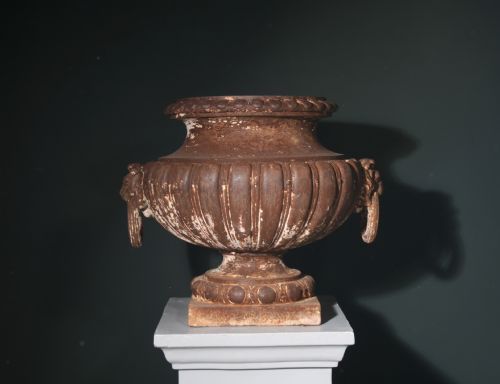
Vintage outdoor urns encompass heavy garden vessels designed to hold plants, ranging from classical campana forms to utilitarian pots and jars. Buyers searching for vintage outdoor urns encounter pieces spanning the nineteenth and twentieth centuries, produced in various revival styles including neoclassical and gothic revival.
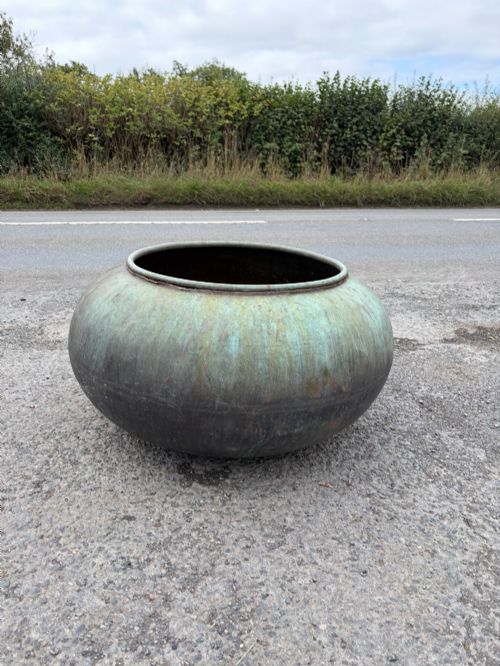
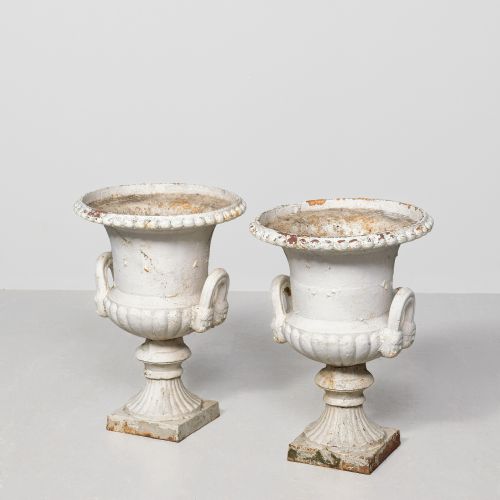
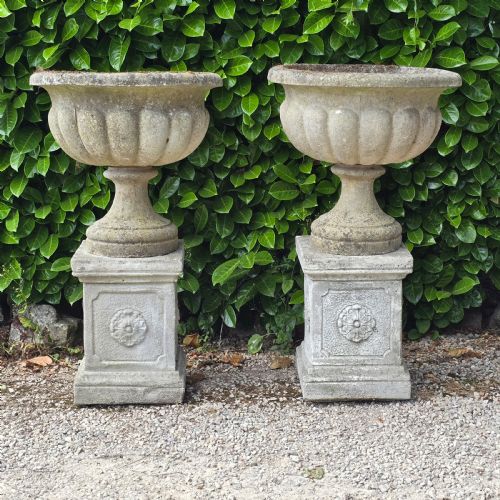
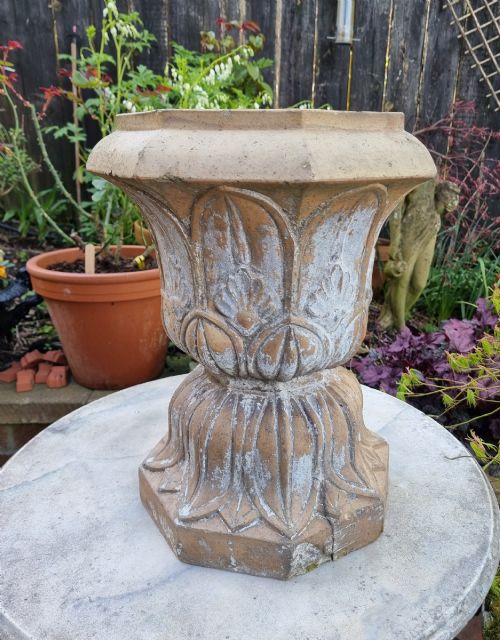
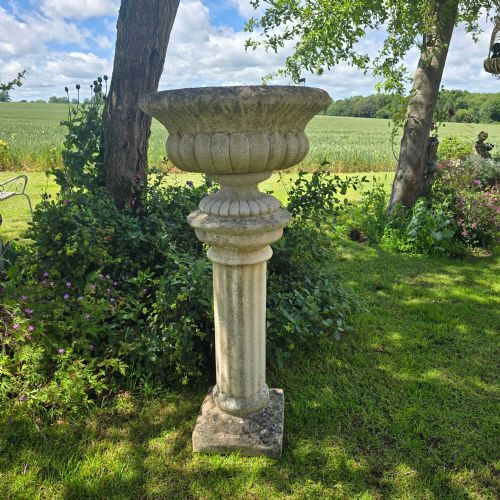
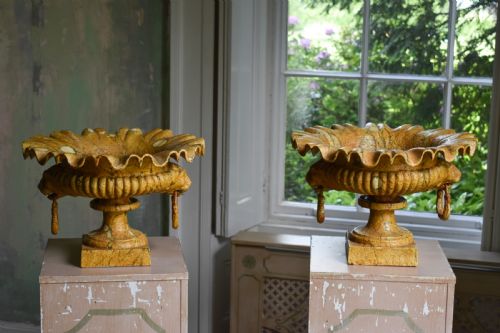
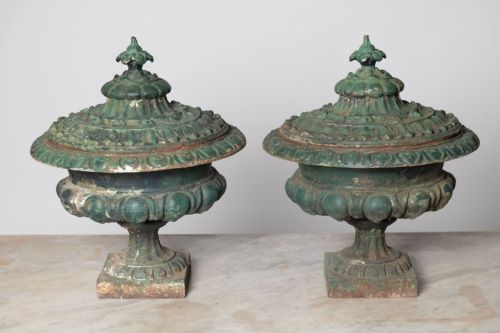
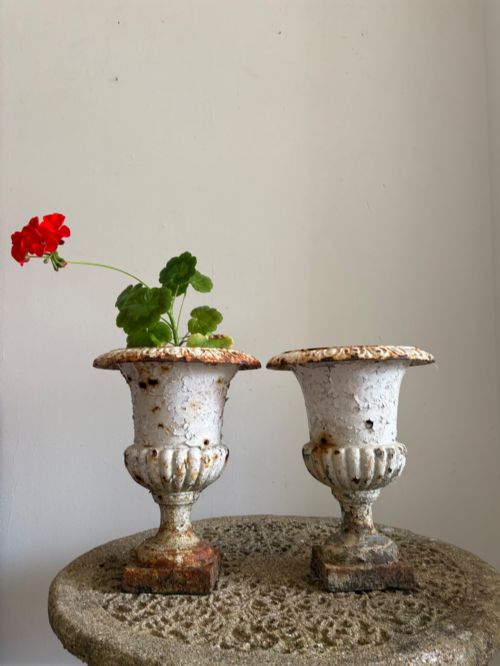
The most common examples on this page are cast iron campana urns, frequently mounted on matching plinths and showing decades of original paint or weathered patination. Alongside these metal vessels, buyers find terracotta oil jars, reconstituted stone planters, and occasional salt-glazed faux bois strawberry planters originating from British, French, and Italian makers.
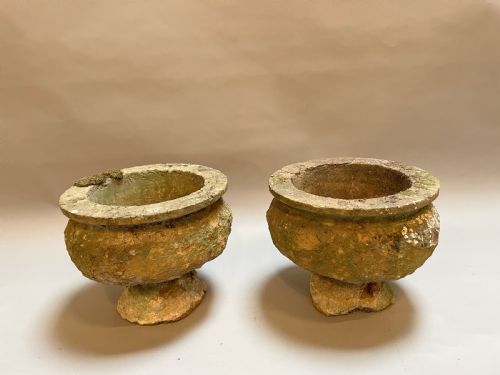
Forms vary from monumental pedestalled containers down to smaller table urns and pair configurations intended for terraces, parterres, and gateways. The selection draws heavily upon nineteenth-century foundry production as well as early twentieth-century garden stoneware.
Materials and construction methods
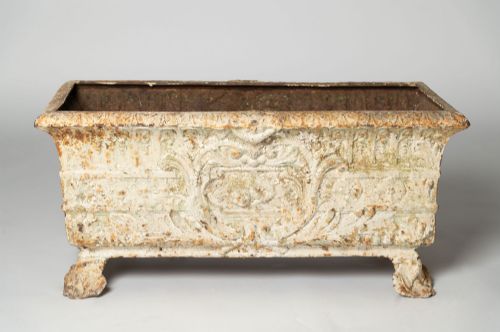
Metal vessels rely on industrial casting techniques, wherein molten iron is poured into sand moulds to create crisp classical relief details, acanthus leaf borders, and fluted bowls. Foundries such as Coalbrookdale, Andrew Handyside, and Val d'Osne produced durable heavy iron pieces designed to withstand decades of exposure.
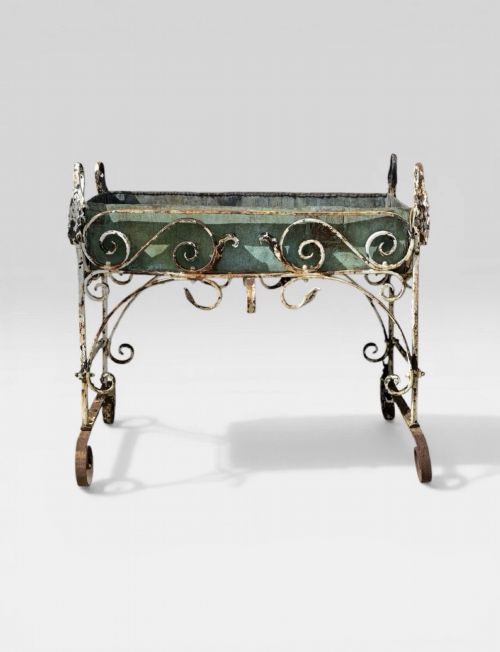
Terracotta and stoneware pieces utilise moulded clay or cast stone mixtures, fired or cured to create porous garden vessels that absorb moisture and acquire rich patinas. Wrought iron variants involve hand-forged structural supports and hoops shaped around decorative planters and oil jars.
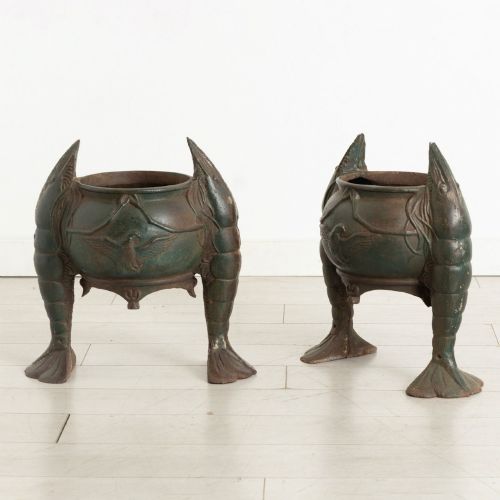
Among the classical vessels on offer, one unusual pair of cast iron planters takes the literal form of marine shrimp.
Assessing quality in garden vessels
Quality rests upon the crispness of the original cast relief and the structural integrity of the metal or stone body. Superior iron castings retain sharp botanical and classical motifs without the softening that occurs when moulds are reused excessively.
Surface history dictates visual merit, where original distressed paint layers or authentic weathering enhance the character of the piece. Matching pairs that retain their original plinths, lids, or pedestals command greater architectural utility in a landscape scheme.
Coalbrookdale·Andrew Handyside·Val d'Osne Foundry·Compton Pottery
The Vintage Outdoor Urns Glossary
- Campana urn
- A bell-shaped garden vessel with an everted rim and a footed base, heavily utilised in classical and nineteenth-century garden design. These forms often feature egg-and-dart detailing along the lip.
- Faux bois
- Imitation wood grain rendered in ceramic, stone, or concrete, popular in nineteenth-century garden ornaments. This technique mimics natural timber textures on durable planters.
- Plinth
- A heavy base or pedestal upon which an urn is elevated to create a stronger vertical presence in a garden. Plinths are frequently cast in matching iron or stone.
- Tazza
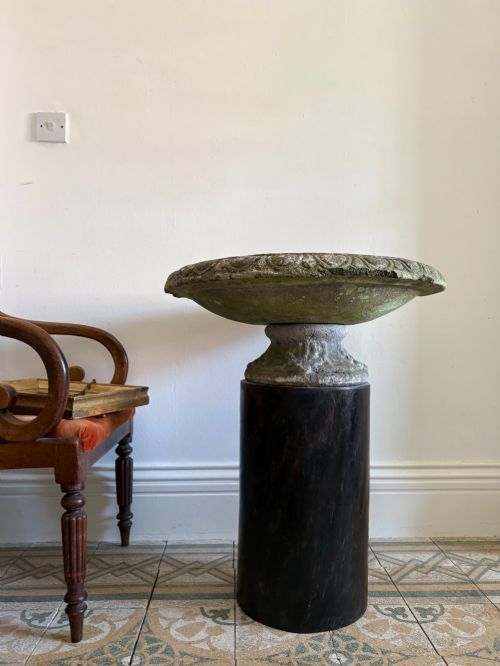
- A shallow cup-shaped vessel on a pedestal, used as an ornamental garden urn or planter. These provide a wider planting spread than standard campana bowls.
- Salt glaze
- A vitreous coating formed by throwing common salt into the kiln during high-temperature firing, producing a pebbled texture on stoneware pottery.
Vintage Outdoor Urns: Frequently Asked Questions
How do I secure an urn outdoors?
Heavy cast iron and stone pieces often rely entirely on their substantial weight to remain stable on terraces and lawns. For taller campana forms on plinths, internal dowels or mortar beds provide extra security against high winds.
Positioning vessels on firm, level foundations prevents shifting as the ground settles through winter frost cycles. Drainage holes should remain clear to prevent water accumulation from freezing and cracking the body.
Can cast iron urns stay outside all winter?
Cast iron handles freezing temperatures well, provided water is not allowed to pool and freeze directly inside the planted bowl. Raising containers slightly off the ground on pot feet encourages proper drainage during heavy rain.
Surviving centuries of exposure demonstrates the resilience of these metals, though unpainted iron will continue to develop a stable oxidised surface layer over time.
How do I identify a nineteenth-century piece?
Nineteenth-century iron urns typically exhibit heavier walls, hand-finished casting seams, and deep layers of historic paint or rust patination. Foundry marks, registration numbers, or distinct stylistic proportions associated with known Victorian makers offer further confirmation.
Earlier examples often display crisper classical ornament and thicker iron sections compared to lighter twentieth-century reproductions.
What plants suit campana urns?
Trailing plants such as ivy, cascading lobelia, and small ivies complement the flared lip and deep bowl of traditional campana urns. Box balls and structured evergreens provide year-round architectural contrast to the classical iron or stone body.
Large oil jars and strawberry planters accommodate root systems that require generous depth and excellent soil aeration.