

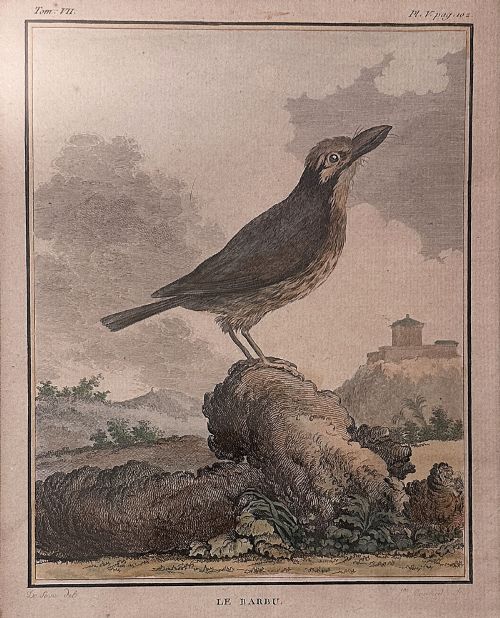
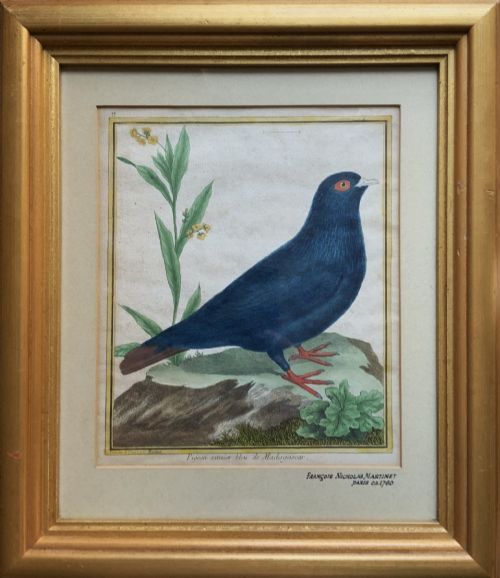
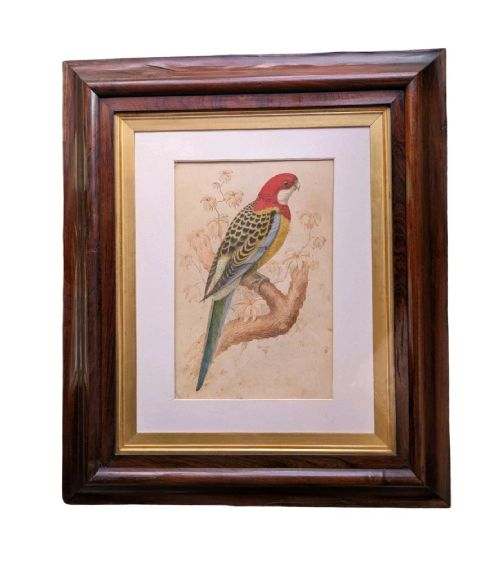

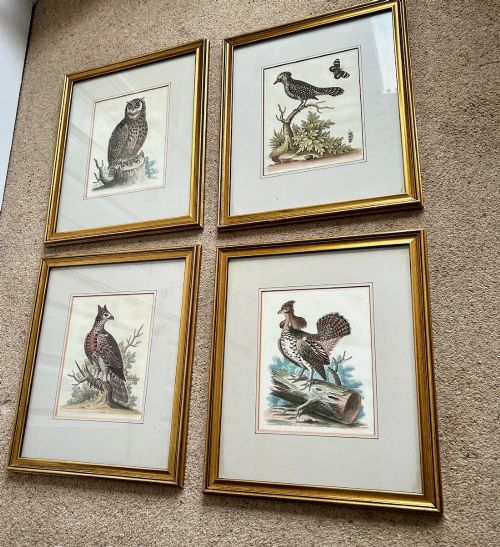


Vintage Ornithology Wall Art
These vintage ornithology wall art pieces bring centuries of natural history study straight onto your wall.
Vintage Ornithology Wall Art
When you search for vintage ornithology wall art, you are looking at scientific illustration transformed into decoration through centuries of framing and preservation. The pieces gathered here span from the eighteenth century through the mid-nineteenth century, Edwardian era, and into the nineteen-fifties.
You will encounter framed prints, hand-coloured engravings, lithographs, and original watercolour paintings on paper. Subjects range from single native lapwings and rosella parrots to tropical birds and game species.
The most common formats on this page are single framed prints and grouped sets of engravings or lithographs. These works combine rigorous natural observation with the decorative tastes of their respective periods.
Materials and methods
The foundation of these works is paper, upon which artists and printers applied ink, watercolour, and sometimes hand-colouring. Engravings and lithographs provided the printed lines, which were often enhanced by hand-applied pigments.
Framing materials reflect the period of presentation, utilising wood, glass, ebonised frames, and deep giltwood mounts alongside gold leaf accents. These traditional mountings protect the fragile paper works while defining their visual boundaries.
Vintage Ornithology Wall Art Retail Price Guide 2026
Typical asking prices for vintage ornithology wall art among the pieces listed under this phrase on Sellingantiques today, from the lower quarter to the upper quarter. They describe what is for sale here now, not the wider market.
Lapwings and rosella parrots gaze across centuries at modern living rooms.
What separates the finest examples
Quality in these botanical and zoological works rests upon the precision of the original draughtsmanship and the vibrancy of the remaining pigment. Hand-coloured details executed by skilled contemporaries command greater attention than mass-produced later impressions.
The integrity of the framing also dictates the character of the piece, where period mounts and original glass preserve the paper underneath. Completeness within sets, such as matching groups of four or ten, elevates the visual impact on the wall.
François-Nicolas Martinet·R. Hurst·George Edwards·William Swainson·Paul-Louis Barruel·Eleazor Albin·Archibald Thorburn
The Vintage Ornithology Wall Art Glossary
- Engraving
- A printmaking technique where an artist cuts an image into a metal plate to hold ink. This method produces crisp, fine lines characteristic of eighteenth-century scientific illustration.
- Lithography
- A planographic printing process based on the repulsion of oil and water, widely utilised in the nineteenth century for multi-coloured plates.
- Hand-coloured
- A print finished with watercolour pigments applied by hand after the initial printing process. This adds individual artistic nuance to each plate.
- Ebonised
- Wood treated to imitate ebony, often providing a dark, contrasting border for nineteenth-century works on paper.
- Giltwood
- Wood carved and covered with a thin layer of gold leaf, frequently seen on mounts and period frames.
Vintage Ornithology Wall Art: Frequently Asked Questions
How do I hang antique bird prints safely?
Hang these paper works away from direct sunlight to prevent the watercolours and inks from fading over time. Keep them in rooms with stable humidity to protect both the paper and the wooden frames.
Use sturdy wall fixings suited to the weight of the framed glass and wood mounts. Ensure the wire or brackets on the back match the hanging height you prefer.
Are these prints originals from the stated period?
The listings on this page originate from the specific centuries and decades noted, ranging from eighteenth-century engravings to mid-twentieth-century watercolours. Each piece reflects the printing and painting techniques of its era.
Examine the paper stock, ink types, and framing methods to understand the physical age of the object. Period framing often provides additional physical evidence of the piece's history.
Can I mix different centuries on one wall?
Grouping pieces from different eras creates a gallery wall that reflects the evolving study of natural history. Eighteenth-century engravings sit comfortably alongside Edwardian prints when united by a common subject.
Maintain balance by pairing similar frame styles or mount depths together. This unifies disparate dates into a coherent decorative display.
What is the difference between a lithograph and an engraving?
An engraving relies on incised lines cut into a metal plate, resulting in sharp, precise outlines. A lithograph uses a flat stone or metal surface, allowing for softer tonal gradations and smoother areas of colour.
Both techniques served scientific illustration but produced distinct visual textures on the paper. Close inspection under magnification reveals the characteristic dot patterns or plate marks.