
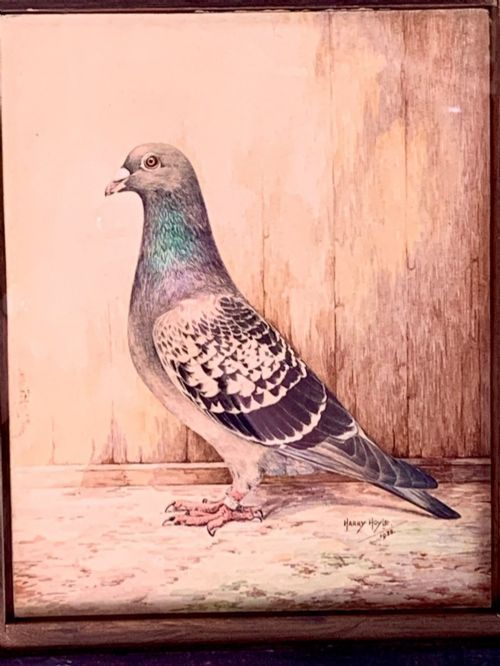
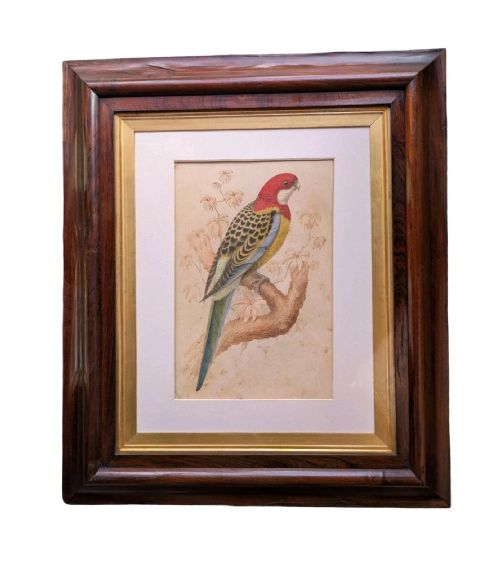
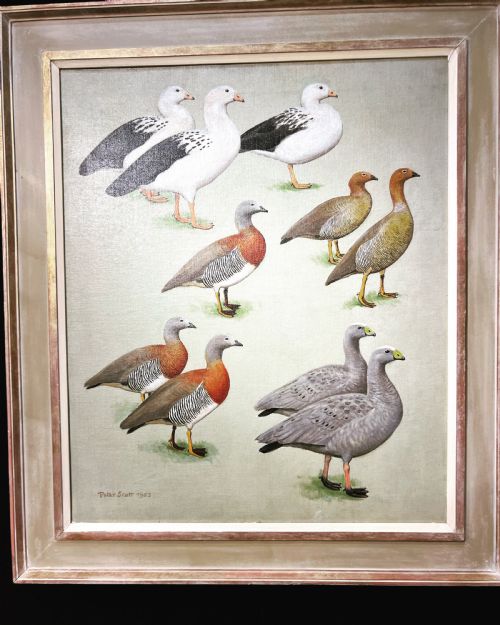
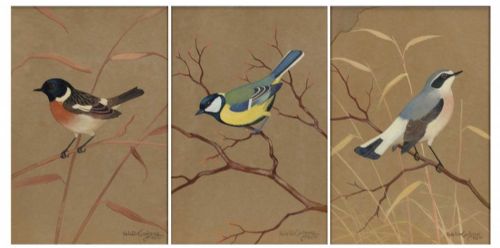


Vintage Ornithological Painting
These vintage ornithological painting examples bring British natural history and wildlife study directly onto the wall in delicate watercolour on paper.
Vintage Ornithological Painting
When you search for vintage ornithological painting, you encounter delicate studies of garden birds, parrots, and game birds rendered in watercolour paint. These works span from the nineteenth century through the mid-twentieth century, capturing avian subjects with scientific precision and artistic grace.
You are most likely to meet framed watercolour paintings executed by named natural history illustrators and artists working within British naturalism and Victorian natural history styles. These pieces often arrive housed in ebonised frames with deep giltwood mounts, ready for display.
How they were made
Artists apply watercolour paint directly onto paper sheets, building up feathered textures and anatomical details through careful washes and fine brushwork. Many examples receive protective housing behind glass within wood frames, occasionally enhanced by gold leaf details.
Ceramic pieces utilise porcelain bodies moulded into plates, bowls, and gravy boats, then decorated with hand-painted bird motifs in enamel. Framed works frequently employ deep giltwood mounts to separate the delicate paper surface from the surrounding frame.
The listings span from the eighteenth century to the mid-twentieth century, recording works on paper, porcelain plates, and wood frames.
What varies in quality
Quality rests upon the precision of the avian anatomy and the confidence of the brushwork demonstrated by the artist. Stronger pieces capture the vitality and distinct plumage of the subject with economical, sure lines rather than heavy, overworked pigment.
The quality of the framing and mounting significantly influences the overall character of the piece, with period ebonised wood and deep giltwood mounts providing superior aesthetic context compared to later, simpler housings.
R. Hurst·Ralston Gudgeon·Charles F. Tunnicliffe·Robin Hill·Paul-Louis Barruel·Donald Watson·Stephen Elmer
The Vintage Ornithological Painting Glossary
- Watercolour
- A paint consisting of a pigment suspended in a water-based solution. This medium allows for translucent washes that suit the delicate rendering of bird plumage.
- Giltwood
- Wood that has been treated with gold leaf or a gold-coloured finish. Deep giltwood mounts serve to frame and elevate works on paper.
- Ebonised
- Wood treated with a finish to resemble ebony, providing a dark, contrasting border around framed watercolours.
- Enamel
- A decorative coating fused to porcelain surfaces under heat. This technique secures painted bird designs onto plates and vessels.
Vintage Ornithological Painting: Frequently Asked Questions
How do I hang a watercolour painting safely?
Keep watercolours away from direct sunlight to prevent the pigments from fading over time. Ensure the room humidity remains stable to protect both the paper and the wooden frame.
Use secure picture hooks rated for the weight of the frame and glass. Hang the piece at eye level to appreciate the fine details of the brushwork.
What is the difference between an ornithological study and a standard bird painting?
Ornithological studies prioritise anatomical accuracy and species identification, often recording specific plumage details and postures. These works stem from natural history traditions and scientific observation.
Standard bird paintings may focus more on decorative composition or emotional atmosphere within a landscape. The ornithological approach remains rooted in documentation while retaining artistic merit.
How do I identify Victorian bird watercolours?
Victorian examples frequently display meticulous attention to feather detail and are often housed in period frames with gilt mounts. The paper stock and framing techniques generally reflect nineteenth-century workshop practices.
Signatures or inscriptions on the reverse can also point towards Victorian natural history illustrators. Stylistic conventions of the period favour a combination of scientific rigour and picturesque background settings.
Can I display porcelain bird plates on the wall?
Porcelain plates featuring bird paintings often include kiln marks or maker stamps on the reverse indicating their origin. Using specialised plate hangers allows you to display these ceramics securely alongside framed watercolours.
Ensure the wall fixings are robust enough to support the weight of porcelain pieces. Grouping plates with framed paper works creates a varied natural history display.