







Vintage Oriental Silk Art
These vintage oriental silk art pieces bring rich textures, delicate threads and centuries of craftsmanship straight to your wall.
Vintage Oriental Silk Art
When you search for vintage oriental silk art, you encounter a diverse range of textiles and paintings spanning multiple centuries, from delicate scrolls to large wall hangings. The items listed here encompass framed artworks, embroidered panels, traditional paintings on silk, and garments such as robes and coats.
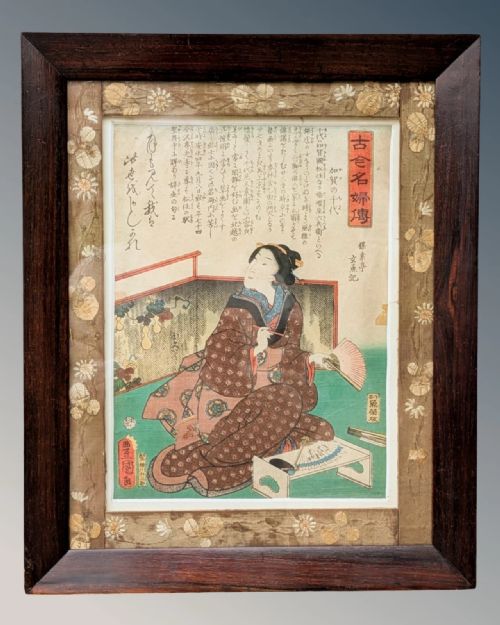
You are most likely to meet Chinese embroidered panels and paintings alongside Japanese silk works and intricate Middle Eastern textiles. These pieces draw upon styles such as traditional Chinese, Qing Dynasty, Meiji Period, Ottoman, and Persian Tribal aesthetics.
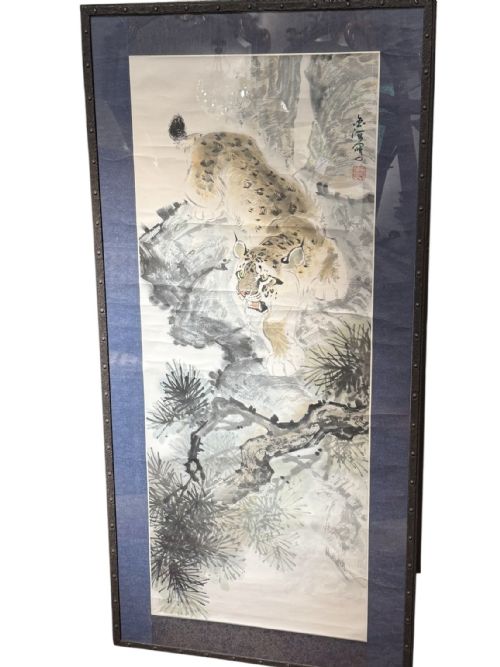
The objects range from nineteenth-century ancestor portraits and bird studies to early twentieth-century scroll paintings and woven fragments. Each piece reflects the specific regional techniques and artistic traditions of its origin.
Materials and construction
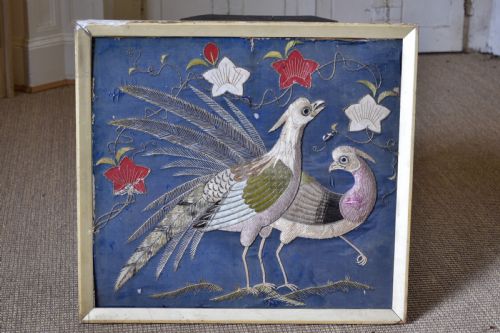
The makers utilised fine silk as the primary canvas or textile base, frequently combining it with cotton grounds, paper, and wooden frames or carved stands. Metallic thread and coloured pigments were applied to enhance the visual depth of embroidered panels and painted scenes.
Techniques varied from meticulous needlework and hand embroidery to gouache and watercolour painting directly onto silk. Many textiles also incorporated wool felt applique work, quilting, and woodblock printing mounted with silk brocade.
Assessing quality
The integrity of the original framing, mounting, and structural supports also influences the standing of an item. Uzbek suzanis, Chinese ancestor portraits, and Japanese textile panels each derive their distinction from the skill and patience invested in their creation.
The Vintage Oriental Silk Art Glossary
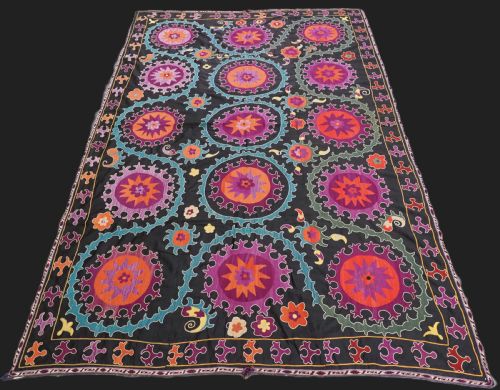
- Suzani
- An embroidered and decorative tribal textile made in Tajikistan, Uzbekistan, and other Central Asian countries. These large wall hangings typically feature bold floral motifs worked in vibrant silk thread.
- Ikat
- A dyeing technique used to pattern textiles that employs a resist dyeing process on yarns prior to dyeing and weaving the fabric. Uzbek coats and panels frequently display this distinct blurred pattern effect.
- Ancestor Portrait
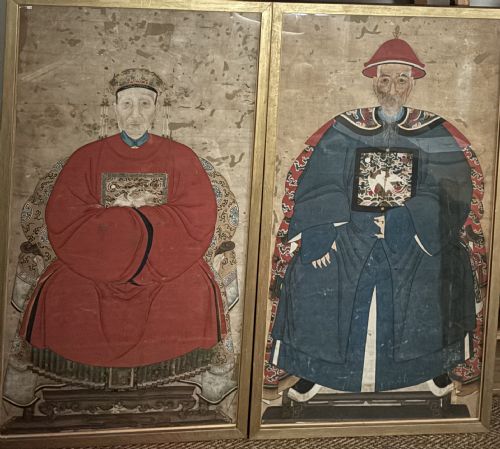
- A formal Chinese painting created to honour deceased family members, usually depicting figures in elaborate traditional robes seated upright. These works served important commemorative and ritual functions.
- Shan Shui
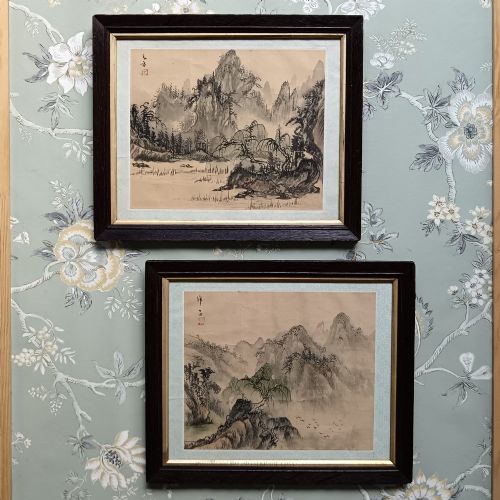
- A style of traditional Chinese painting that represents natural scenery using a brush and ink rather than conventional paints. These works focus on landscapes featuring mountains, rivers, and waterfalls.
- Jajim
- A type of flatwoven textile produced in strips and stitched together, often utilised as a cover or rug. They typically exhibit bold geometric stripe patterns woven from wool and silk.
Vintage Oriental Silk Art: Frequently Asked Questions
How do I hang a silk textile?
Mount delicate silk textiles behind glass with a proper mat to protect the fibres from dust, moisture, and direct handling. Ensure the framing materials are acid-free to prevent degradation over time.
Larger wall hangings and carpets can be mounted using a discreet fabric sleeve stitched to the reverse, through which a flat wooden baton is inserted for wall support.
Are these Chinese paintings hand-painted?
The majority of pieces from this tradition are executed by hand using watercolour, gouache, or ink directly onto a silk ground. Artists employed fine brushes to capture intricate details on the delicate fabric.
Signatures, stamps, and seals often appear on these works, indicating the painter or the studio where the piece was produced.
How should I clean antique silk?
Professional textile conservation is required for cleaning antique silk, as household washing methods can dissolve fragile pigments and damage aged fibres. Surface dust should be gently removed with low suction through a mesh screen.
Avoid direct sunlight and high humidity environments to preserve the integrity of the silk and metallic threads.
What is an Ottoman embroidered fragment?
An Ottoman embroidered fragment is a surviving portion of a larger textile, such as a hanging or garment, produced within the Ottoman Empire. These pieces typically showcase dense floral or geometric needlework in metallic and silk threads.
Collectors often frame these fragments to preserve the remaining embroidery and display the intricate craftsmanship.