

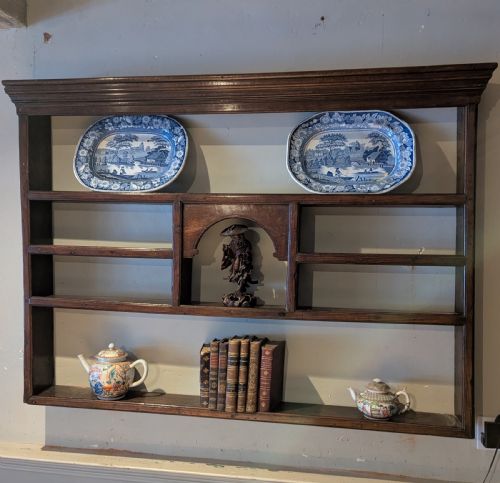
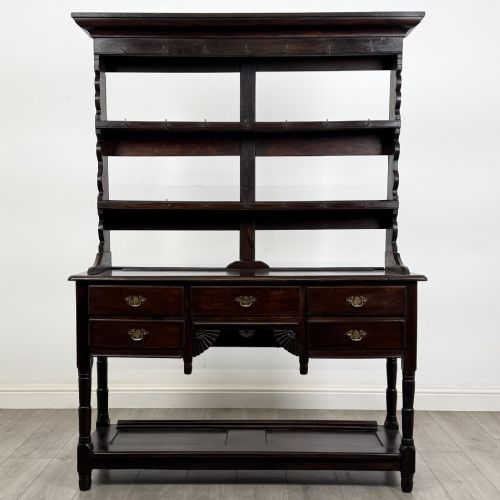
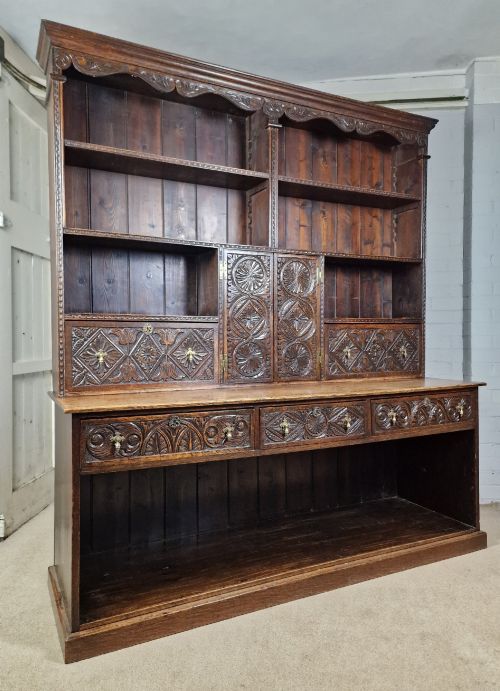
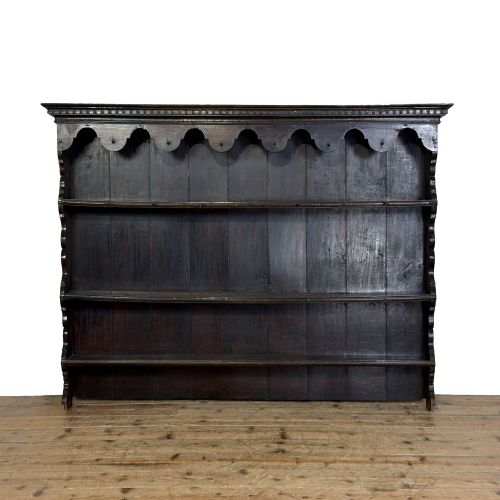
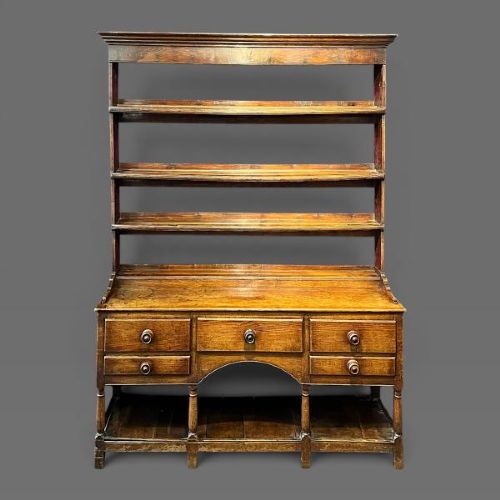
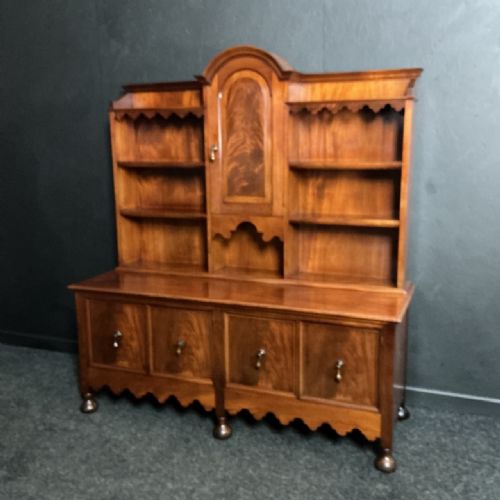
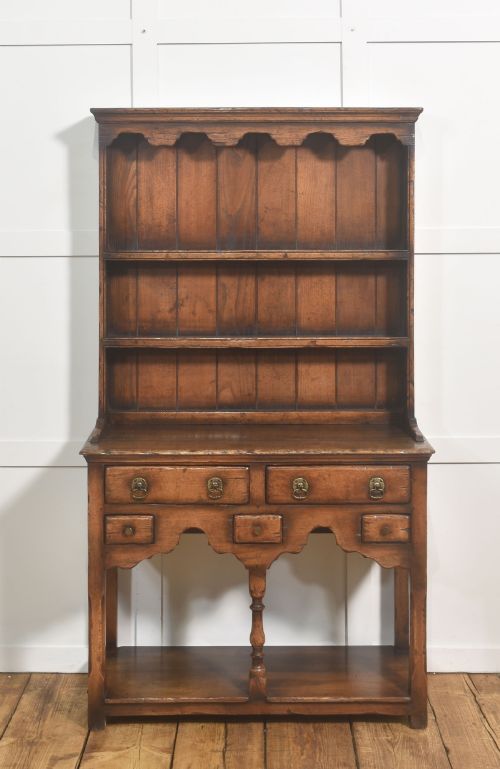
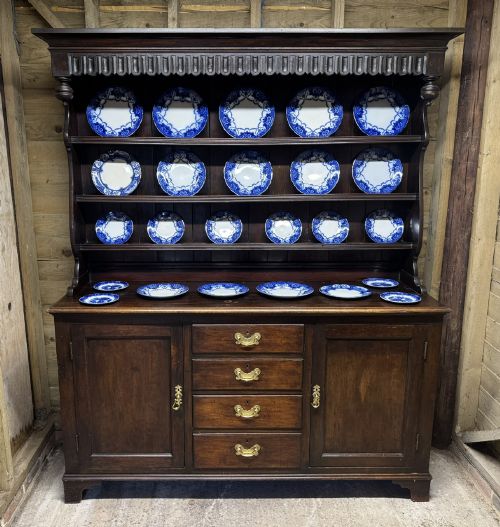
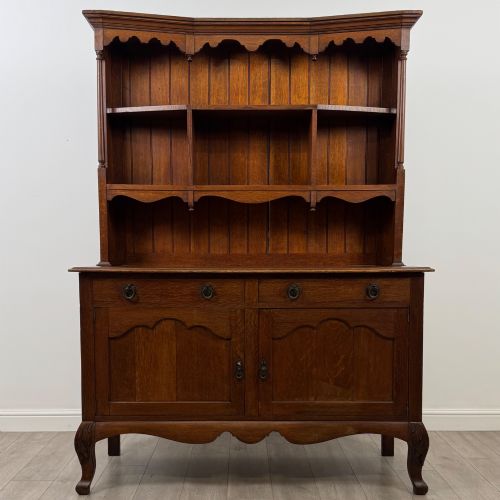

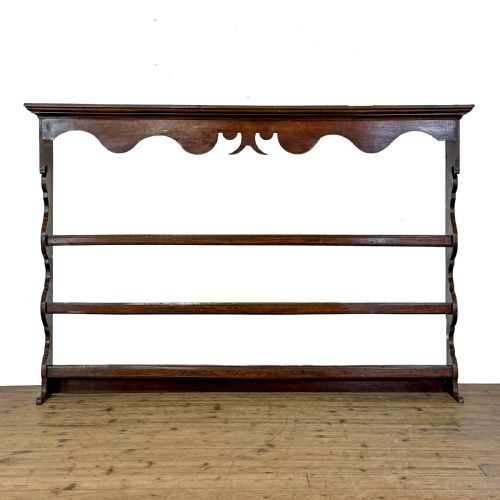


Vintage Open Plate Rack
These vintage open plate rack pieces bring honest utility and timeworn character to any room, offering classic display space for pottery and china.
Vintage Open Plate Rack
A vintage open plate rack provides practical wall-mounted or dresser-integrated shelving designed specifically to display plates upright in domestic spaces. These pieces emerge in various traditional forms, ranging from simple hanging wall shelves to substantial Welsh dressers featuring open tiers above pot boards or cupboards.
The versions most commonly met on this page span the eighteenth, nineteenth, and early twentieth centuries, constructed predominantly in regional British hardwoods and softwoods. Buyers encounter everything from compact Arts and Crafts oak wall shelves to large Georgian and Victorian country dressers designed for everyday kitchen use.
How they were made
Construction relies heavily on traditional timber framing, utilising sturdy oak, pine, mahogany, and occasional cherry wood joined with pegged mortise and tenon joints. Backboards often consist of vertically mounted planks, while plate grooves are rebated directly into the shelf timber to secure crockery safely.
Surfaces show varying finishes, from stripped natural grain and waxed flame mahogany to historic painted wood coatings. Brass or iron hardware supports hanging mechanisms and cupboard doors where the rack forms part of a larger dresser base.
Vintage Open Plate Rack Retail Price Guide 2026
Typical asking prices for vintage open plate rack among the pieces listed under this phrase on Sellingantiques today, from the lower quarter to the upper quarter. They describe what is for sale here now, not the wider market.
Listings span centuries of cabinetmaking, featuring materials from native oak and pine to exotic mahogany and painted finishes.
What varies in quality
Quality separates through timber selection and the integrity of the original construction, where dense quarter-sawn oak or finely figured flame mahogany elevate a piece far above utilitarian softwood alternatives. Superior examples maintain crisp architectural mouldings, well-proportioned plate grooves, and undisturbed structural joinery.
Proportion and regional vernacular detailing heavily influence desirability, with West Country and Welsh workshops exhibiting distinct local character in their bracket feet and frieze designs. Original untouched surfaces with honest patination consistently outrank heavily restored or excessively sanded items.
The Vintage Open Plate Rack Glossary
- Plate rack
- A set of open shelves featuring grooved timber ledges designed to hold ceramic plates upright for display and drying.
- Pot board
- A low open lower shelf on a dresser base traditionally utilised for storing heavy pots and pans.
- Welsh dresser
- A traditional kitchen furniture form combining a lower base of cupboards or drawers with an upper open rack for plates.
- Flame mahogany
- A highly decorative mahogany veneer exhibiting a distinct flame-like grain pattern used on finer Georgian and Edwardian pieces.
- Vernacular furniture
- Domestic pieces built by regional tradesmen using local timber traditions rather than following strict metropolitan design patterns.
Vintage Open Plate Rack: Frequently Asked Questions
How do I secure a heavy wooden plate rack to the wall?
Heavy wooden plate racks require secure fixing directly into wall studs or masonry using appropriate heavy-duty screws and wall plugs to bear the combined weight of the timber and heavy ceramics safely.
Professional installation is strongly recommended for larger oak or mahogany hanging shelves to ensure the structure remains stable under daily domestic use.
How should I clean and maintain antique pine or oak?
Maintenance requires only gentle dusting with a dry, soft cloth and occasional application of traditional beeswax to nourish the dry historical timber.
Avoid modern liquid polishes containing silicones, which can permanently alter the surface sheen and penetrate the open grain of antique wood.
How do I tell an 18th-century rack from a later reproduction?
Eighteenth-century examples display hand-cut joinery, pegged framing, and timber shrinkage consistent with age, alongside authentic tool marks on the reverse boards.
Later copies often reveal uniform machine sawing, modern sandpaper smoothing, and standardised hardware that lacks the individual character of period workshop construction.