

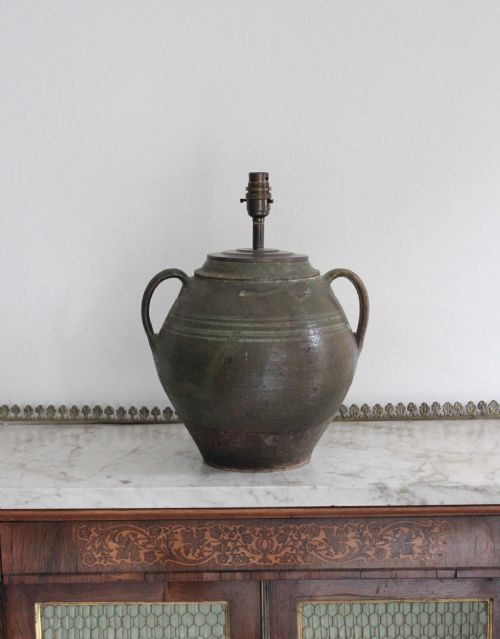
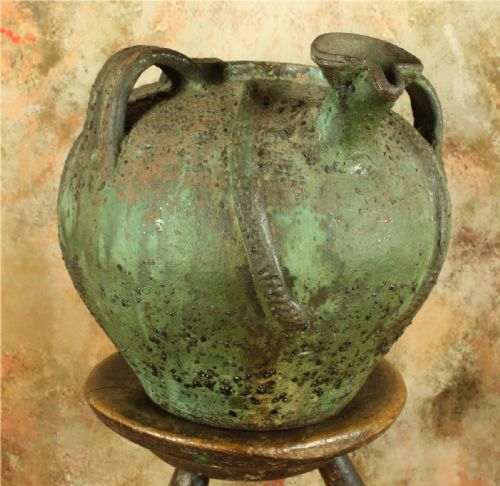


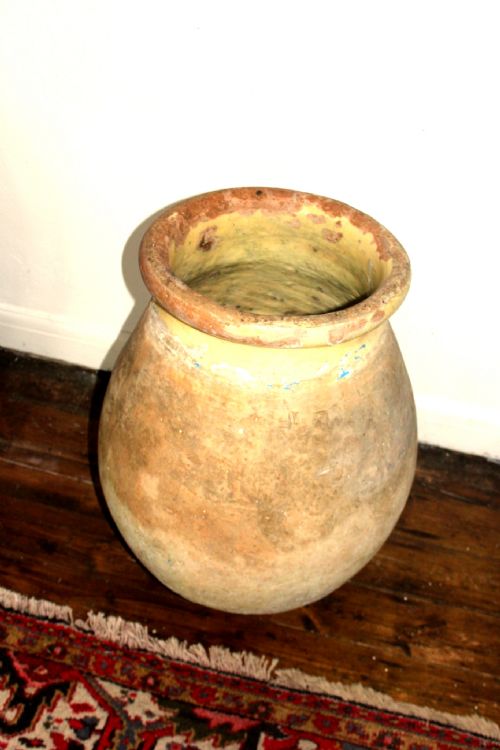


Vintage Olive Jar Vessel
These vintage olive jar vessel examples bring rustic Mediterranean weight and aged terracotta warmth straight into a modern interior.
Vintage Olive Jar Vessel
When you search for a vintage olive jar vessel, you encounter utilitarian earthenware and terracotta containers created to hold oil, water, or preserves across European and Mediterranean landscapes. The selections on this page span several centuries, reaching back through the nineteenth century and into earlier periods.
Most pieces you meet here present the heavy forms of French country and Mediterranean folk art, often carrying three handles or simple cylindrical profiles. They appear alongside related utilitarian vessels like confit jars, amphorae, and pickling vessels.
Origins stretch across French, Portuguese, Turkish, and wider Mediterranean traditions, reflecting local agricultural storage needs. These containers served functional roles in rural life before finding new purpose as decorative garden and interior focal points.
How they were made
Potters shaped these vessels from local clay and terracotta on the wheel or by hand, building thick walls designed to protect precious liquids from temperature shifts. Many pieces retain surface treatments such as lime wash, green glaze, or simple paint applications applied over the earthenware body.
Vintage Olive Jar Vessel Retail Price Guide 2026
Typical asking prices for vintage olive jar vessel among the pieces listed under this phrase on Sellingantiques today, from the lower quarter to the upper quarter. They describe what is for sale here now, not the wider market.
Object forms documented here include three-handle jugs, confit jars, amphorae, and blown glass pickling vessels.
What varies in quality
Quality in these vessels rests in the balance of proportion, the depth of the aged patina, and the character of the surface wear accumulated over centuries. Examples with intact historical glazes, lime washes, or original iron stands hold a distinct visual presence compared to plain surfaces.
The integrity of the heavy earthenware body matters greatly, as does the authenticity of the surface weathering. Subtle variations in throwing marks and firing irregularities contribute to the individuality of each piece.
The Vintage Olive Jar Vessel Glossary
- Terracotta
- A porous, unglazed or glazed fired clay of a brownish-red colour. It forms the primary material for the majority of Mediterranean storage vessels.
- Confit jar
- A traditional French earthenware pot featuring handles, historically utilised for storing and preserving meats. They often display distinctive dipped glazes near the rim.
- Amphora
- A tall ancient container type with two handles and a narrow neck, utilised for transporting and storing oil or wine. Surviving examples display classical utilitarian proportions.
- Carboy
- A large glass bottle enclosed in a protective basket or standing alone, used for holding liquids. They offer a transparent counterpart to heavy earthenware jars.
- Lime wash
- A simple coating made from slaked lime that was traditionally applied to exterior walls and utilitarian pots. It ages to produce a chalky, weathered surface patina.
Vintage Olive Jar Vessel: Frequently Asked Questions
Can these vessels stay outside?
Terracotta and earthenware pots tolerate garden placement well, provided they are managed correctly through freezing winter conditions. Porous clay absorbs moisture that can expand when temperatures drop below freezing.
Protecting unglazed jars from standing water and severe frost preserves the structural integrity of the clay. Many pieces function equally well indoors as substantial architectural accents.
How do I date a terracotta jar?
Dating relies on observing forming techniques, tool marks, clay composition, and the natural evolution of surface wear. Earlier pieces often display hand-thrown irregularities and traditional regional forms.
Surface treatments like historical lime wash, early glazes, and accumulated patinas offer further clues to a jar's age. Comparing specific handle placements and rim profiles against documented regional types helps narrow the period.
What is a Biot jar?
A Biot jar is a specific style of heavy terracotta storage vessel originating from the French village of Biot. These pots are traditionally recognised for their generous proportions and utilitarian strength.
Makers often marked or reinforced these containers for heavy agricultural use in Provençal olive oil production. Their distinct presence makes them sought-after examples of French country craftsmanship.