

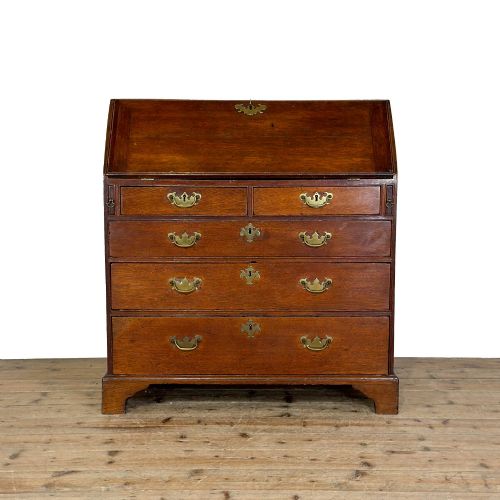
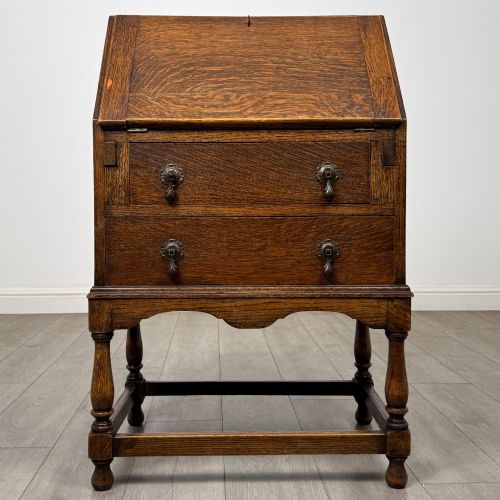
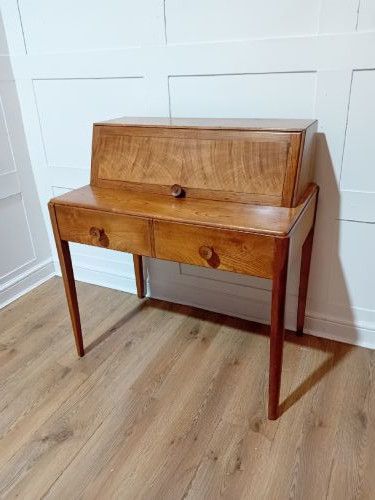
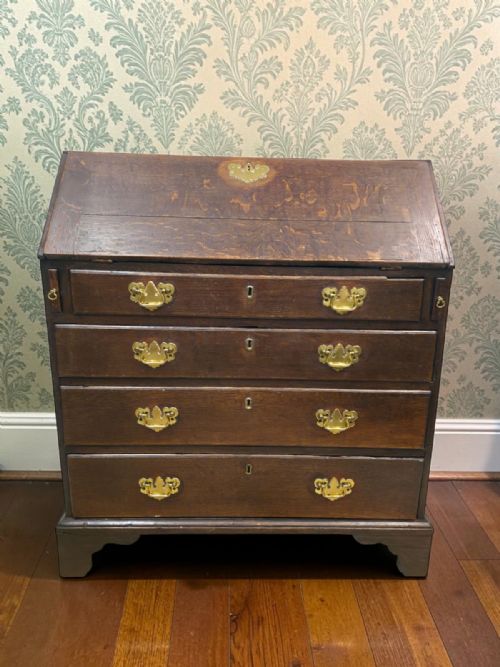

Vintage Oak Writing Cabinet
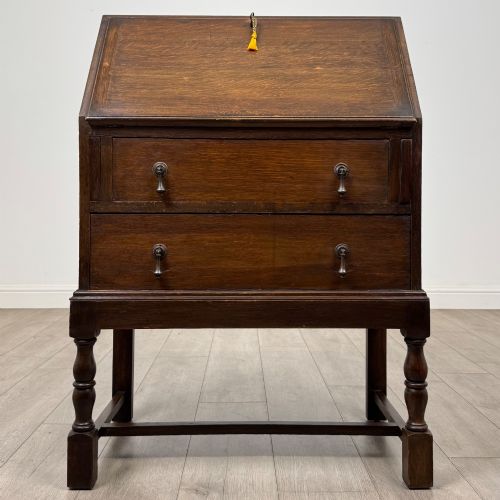
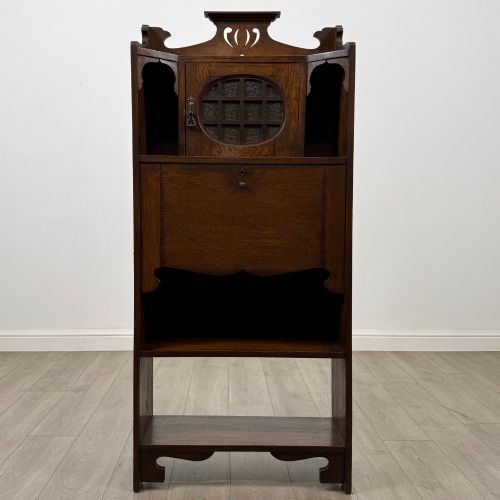
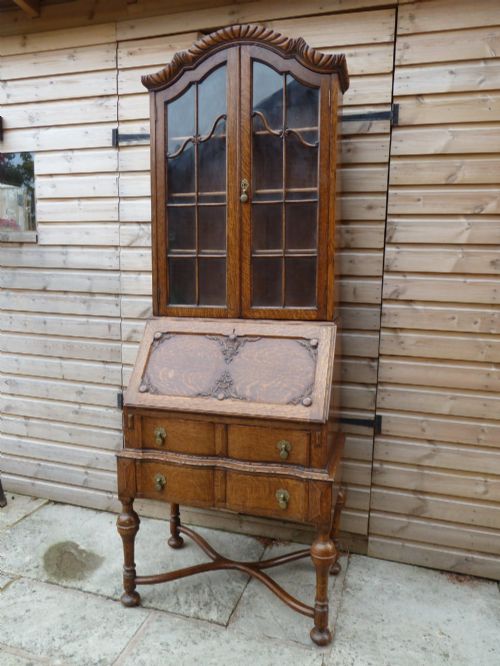
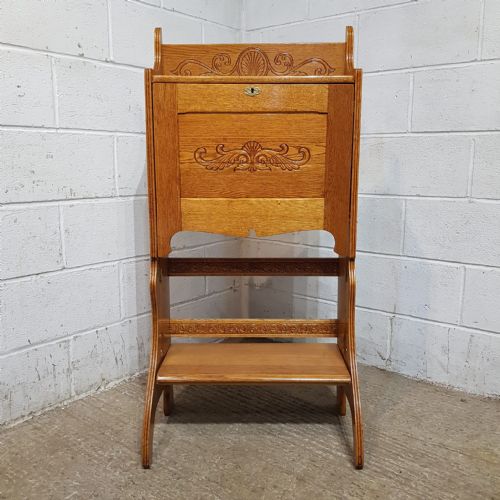
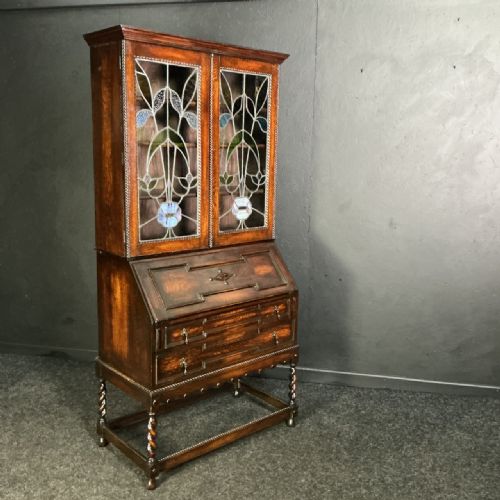
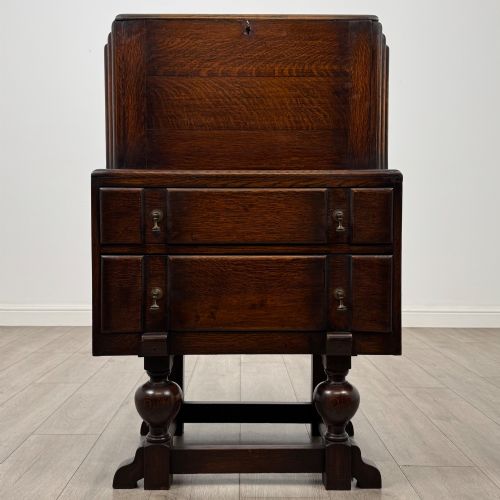
A vintage oak writing cabinet offers a practical fall-front desk space combined with fitted pigeonholes, drawers and upper bookcase sections.
Vintage Oak Writing Cabinet
A vintage oak writing cabinet combines a compact writing surface with enclosed storage, taking forms such as standard bureaux, bureau bookcases and smaller stationery boxes. Buyers searching for a vintage oak writing cabinet encounter pieces spanning the Georgian, Victorian, Edwardian and 1930s periods.
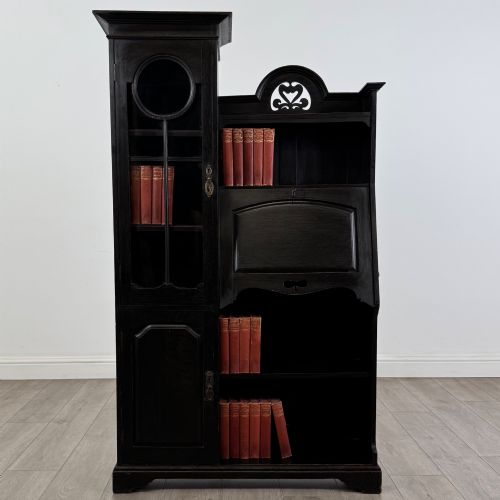
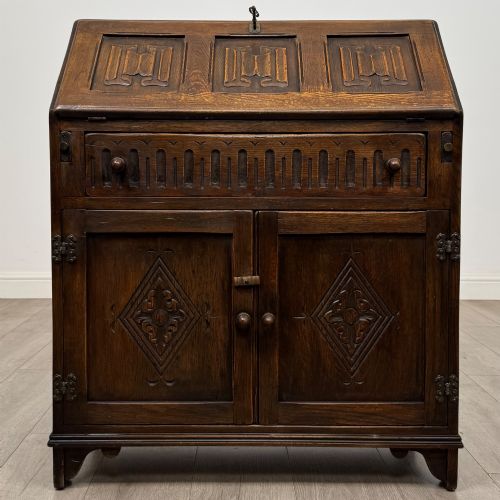
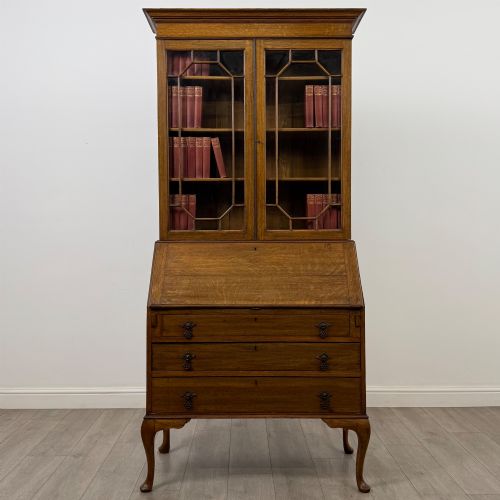
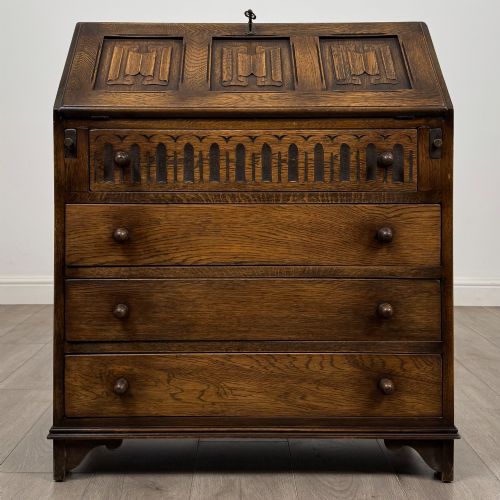
Edwardian examples and 1920s designs appear most frequently on this page, often utilising golden oak or incorporating linenfold carving. These domestic pieces range from narrow writing desks to larger bureau bookcases fitted with glazed upper doors.
Regional workshops and specific revival styles such as Jacobean, Tudor and Arts & Crafts shape the variety seen across these listings. Smaller desk tidies and stationery boxes also emerge under this heading, providing compact alternatives to full-sized furniture.
Materials and construction methods
Makers built these cabinets primarily in solid oak and oak veneer, sometimes applying ebonised finishes or selecting golden oak boards. Structural integrity relied on traditional joinery techniques to support the folding fall-front writing slopes.
Hardware details typically include brass handles, hinges and escutcheons, occasionally accompanied by glass panels in upper bookcase sections and leather writing inserts. Internal fittings incorporate small drawers, pigeonholes and lead or iron fixings where appropriate.
Forms include bureau bookcases, standard bureaux, narrow writing desks and compact stationery boxes.
Markers of quality and craftsmanship
Quality reveals itself in the selection of timber figures, the crispness of carved details like linenfold panels, and the weight of the brass hardware fitted to the drawers and fall-fronts. Superior pieces display thoughtful proportions and clean internal pigeonhole arrangements.
The integration of upper bookcase sections or display cabinets demonstrates the maker's joinery skill, particularly in the alignment of glazed doors and fitted shelving. Signed or labelled examples from notable workshops carry distinct construction traits that separate them from standard commercial production.
Arthur Basil Reynolds·Stanley Webb Davies·Bryn Mawr·Robert Mouseman Thompson·Harris Lebus·Liberty and Co
The Vintage Oak Writing Cabinet Glossary
- Bureau
- A writing desk featuring a sloping hinged lid that drops down to form a writing surface. It encloses small drawers and pigeonholes inside.
- Bureau bookcase
- A combination piece comprising a lower writing bureau topped with a glazed or panelled bookcase cabinet. Upper doors often secure with original locks.
- Fall-front
- A hinged panel that pulls down or drops forward to provide a horizontal writing surface. It conceals the internal stationery compartments when closed.
- Linenfold
- A style of wood carving representing folded pleated linen. It appears frequently on panels of Edwardian and revival furniture.
- Stationery box
- A tabletop desk tidy designed to hold letters and writing supplies. These compact oak boxes often feature sloped lids and internal dividers.
Vintage Oak Writing Cabinet: Frequently Asked Questions
What is a vintage oak writing cabinet?
A vintage oak writing cabinet is a compact desk featuring a hinged fall-front writing surface that conceals internal drawers and pigeonholes. Many examples include upper shelving or bookcase compartments enclosed by glass or wooden doors.
These pieces range from tall bureau bookcases dating to the Georgian period down to smaller Edwardian desks and tabletop stationery boxes. Oak serves as the primary material across these variations, often complemented by brass handles and leather inserts.
How do I date an oak writing cabinet?
Dating relies on examining the construction style, hardware, and decorative motifs present on the cabinet. Georgian pieces display simpler, heavier carcases and bracket feet, whereas Edwardian and 1920s examples frequently incorporate linenfold carving or golden oak finishes.
Makers' marks, paper labels, and stamped signatures also help establish an exact period of origin. Stylistic revivals, such as Jacobean or Arts and Crafts influences, provide further clues regarding the decade of manufacture.
How were these cabinets used originally?
Owners used these cabinets for correspondence, managing household accounts, and storing writing paper within dedicated pigeonholes. The drop-down fall-front provided an immediate desk surface that could be closed to conceal clutter when not in use.
Larger bureau bookcases served a dual purpose as both a working desk and a library for housing books. Smaller stationery boxes sat atop tables to keep writing implements organised in domestic settings.
How do I care for vintage oak furniture?
Maintenance involves keeping oak furniture away from direct heat sources and dramatic humidity changes to prevent the timber from splitting. Regular dusting with a soft, dry cloth preserves the finish without building up unwanted residues.
Occasional applications of appropriate wax nourish the oak grain and protect the surface of the wood. Leather writing inserts benefit from gentle cleaning to maintain their suppleness over time.