


Vintage Oak Tray Table
A vintage oak tray table offers practical surface space with removable trays, spanning periods from the nineteenth century through the 1930s.
Vintage Oak Tray Table
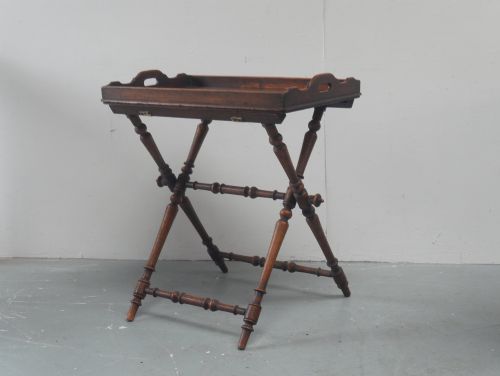
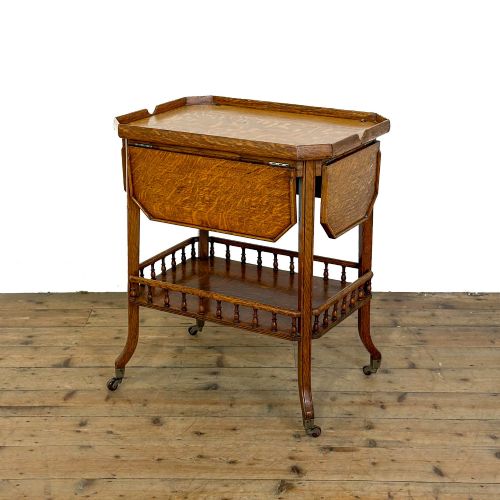
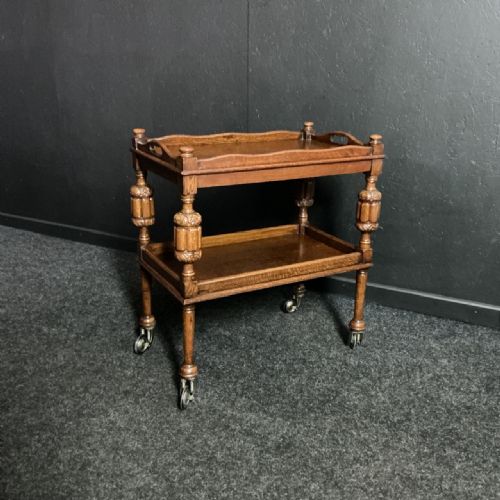
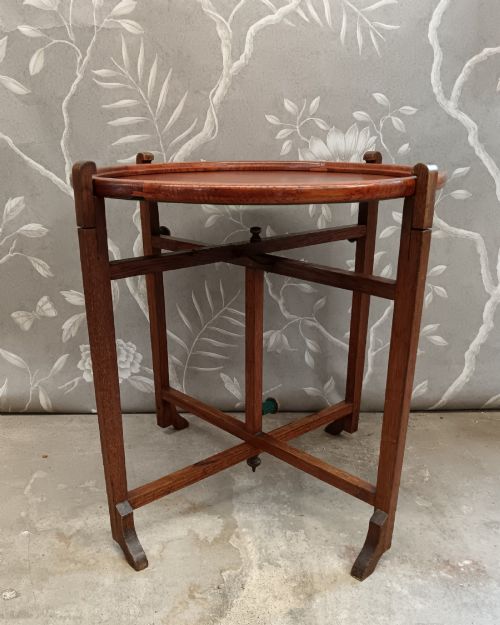
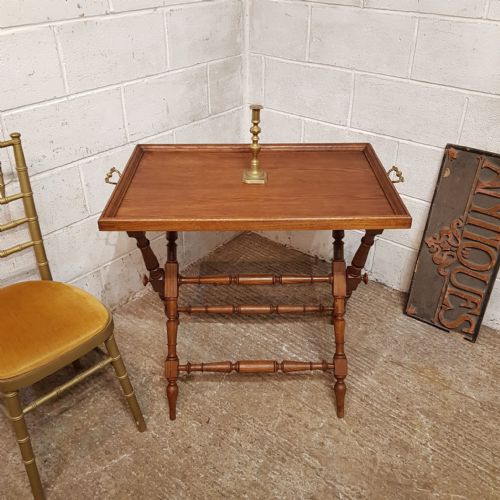
A vintage oak tray table combines a sturdy folding or stationary stand with a detachable serving tray, designed for utility and mobility in period interiors. You encounter various forms here, including traditional butlers trays, tea trolleys, and two-tier occasional tables from Victorian, Edwardian, and later twentieth-century eras.
The practical design allowed Victorian and Edwardian households to transport food and drink easily between rooms before resting the tray securely upon its designated support. Many examples feature folding mechanisms that enable compact storage when not in active use around the home.
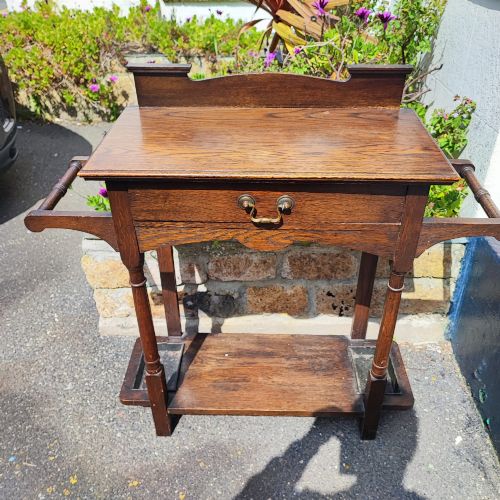
Beyond standard serving pieces, the selection includes related variants such as cartographer trays, reversible coaching tables, and occasional folding coffee tables. These diverse formats share a robust oak construction suited to daily service.
How they were made
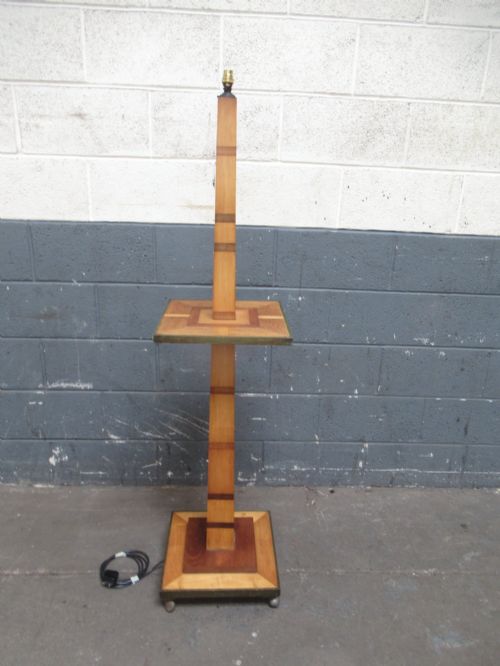
Cabinet makers utilised solid oak and oak veneers, sometimes incorporating contrasting timbers like satinwood and walnut for decorative banding or inlay work. Metal and brass elements frequently appear on hinges, carrying handles, and castor wheels.
Structural joints rely on traditional woodworking techniques to ensure stability under heavy service loads, particularly on folding stands and wheeled tea trolleys. Surfaces were finished to highlight the natural grain of the wood while providing resistance to moisture and daily wear.
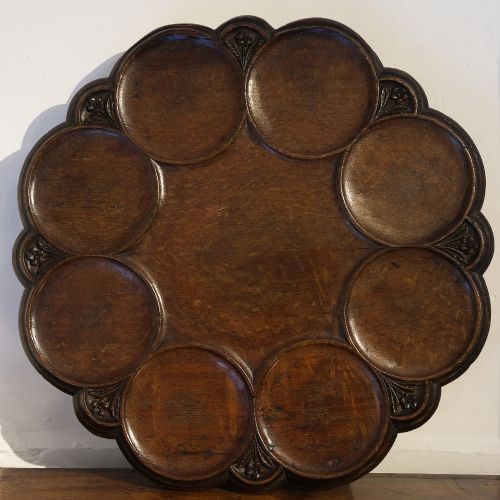
One extraordinary nineteenth-century tray travelled all the way from Bäckaskog Castle before finding its way to the modern market.
What varies in quality
The refinement of the timber selection and the precision of the joinery distinguish standard utilitarian pieces from finer domestic furnishings. Superior examples display carefully chosen oak grain, tight structural joints, and well-fitted removable trays that sit flush upon their stands.
The Vintage Oak Tray Table Glossary
- Butlers tray
- A portable wooden tray with raised sides, traditionally used by domestic staff to serve food and drinks, often paired with a folding X-frame stand.
- Tea trolley
- A mobile serving table featuring multiple tiers and wheels designed for afternoon tea service in Edwardian and later homes.
- Reversible top
- A dual-purpose tabletop that flips or inverts to reveal a different surface, such as a baize-lined card table or an alternative serving tray.
- Campaign furniture
- Portable furnishings designed to dismantle or fold easily for military travel or domestic convenience during the nineteenth century.
- Castor
- A small wheel attached to the legs of trolleys and heavy furniture to facilitate smooth movement across floors.
Vintage Oak Tray Table: Frequently Asked Questions
What is a butlers tray table?
A butlers tray table consists of a removable wooden tray resting upon a folding or fixed wooden stand. The raised edges of the tray prevent items from sliding off during transport.
These pieces served a practical function in nineteenth and early twentieth-century households for moving meals and refreshments between rooms.
How do I date an oak tray table?
Dating relies on examining the construction methods, hardware materials, and stylistic details present in the woodwork. Victorian and nineteenth-century examples often feature hand-cut joints and heavier proportions.
Later Edwardian and 1930s pieces frequently incorporate lighter timbers, wheeled castors, or simpler folding mechanisms suited to changing domestic habits.
Are the trays removable on these tables?
Most trays lift completely off their supporting stands to function independently as serving platters. This lift-off design allowed servants to carry refreshments to guests before mounting the tray back onto the frame.
Some variations use fixed tiers or hinged mechanisms, so checking the specific mechanical arrangement is useful.
How can I use a tray table today?
These tables function well as portable coffee tables, side tables, or serving stations in modern living spaces. The folding stands allow for easy storage when floor space is needed.
They also provide display surfaces for decorative objects, books, and plants within traditional or contemporary interiors.