




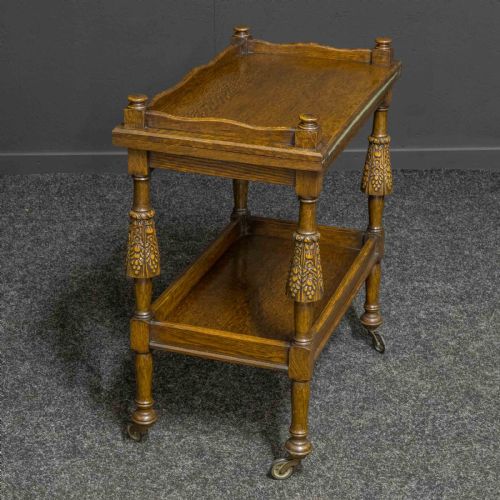
Vintage Oak Tea Trolley
A vintage oak tea trolley is a practical mobile server on wheels designed for serving afternoon tea or drinks, prized for its sturdy timber construction and period charm.
Vintage Oak Tea Trolley
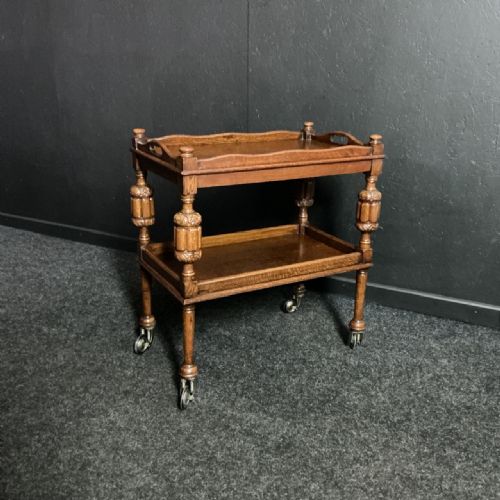
A vintage oak tea trolley is a mobile serving piece designed to transport refreshments from the kitchen to the parlour or dining room. The examples found here span several distinct eras, incorporating Edwardian, Victorian, nineteen-twenty, nineteen-thirty, and nineteen-sixty designs.
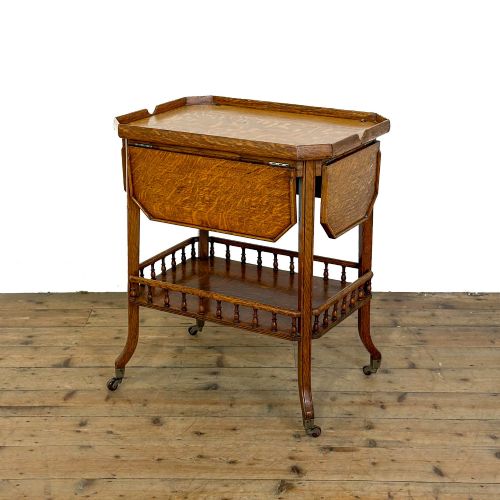
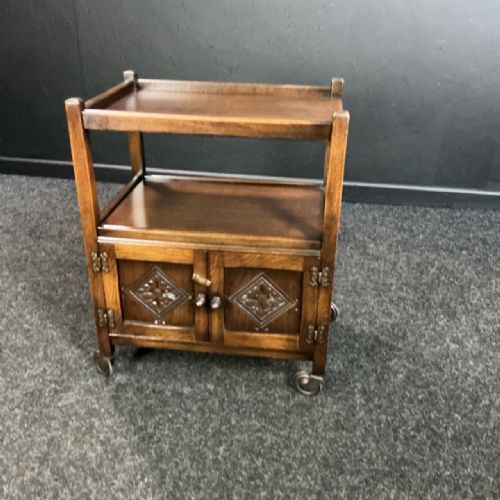
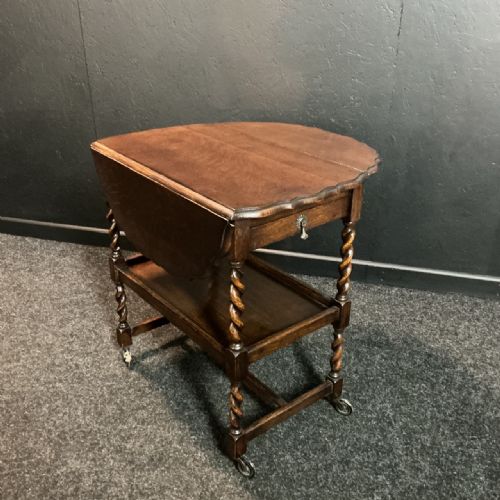
Buyers will most commonly encounter versatile two-tier versions, drop-leaf surfaces, and pieces featuring lift-off trays or folding tops. Certain variants double as card tables or serving buffets, reflecting the multifunctional nature of domestic furniture from these periods.
The forms range from traditional barley twist supports to simpler side tables and etagere styles. Their origins reside in British domestic utility, merging the requirements of hospitality with the solid presence of oak timber.
How they were made
Construction relies heavily on oak timber, shaped into turned legs, barley twist uprights, and supportive frame structures. Metal components, brass fittings, and iron elements appear on the wheels, castors, and hinges that grant these trolleys their mobility.
Carpenters utilised traditional joinery methods to secure multiple tiers, drop leaves, and removable trays. Selected pieces also incorporate plywood elements within their tiered shelving designs to reduce weight while maintaining structural integrity.
Vintage Oak Tea Trolley Retail Price Guide 2026
Typical asking prices for vintage oak tea trolley among the pieces listed under this phrase on Sellingantiques today, from the lower quarter to the upper quarter. They describe what is for sale here now, not the wider market.
Some models moonlight as card tables, proving that Victorian tea service occasionally required a serious hand of bridge.
What varies in quality
The distinction between standard examples and finer pieces rests upon the complexity of the timber turning and the ingenuity of the mechanism. Elaborate barley twist legs and smoothly operating folding tops or removable tray fittings demonstrate superior craftsmanship.
The integration of hardware, such as solid brass castors and well-fitted drop leaves, separates basic utility items from more refined serving furniture. The grain definition and depth of the oak finish further distinguish individual pieces.
The Vintage Oak Tea Trolley Glossary
- Barley twist
- A spiral turning carved into furniture legs and uprights. This decorative technique adds vertical movement and visual interest to the wooden frame.
- Drop-leaf
- A hinged section of a table top that folds down when not in use. It allows the trolley to occupy less space in smaller rooms.
- Etagere
- A set of open shelves for displaying or serving items. These tiers provide structured storage accessible from multiple angles.
- Castor
- A small wheel mounted on a swivel attached to the base of the legs. It enables the trolley to move smoothly across floor surfaces.
Vintage Oak Tea Trolley: Frequently Asked Questions
What is a vintage oak tea trolley used for?
These pieces were originally designed to transport teapots, cups, and plates from the kitchen to guests in the sitting room.
Today, many owners repurpose them as mobile drinks carts or side tables in living spaces and dining rooms.
How do I identify an Edwardian tea trolley?
Edwardian examples often feature lighter timber tones and refined proportions reflecting the early twentieth century.
Look for classic detailing such as spindle galleries, slender legs, and simple two-tier shelving.
Are all tea trolleys fitted with wheels?
Most pieces include wheels or castors to facilitate movement across carpets and wooden floors.
Some variations function primarily as static side tables or serving buffets while retaining the tiered trolley form.
How do I care for oak tea trolley surfaces?
Oak furniture benefits from regular dusting with a dry cloth and occasional treatment with suitable wood wax.
Protect the timber from excessive moisture by using coasters on the serving tiers.