

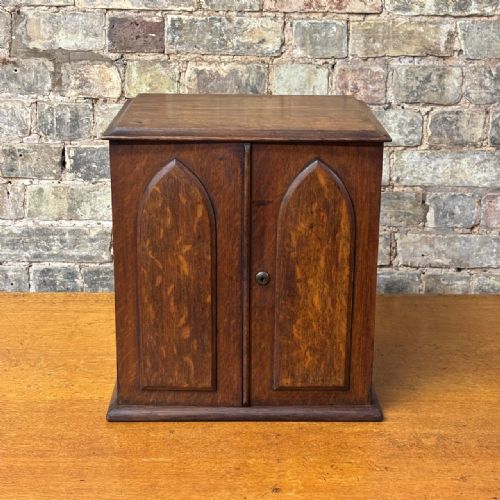


Vintage Oak Stationery Cabinet
A vintage oak stationery cabinet keeps desks orderly, offering compartmentalised storage built during the Victorian and Edwardian eras.
Vintage Oak Stationery Cabinet
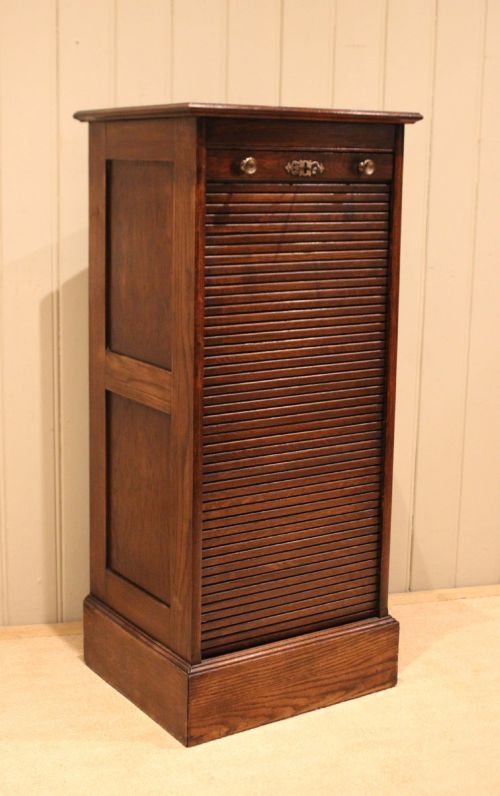
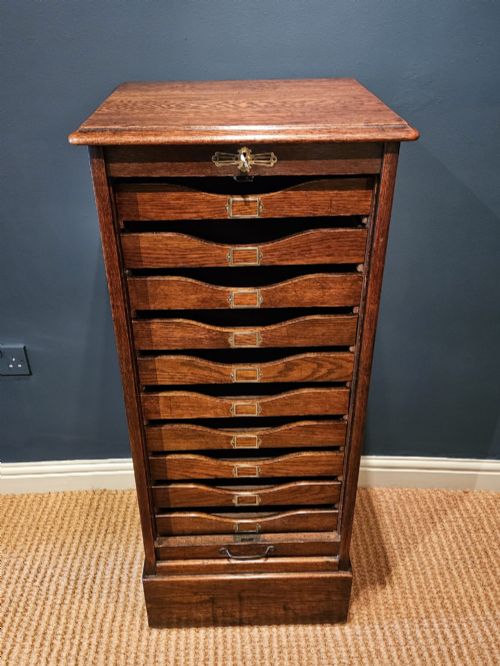
A vintage oak stationery cabinet provides desk storage designed to organise letters, paper and writing implements in domestic studies and offices. These pieces range from small table boxes to tambour-front filing units and country house postboxes originating across the nineteenth and twentieth centuries.
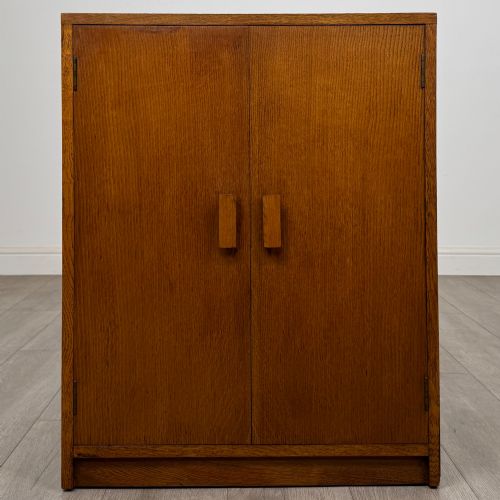
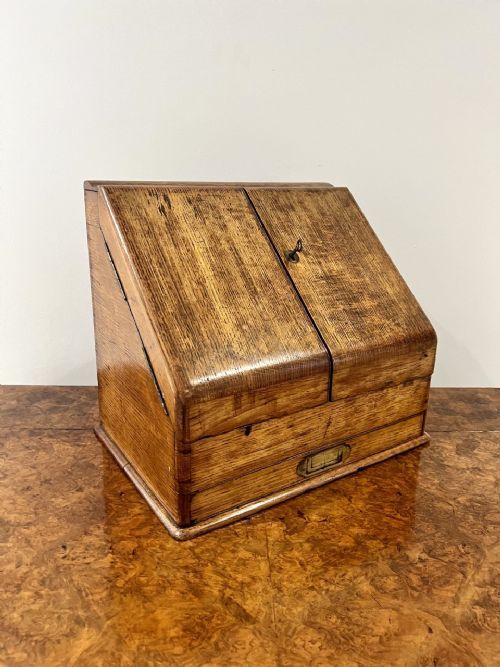
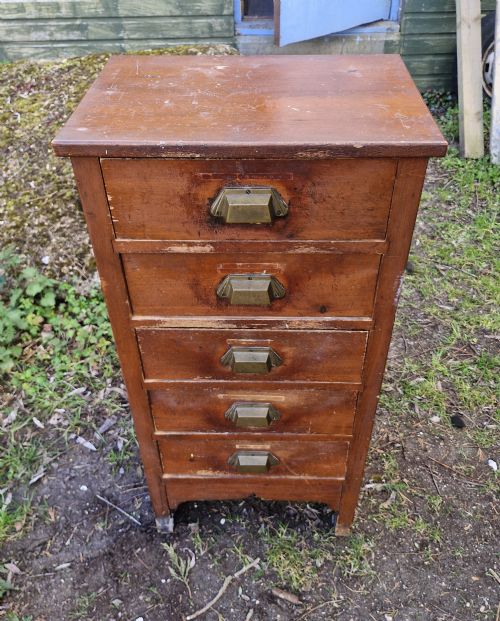
The versions most frequently met on this page date from the Edwardian period and the Victorian era, constructed in solid oak or golden oak. Common formats include fall-front boxes, desktop tidies, and multi-drawer office cabinets fitted with brass handles.
How They Were Made
Cabinetmakers utilised solid oak and oak veneer, complemented by brass for handles, hinges and lock escutcheons. Internal compartments often incorporate glass inkwells, canvas linings, and metal fixtures.
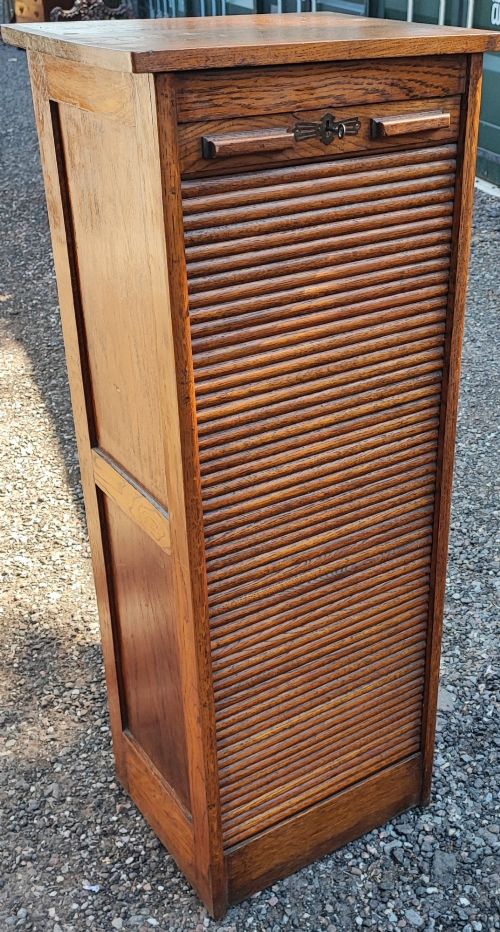
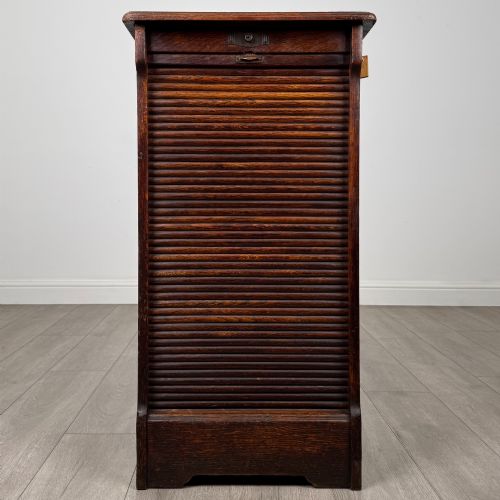
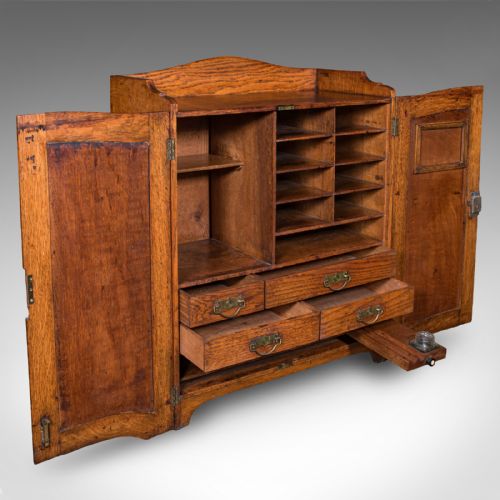
Construction methods include sliding tambour fronts, fall-front mechanisms, and panelled doors reflecting styles such as Gothic Revival, Arts and Crafts, and Jacobean Revival.
An estate gamekeeper used one sturdy Victorian oak clerk's cupboard before it retired to the desk.
What Varies in Quality
Quality shows in the complexity of the interior fittings and the cleverness of the mechanisms, such as smooth-running tambour shutters and well-configured letter slots. Simple stationery boxes contrast with elaborate fitted cupboards containing multiple drawers and pigeonholes.
The selection of timber grain and the execution of period details, like Gothic panel doors or Arts and Crafts carved motifs, separate standard utility pieces from finer country house examples.
The Vintage Oak Stationery Cabinet Glossary
- Tambour
- A flexible shutter door formed of narrow slats of wood glued to a canvas backing, allowing it to slide smoothly around a curved track. This mechanism is frequently found on office and filing cabinets from the early twentieth century.
- Stationery Box
- A desk accessory designed to hold writing paper, envelopes and sometimes ink bottles. They often feature sloping lids or fall-fronts that open to reveal fitted interior dividers.
- Fall Front
- A hinged panel that drops downward to open a cabinet or desk compartment, providing access to internal shelves or pigeonholes.
- Escutcheon
- A protective brass plate surrounding a keyhole. On these cabinets, they double as decorative hardware.
- Pigeonhole
- A small, open compartment within a desk or cabinet used for sorting letters and documents. They form the primary internal organisation of many stationery boxes.
Vintage Oak Stationery Cabinet: Frequently Asked Questions
How do I use a stationery box today?
These boxes store modern correspondence, fountain pens, notebooks, and small desk accessories on a working surface.
Their internal compartments keep clutter contained while adding period character to a modern study.
Are these cabinets made of solid wood?
Most examples utilise solid oak, though some items incorporate oak veneer over secondary timbers.
Brass hardware and glass components appear frequently alongside the primary wood structure.
What styles are common in these cabinets?
The selection includes Victorian and Edwardian designs, alongside Arts and Crafts, Gothic Revival, and Industrial Utility styles.
Details range from plain office filing units to decorative country house postboxes with panelled doors.