

Vintage Oak Stacking Bookcase
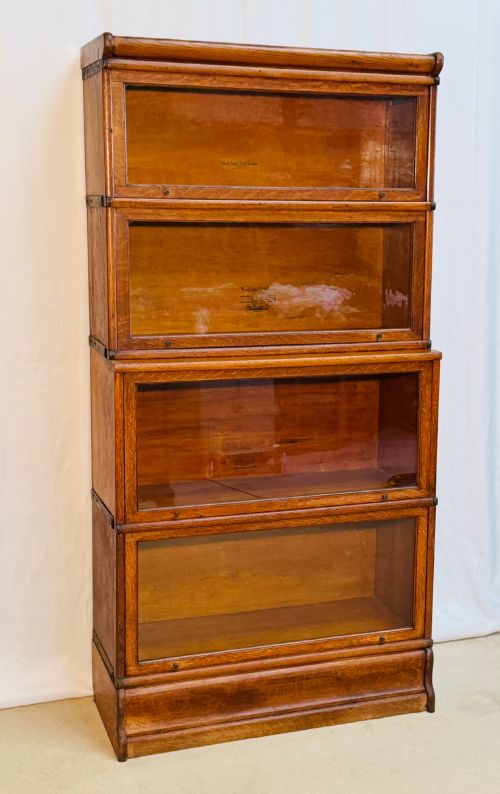
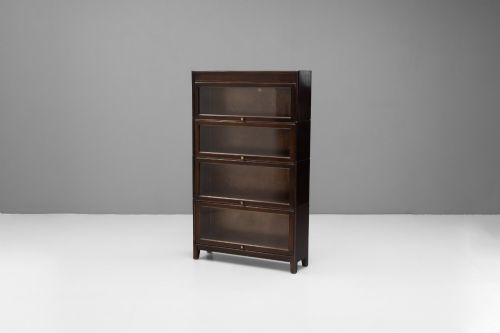
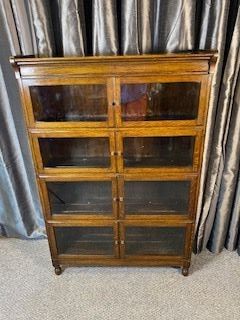
A vintage oak stacking bookcase brings modular practicality to any room, offering versatile shelving enclosed by clever glazed lifting doors.
Vintage Oak Stacking Bookcase
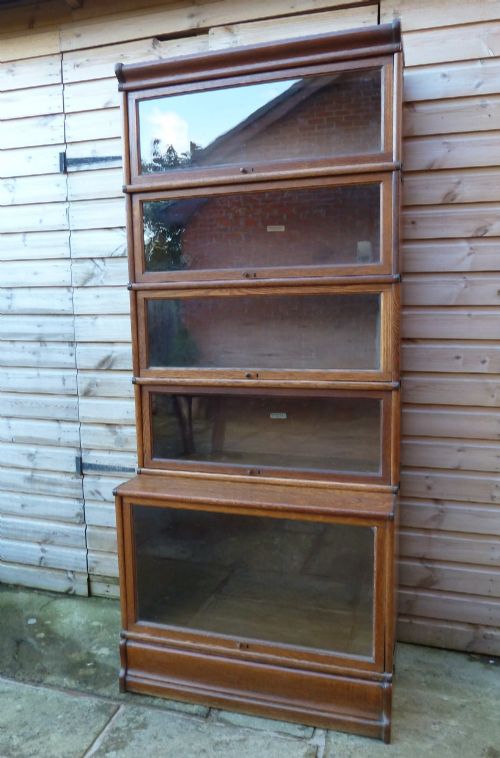
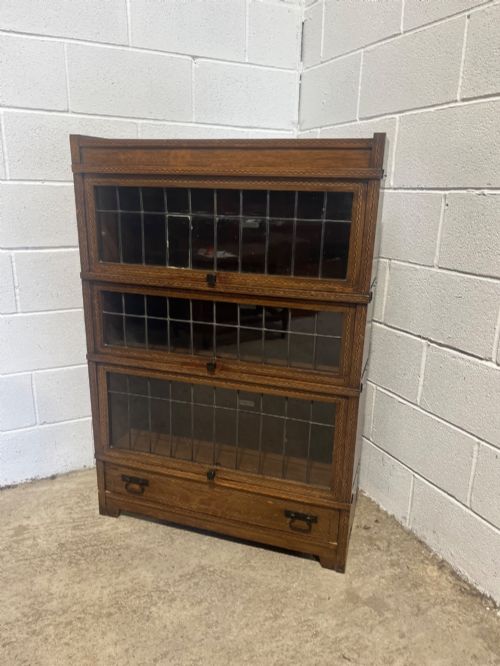
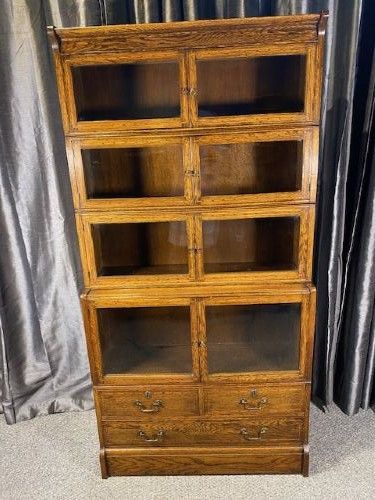
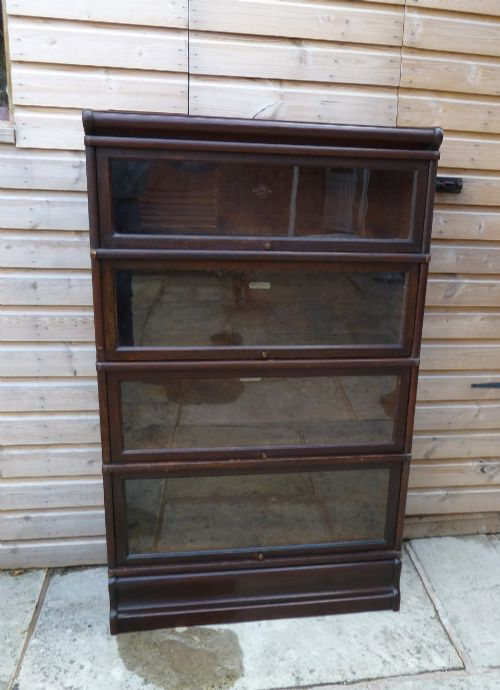
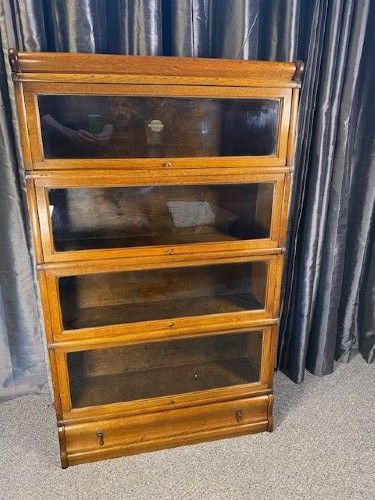
A vintage oak stacking bookcase is a modular piece of furniture built from separate modular sections that sit one upon another without fixed permanent joining. When you search for this phrase, you encounter sectional cabinets designed to protect library volumes behind individual glass doors.
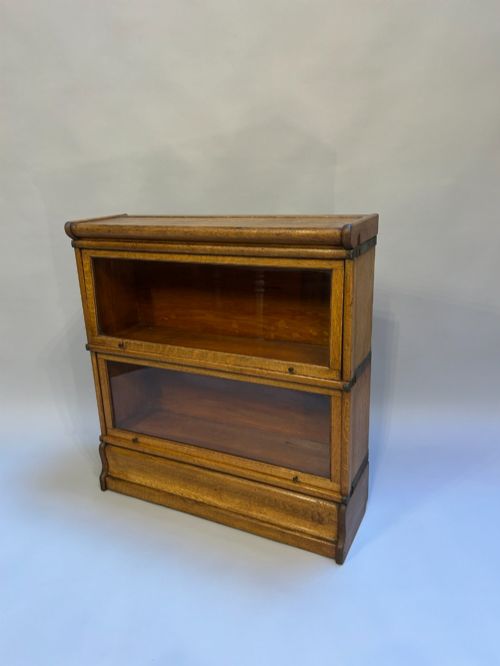
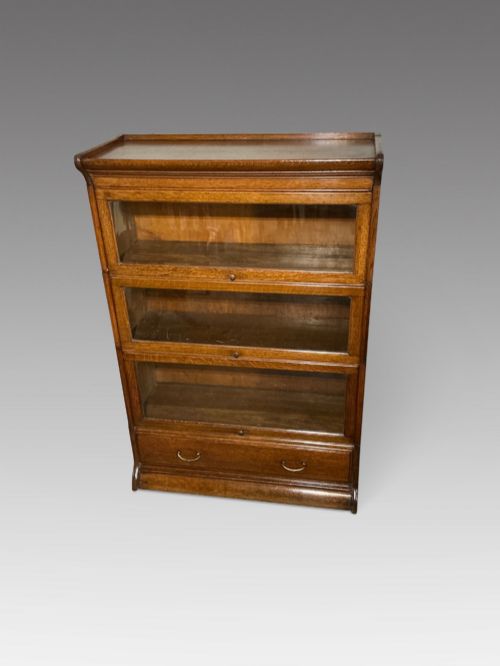
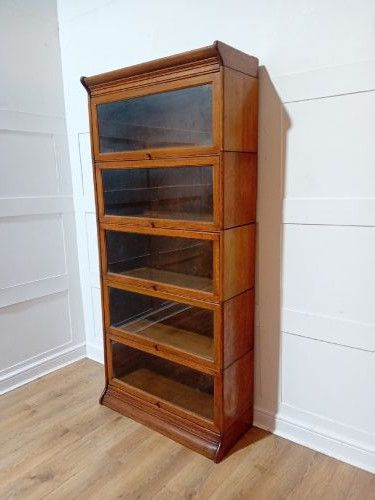
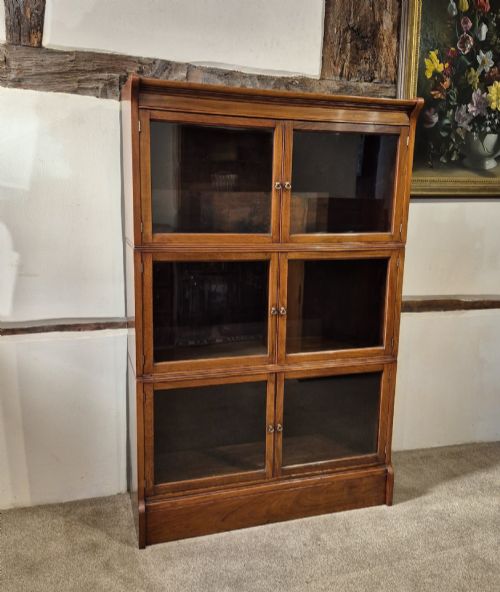
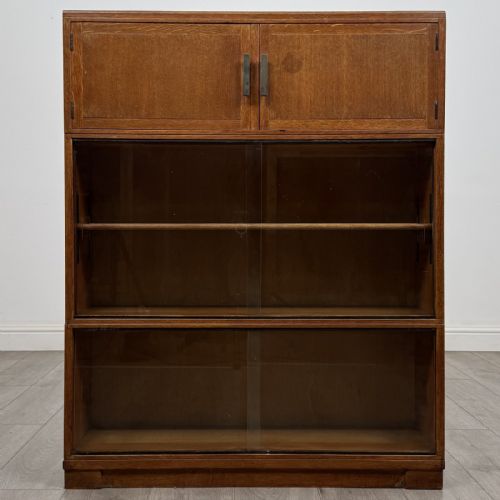
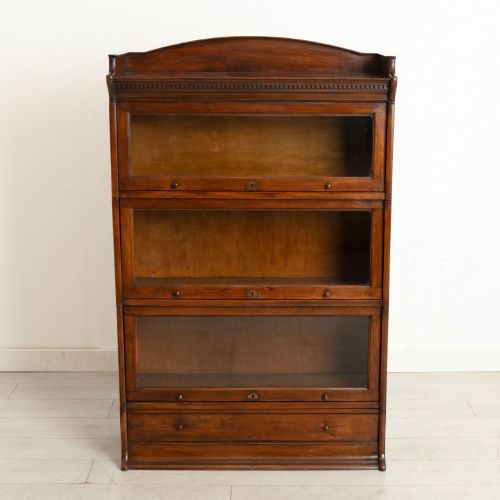
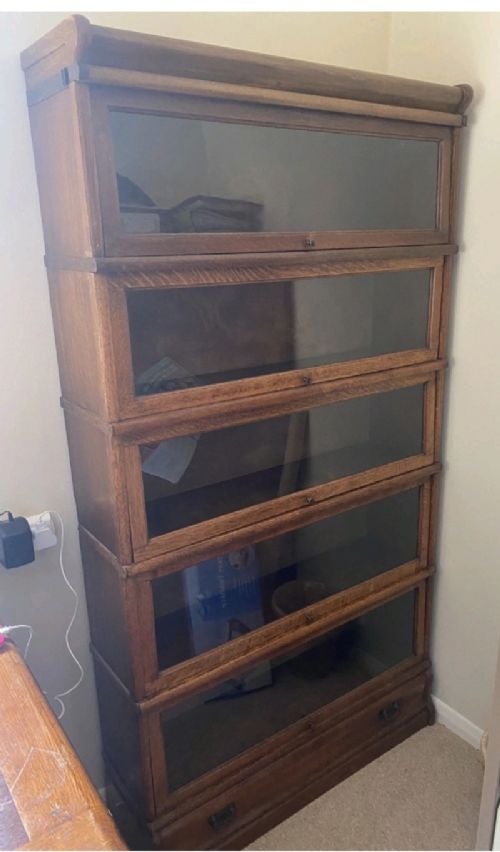
Most examples you meet on this page hail from the early twentieth century, spanning the Edwardian period through the 1920s and 1930s. These configurations range from compact three-tier units to tall six-piece arrangements, sometimes incorporating a drawer to the base.
Makers such as Globe Wernicke, Gunn, Minty, and Lebus dominate the offerings, translating office and study utility into domestic display. You will find golden oak finishes alongside limed oak variations reflecting Arts and Crafts, Edwardian, and Art Deco influences.
Materials and construction
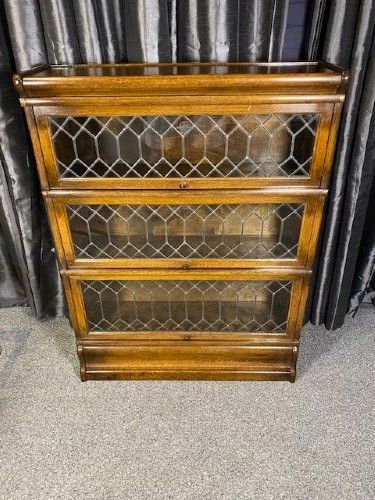
Construction relies heavily on solid oak and golden oak veneers, selected for sturdy framing and pleasing grain patterns. Individual sections house glazed panels fitted with glass and occasionally leaded detailing to keep dust from valuable books.
Functionality depends on clever internal or external metal and brass mechanisms that allow each tier's door to lift and slide smoothly back into the cabinet housing. Wood inlay occasionally adds decorative contrast to the upper cornices or drawer fronts of Edwardian iterations.
Vintage Oak Stacking Bookcase Retail Price Guide 2026
Typical asking prices for vintage oak stacking bookcase among the pieces listed under this phrase on Sellingantiques today, from the lower quarter to the upper quarter. They describe what is for sale here now, not the wider market.
Materials recorded across the inventory include oak, glass, brass, lead, metal, and wood inlay.
The spectrum of quality
Quality in these modular cabinets is dictated by the precision of the stacking mechanism and the integrity of the maker's hardware. Superior examples maintain exact alignment across four, five, or six tiers, ensuring that lifting doors glide without catching.
The choice of timber and the depth of the oak grain distinguish standard utilitarian office furniture from finer domestic pieces. Original finishes, intact glass, and branded maker stamps elevate an ensemble from a simple storage unit to a notable cabinet.
Gunn·Minty of Oxford·Globe Wernicke·Lebus·Warwick
The Vintage Oak Stacking Bookcase Glossary
- Barristers bookcase
- A sectional bookcase featuring glass lifting doors designed to protect law books in a busy chambers. These units pull apart into individual tiers for easy moving.
- Globe Wernicke
- The pioneering manufacturing system of modular stacking bookcases that used an interlocking mechanism. The name became synonymous with sectional office and library furniture.
- Sectional cabinet
- A piece built in independent horizontal tiers stacked together beneath a top cornice and above a base plinth. This design allows owners to expand their shelving vertically as libraries grow.
- Limed oak
- Timber treated with a specialised pigment finish that leaves a white or pale residue in the open grain. This technique gained popularity in later twentieth-century designs.
- Lead glazing
- Small panes of glass held together by lead cames to create decorative geometric patterns across cabinet doors. This method appears on select Arts and Crafts influenced pieces.
Vintage Oak Stacking Bookcase: Frequently Asked Questions
How do stacking bookcase sections stay together?
Each modular section rests securely on the tier below it using gravity and interlocking lips or pins built into the wood framing. The heavy top cornice and base plinth anchor the stack without requiring permanent screws or glue.
This clever engineering allows owners to separate the cabinet into individual boxes for transport and reassemble them effortlessly in a new room.
Can I separate the tiers to use them individually?
While the sections are physically independent boxes, each tier lacks a proper finished top or bottom surface when isolated. They are engineered to function exclusively as a cohesive vertical column rather than as standalone trays.
Attempting to display single tiers on their own often exposes unfinished edges or lacks the necessary base support and top crown to look complete.
How do the glass lifting doors operate?
The glass doors feature a metal scissor mechanism or pin-and-track system attached to the sides. Lifting the handle causes the door to slide smoothly upward and back into the horizontal recess above the books.
This clever action protects volumes from dust while allowing effortless access to shelves even when the surrounding floor space is limited.
How do I distinguish Edwardian pieces from later ones?
Edwardian examples typically exhibit deeper golden oak tones, heavier cornices, and occasionally subtle wood inlay or brass pulls. They reflect traditional Arts and Crafts sensibilities in their substantial timber thickness.
Later iterations stretching into the 1930s and mid-century embrace cleaner lines, lighter limed oak finishes, and more restrained hardware reflecting Art Deco shifts.