




Vintage Oak Settle Table
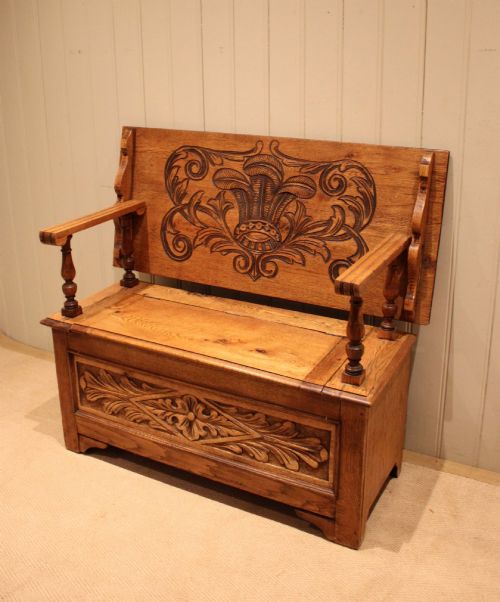
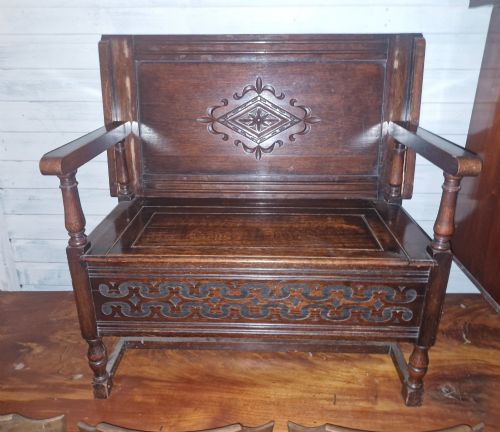
These vintage oak settle table pieces combine a bench and a table into one clever piece of furniture.
Vintage Oak Settle Table
A vintage oak settle table serves as both a bench and a table by utilising a fold-over top or a lift-up seat. These items appear across the nineteenth century, nineteen hundred, nineteen ten, nineteen twenty, and nineteen thirty periods in various forms.
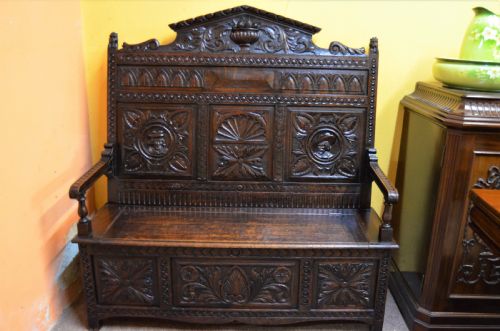
The selections on this page include benches, monks benches, hall benches, hall seats, and settle configurations. Buyers encounter solid oak construction frequently alongside fabric and metal elements.
Stylistic influences span Jacobean Revival, Art Nouveau, Art Deco, and Victorian Gothic Revival designs. Pieces range from small hall seats to large carved hall benches and armchairs.
How they were made
Craftsmen built these convertible items primarily from solid oak using traditional woodworking joints to handle the daily movement of the folding tops and lift-up seats. Carved decoration appears across many examples, particularly within Revival and Gothic styles.
Some variations incorporate metal fittings for hinges and mechanisms alongside fabric components. The timber receives finishes that range from golden tones to dark patinas depending on the period.
Some monks benches double as secret tables, proving that historical furniture makers loved a good magic trick just as much as we do.
What varies in quality
Quality rests upon the crispness of the carved details and the structural integrity of the pivoting mechanism used for the table top. Pieces displaying confident carving and sturdy solid oak construction stand apart from simpler iterations.
The balance of proportions when the top converts from a backrest into a table surface distinguishes better examples. Wear on the joints and hinges indicates how heavily the dual-purpose design was utilised over time.
The Vintage Oak Settle Table Glossary
- Monks Bench
- A dual-purpose piece featuring a high back that folds down over the arms to form a table top. This form provides seating and a surface in compact spaces.
- Settle
- A wooden bench with a high back and solid arms designed to keep out drafts. Many examples include a box compartment beneath the seat.
- Jacobean Revival
- A style popular in British furniture making that imitates seventeenth-century motifs with heavy carving and dark oak. This aesthetic recurs in pieces from the late nineteenth and early twentieth centuries.
- Art Nouveau
- A decorative style characterised by flowing organic lines and natural motifs. This approach softens the otherwise rigid geometric nature of standard oak furniture.
- Art Deco
- A design movement favouring sleek lines and modern geometric patterns. Examples from this era adapt traditional furniture forms to twentieth-century tastes.
Vintage Oak Settle Table: Frequently Asked Questions
How do you use a vintage oak settle table?
The top of the backrest pivots forward to rest upon the arms, transforming the bench into a table. Lifting the seat itself reveals a storage compartment underneath for household items.
This dual-purpose design made these items useful in hallways and smaller rooms where space was limited. Owners could sit by the door or create an instant surface for writing and dining.
What periods do these pieces come from?
The selection spans from the nineteenth century through the early decades of the twentieth century. Examples appear from the eighteen eighties, nineteen hundreds, nineteen tens, nineteen twenties, and nineteen thirties.
Victorian Gothic Revival styles tend to represent the earlier end of the timeline. Later pieces often incorporate Art Nouveau or Art Deco design elements.
Are these pieces made entirely of solid oak?
Most listings specify solid oak construction for the main body of the bench. Some examples incorporate fabric or metal components for upholstery and hardware.
Carpenters relied on sturdy oak timbers to support the movement of the folding top and lift-up seat. The timber finishes vary from bright golden tones to rich dark surfaces.
How do I identify different revival styles?
Jacobean Revival pieces feature deep geometric or floral carving and heavier proportions. Art Nouveau variants display flowing plant motifs while Art Deco versions use streamlined geometric shapes.
Examining the carving style and overall silhouette helps distinguish between nineteenth-century Gothic work and nineteen-twenties production.