


Vintage Oak Keepsake Box
A vintage oak keepsake box is a sturdy wooden container for letters, trinkets and mementos, prized for its honest grain and enduring build.
Vintage Oak Keepsake Box
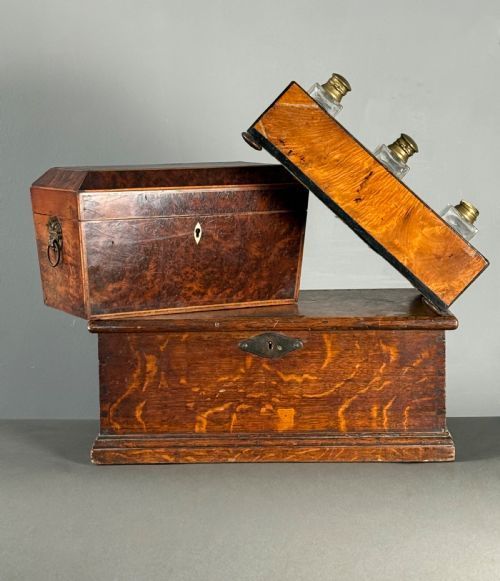
A vintage oak keepsake box brings together centuries of timber craftsmanship in compact forms designed to protect small treasures. When you search for a vintage oak keepsake box, you encounter pieces spanning from the seventeenth century through the Edwardian period and the early twentieth century. The selection includes decorative boxes, caskets, cigar boxes and desk boxes shaped by different regional traditions.
Most examples rely on solid timber or polished veneers, sometimes contrasted with pollard oak. These range from chip-carved seventeenth-century containers to inlaid Welsh chests and presentation pieces from the Victorian era. The common thread is a durable hardwood enclosure intended for daily use on a desk or dressing table.
How they were made
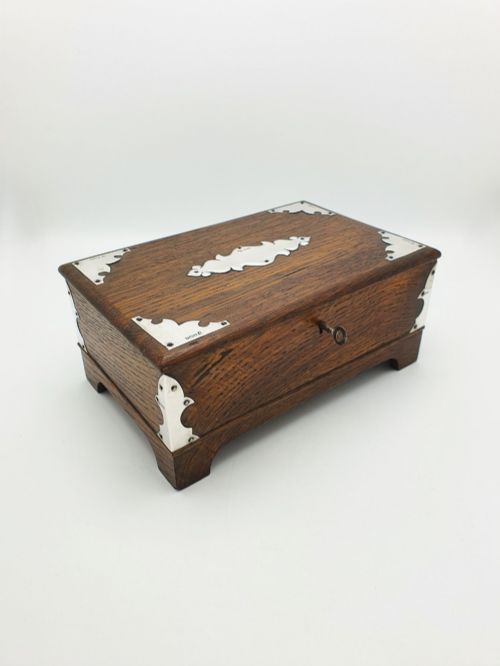
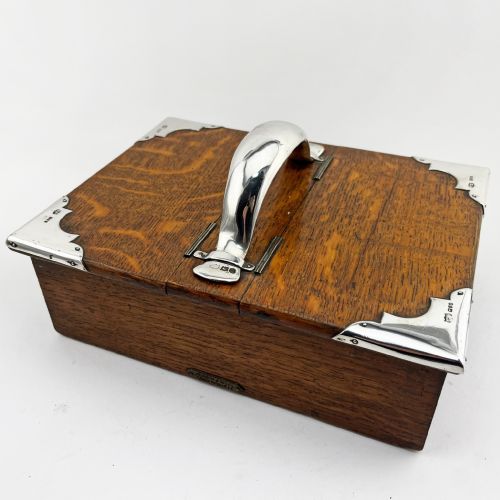
Cabinetmakers constructed these pieces using seasoned oak boards joined with traditional methods, often incorporating brass hinges, escutcheons and carrying handles. Metal mounts in sterling silver or polished brass frequently reinforce the corners and lids, adding structural strength and visual weight.
Surface decoration relies on the natural grain of the wood, supplemented by chip carving, brass binding or inlaid details in bone and mother of pearl. Some examples utilise contrasting timbers like pollard oak or walnut to highlight the lid panels and framing.
Several boxes double as cigar cabinets or secret book safes, hiding personal treasures behind faux leather bindings.
What varies in quality
The standard of a box rests upon the selection of the timber and the precision of the joinery. Quarter-sawn oak displays a tight, figured medullary ray pattern that signals superior log selection, whereas plain-sawn boards offer a simpler visual texture.
Fittings and hardware also distinguish the work. Hand-forged or cast brass hinges, flush-fitting locks with working keys, and solid sterling silver mounts indicate a higher grade of production than stamped mass-market alternatives.
Mappin & Webb
The Vintage Oak Keepsake Box Glossary
- Quarter-sawn
- Timber cut radially from the growth rings to produce a durable board with a distinctive flecked grain pattern. This method reduces warping and shrinkage over time.
- Escutcheon
- A protective plate surrounding a keyhole, usually made of brass or bone. It prevents the wood from splitting around the lock.
- Pollard oak
- Wood harvested from trees that have been pollarded, producing a highly figured and swirling burl grain pattern. It was often employed for decorative veneered panels.
- Chip carving
- A primitive relief-carving technique where small chips are removed from a single piece of wood using knives or chisels. It creates geometric patterns common on early European boxes.
Vintage Oak Keepsake Box: Frequently Asked Questions
What is a vintage oak keepsake box used for?
These boxes serve to store letters, photographs, jewellery and small personal items away from dust and light.
Placed on a desk or chest of drawers, they keep daily clutter contained while displaying the natural grain of the timber.
How do I date an old oak box?
Dating relies on construction methods, hardware styles and the timber preparation visible inside and underneath the piece.
Hand-cut dovetails, forged iron or brass hinges, and chip carving point towards earlier centuries, whereas machine-sawn elements suggest the Victorian or Edwardian eras.
Are these boxes made of solid oak?
Many examples utilise solid oak boards throughout the lid, base and sides, particularly those originating from seventeenth and eighteenth-century workshops.
Later Victorian and Edwardian pieces sometimes combine solid frames with oak veneers or secondary hardwoods like walnut and teak.
How should I care for an oak box?
Keep the wood away from direct heat sources and strong sunlight to prevent the panels from drying out or splitting.
An occasional application of a suitable wax polish maintains the lustre of the finish without building up heavy residues.