

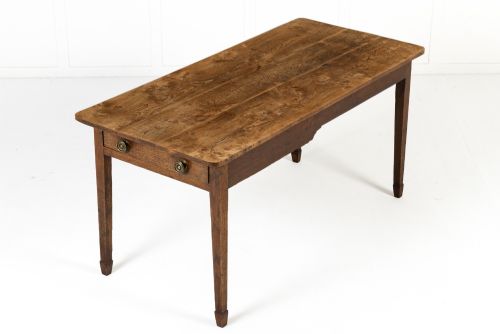
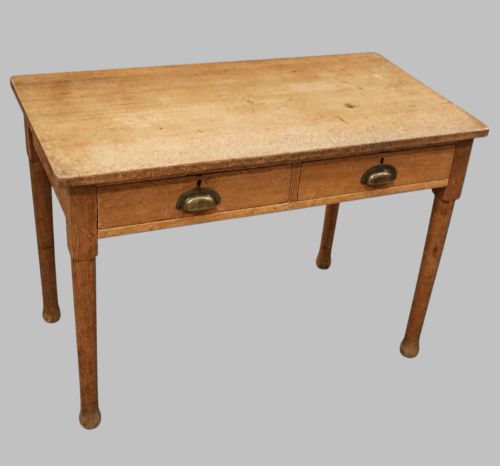
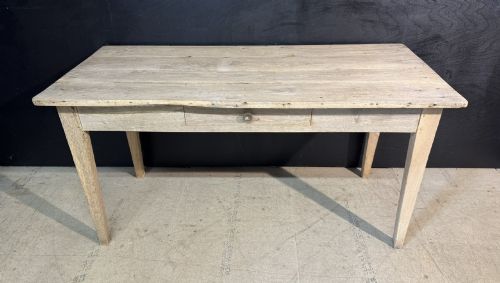
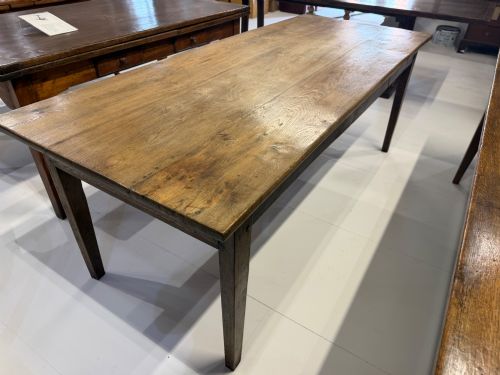
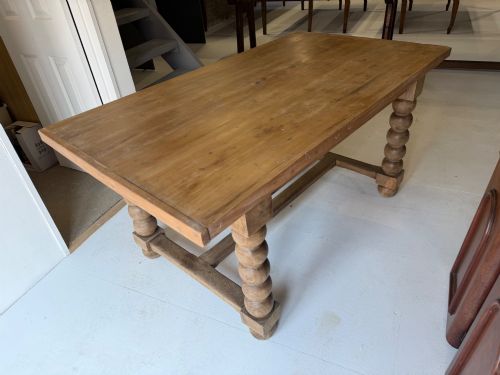
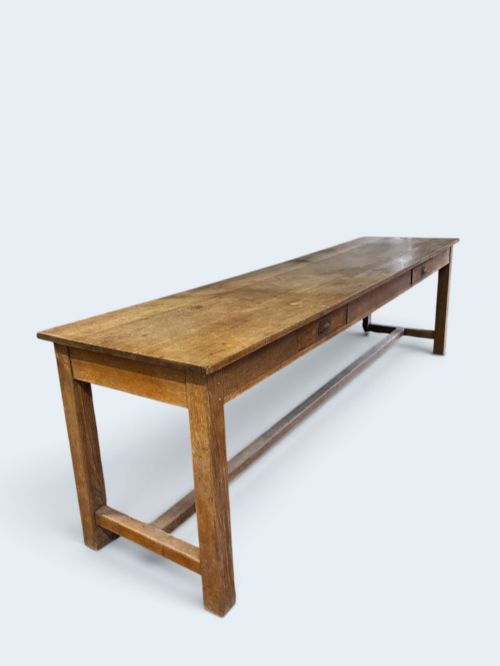
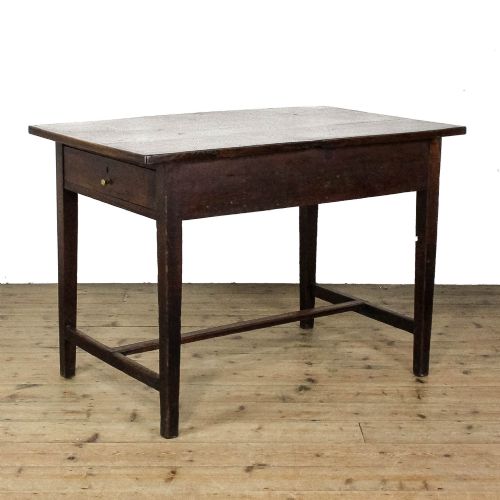


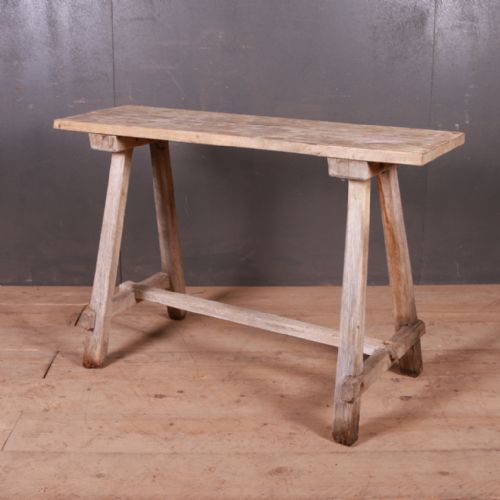

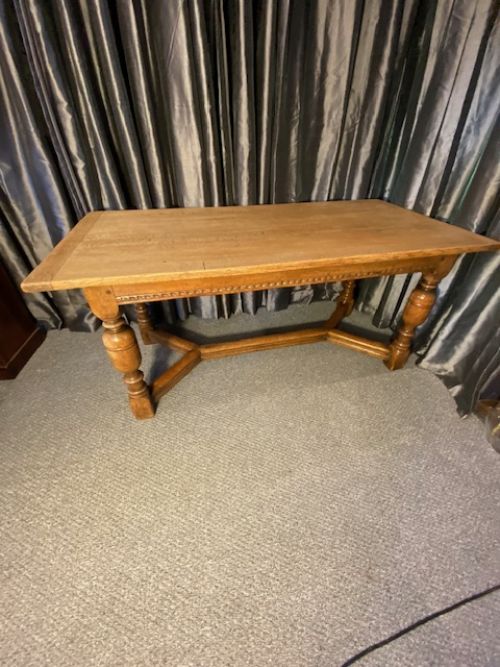
Vintage Oak Farmhouse Desk
A vintage oak farmhouse desk offers robust character and honest utility, bringing warm timber grain and functional surface space into a working room.
Vintage Oak Farmhouse Desk
Buyers seeking a vintage oak farmhouse desk encounter sturdy timber tables originating from the nineteenth century up to the nineteen-twenties. These pieces draw upon styles such as rustic farmhouse, Victorian country, and Welsh country traditions.
Origins vary across English, Welsh, and French traditions, encompassing trestle structures and simple four-legged designs. Each piece reflects the functional requirements of nineteenth-century domestic and culinary spaces.
Materials and construction methods
Construction relies heavily on solid oak timbers, occasionally paired with supportive elements in beech, pine, or poplar. Iron, brass, and vitreous enamel appear as functional hardware or specialised prep surfaces.
Makers utilised traditional joinery suited to heavy domestic tasks, building robust frames capable of enduring regular preparation and writing work. Timber surfaces often display the pale or bleached tones characteristic of regional European workshops.
Vintage Oak Farmhouse Desk Retail Price Guide 2026
Typical asking prices for vintage oak farmhouse desk among the pieces listed under this phrase on Sellingantiques today, from the lower quarter to the upper quarter. They describe what is for sale here now, not the wider market.
Current listings span the nineteenth century to nineteen-twenty, featuring oak, beech, pine, and poplar alongside iron and vitreous enamel.
Assessing quality in country furniture
Quality rests in the integrity of the timber and the honesty of the construction, where substantial solid oak boards command greater appreciation than mixed-wood alternatives. The weight of the timber and the solidity of the frame dictate the overall substance of the piece.
Proportion and the handling of supporting elements, such as bobbin legs or trestle bases, distinguish standard utility items from finer regional examples. The integration of functional details like drawers or enamel inserts further elevates the utility of the table.
The Vintage Oak Farmhouse Desk Glossary
- Solid Oak
- Timber milled straight from the oak tree rather than applied as a veneer. This material provides the structural weight and durability expected in nineteenth-century country furniture.
- Trestle Table
- A table structure consisting of two or more supports connected by a horizontal beam. This form appears frequently in French country and provincial pieces.
- Bobbin Legs
- Turned furniture legs featuring a series of rounded, spool-like swellings carved along the wood. This decorative turning style is seen on nineteenth-century beech and oak examples.
- Vitreous Enamel
- A material created by fusing powdered glass to a substrate through firing. It provides a durable, hygienic surface for pastry and food preparation on nineteenth-century tables.
Vintage Oak Farmhouse Desk: Frequently Asked Questions
What is a vintage oak farmhouse desk?
A vintage oak farmhouse desk encompasses robust nineteenth-century and early twentieth-century wooden tables originally built for domestic or culinary utility. These pieces feature solid oak construction and simple, honest lines suited to modern workspaces.
Buyers select these tables for their generous surface area and enduring timber character. They bring historical warmth and practical workspace into studies and living areas.
How do I date a farmhouse table?
Dating relies on observing construction methods, timber selection, and stylistic markers recorded across the nineteenth century and the nineteen-twenties. Regional details, such as French trestle forms or Welsh country proportions, offer further clues to origin.
Hardware components like iron brackets or brass fittings also assist in placing a piece within the Victorian period or the early twentieth century. Examining the underside and joint construction reveals the manufacturing era.
Are these tables suitable for daily office use?
These tables provide exceptionally sturdy surfaces that easily accommodate modern writing and computing equipment. Their original purpose as kitchen or prep tables ensures high load-bearing capacity and robust daily durability.
Placing one in a study creates a spacious, stable workstation anchored by nineteenth-century craftsmanship. The generous depth and length allow for ample legroom and organised working layouts.
What woods are commonly found?
Oak forms the primary material for the main body and top surfaces, appearing as solid oak or pale oak. Supporting elements and secondary framing occasionally incorporate beech, pine, or poplar.
Additional materials like iron and vitreous enamel appear on specific prep tables designed for culinary tasks. This combination of sturdy hardwoods ensures long-term stability and resilience.