

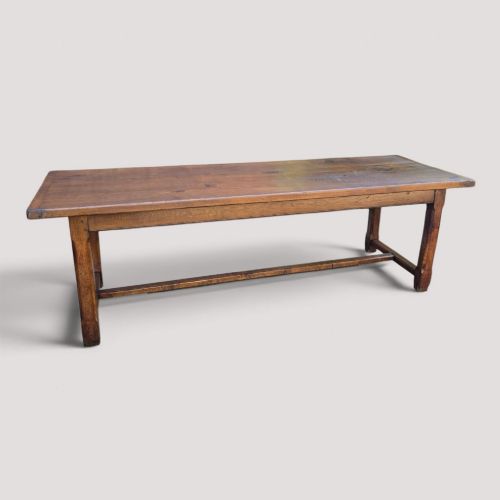
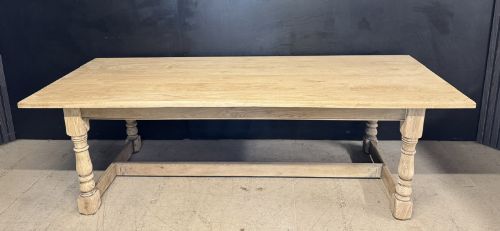
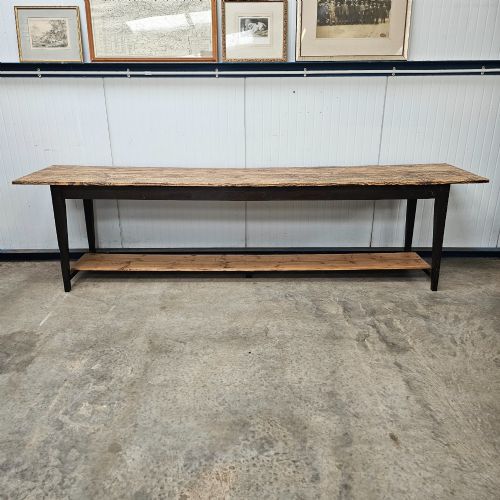


Large Oak Harvest Table
A large oak harvest table anchors a room with undeniable presence, offering robust dining surfaces shaped by centuries of communal use.
Large Oak Harvest Table
When buyers search for a large oak harvest table, they look at substantial dining surfaces designed to seat many people comfortably. These pieces span from the 17th century through the 19th century and into the early 20th century, drawing on rustic farmhouse, Georgian, French country, and Jacobean styles.
The versions most frequently met on this page include sturdy oak farmhouse tables and refectory formats, sometimes paired with pine or red walnut elements. Originating primarily as utilitarian dining furniture, they now serve as commanding centerpieces in modern and traditional spaces alike.
How they were made
These tables rely primarily on solid oak construction, sometimes complemented by secondary woods such as pine for structural framing or red walnut for distinct tops. Iron and brass hardware occasionally reinforce the heavy timber joints.
Joinery methods reflect the demands of large-scale domestic and communal use, utilising heavy framing and pegged joints to maintain stability across expansive lengths reaching multiple metres.
Large Oak Harvest Table Retail Price Guide 2026
Typical asking prices for large oak harvest table among the pieces listed under this phrase on Sellingantiques today, from the lower quarter to the upper quarter. They describe what is for sale here now, not the wider market.
Listings span from the 17th century through the 19th century and into 1920, predominantly utilising oak alongside pine, iron, walnut, and brass.
What varies in quality
The distinction between standard examples and exceptional pieces rests upon the integrity of the timber and the harmony of the proportions. Rich surface patination developed through generations of daily use distinguishes superior examples from later revivals.
Construction depth also dictates standing, where master carpentry in early refectory formats commands greater regard than simpler provincial adaptations from later centuries.
The Large Oak Harvest Table Glossary
- Refectory table
- A long dining table historically used in monastic dining halls and large country houses. These pieces feature elongated proportions supported by robust legs and stretchers.
- Farmhouse table
- A domestic dining table built for utility and everyday family life. They typically showcase generous timber planks and sturdy structural framing.
- Patina
- The surface sheen and coloration developed by wood over years of handling, polishing, and exposure to light. It serves as a visual indicator of age and genuine wear.
- Stretcher
- A horizontal wooden bar connecting the legs of a table to provide structural rigidity. In older refectory designs, these often run close to the floor to support heavy loads.
Large Oak Harvest Table: Frequently Asked Questions
How do I seat twelve people?
Selecting a long format exceeding three metres ensures adequate legroom and surface area for large gatherings. Many substantial pieces are specifically proportioned to accommodate twelve diners comfortably along the flanks.
Positioning chairs thoughtfully around structural stretchers maintains comfort without compromising the stability of the heavy wooden frame.
How are these tables cleaned?
Maintaining the surface requires simple dusting with a dry cloth and avoiding harsh chemical polishes that strip historical patination. Gentle wax application helps nourish older timber without building up excess residue.
Protecting the wood from excessive moisture and direct heat sources preserves the structural integrity of large plank tops.
Are 17th-century tables stable?
Early pieces from the seventeenth century utilise heavy pegged joinery and stout framing designed for centuries of robust use. Their substantial weight keeps them firmly planted on the floor.
Periodic checking of structural joints ensures that historical timbers remain secure under modern household demands.
What styles are available here?
The selection encompasses rustic farmhouse forms, Georgian country house designs, and French provincial variations. Jacobean revival pieces also appear alongside starker seventeenth-century refectory archetypes.
Each stylistic tradition brings distinct leg profiles and edge details while maintaining the core utility of a large oak top.