

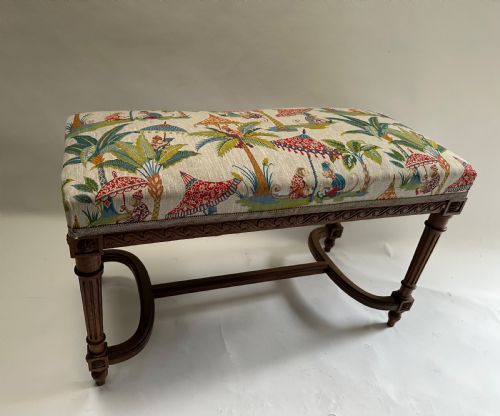
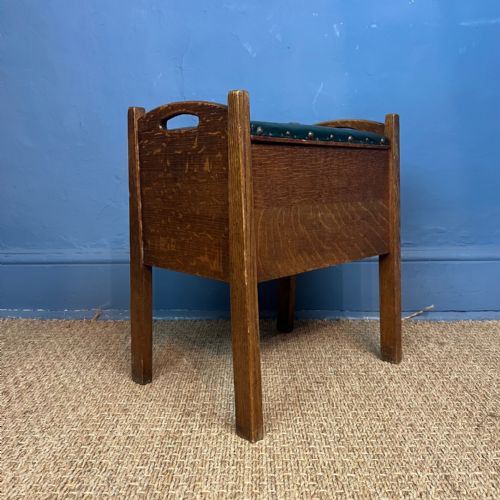
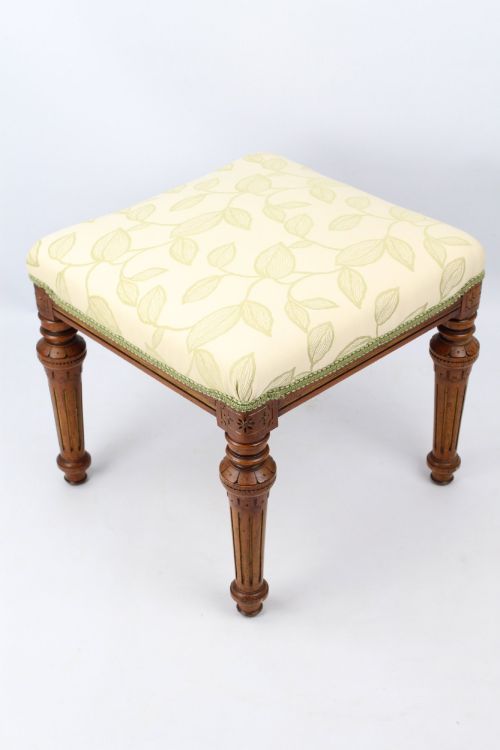

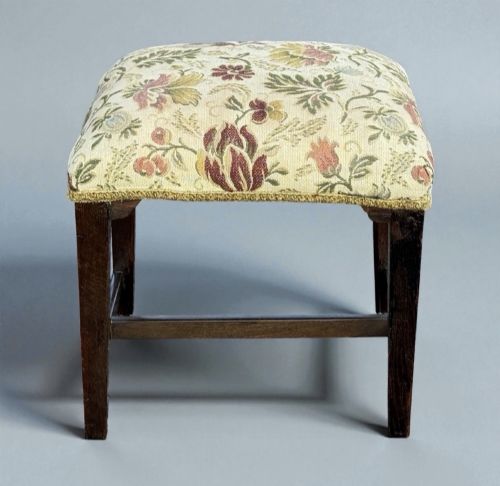
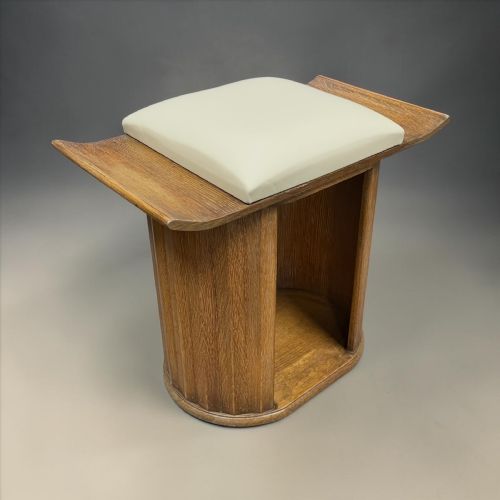


Vintage Oak Dressing Stool
These vintage oak dressing stool pieces combine solid timber frames with period upholstery, offering both practical seating and genuine historic character.
Vintage Oak Dressing Stool
When you search for a vintage oak dressing stool, you encounter low timber seats designed for vanity tables, bedrooms, and sitting rooms across multiple historic eras. These compact forms range from plain rustic frames to detailed Arts and Crafts and Art Deco designs.
The versions most commonly met on this page span the late nineteenth century through to the 1930s, alongside earlier Georgian and Victorian examples. They appear as simple saddle-seated forms, drum-shaped storage pieces, and carved dressing table accompaniments.
Makers and workshops of the Cotswold School and firms such as Gordon Russell and Harry & Lou Epstein contributed notably to this tradition. Each piece reflects the prevailing domestic interior fashions of its decade of origin.
How they were made
Construction relies primarily on solid oak, selected for durability and finished with various treatments including parcel gilt accents and natural wax polishes. Joinery techniques range from traditional pegging in early rural pieces to streamlined geometric framing in later Art Deco interpretations.
Upholstery forms a vital component of the construction, utilising fabrics such as leather, tweed linen, tapestry, and general textile coverings. Brass fixings and cane work also appear as structural or decorative elements on specific examples.
Vintage Oak Dressing Stool Retail Price Guide 2026
Typical asking prices for vintage oak dressing stool among the pieces listed under this phrase on Sellingantiques today, from the lower quarter to the upper quarter. They describe what is for sale here now, not the wider market.
Some mid-century dressing stools cleverly double as secret drum-shaped storage units to hide away morning clutter.
What varies in quality
The distinction between standard examples and superior pieces rests on the integrity of the timber frame and the sophistication of the design. Workshops associated with specific known designers or recognised movements display finer hand-detailing and more resolved proportions.
The condition and authenticity of the upholstery materials, whether original leather, tapestry, or later replacement fabric, influence the overall character. Heavy construction and distinctive forms like drum storage compartments or saddle seats elevate particular items above basic utility furniture.
Gordon Russell·Harry & Lou Epstein·Arthur W Simpson·B. North & Son
The Vintage Oak Dressing Stool Glossary
- Arts and Crafts
- A design movement emphasising handcraftsmanship, natural materials, and simple vernacular forms. It heavily influenced early twentieth-century oak furniture production.
- Cotswold School
- A twentieth-century regional offshoot of the Arts and Crafts movement centered on solid wood construction and honest joinery. Pieces from this tradition show careful hand-working of the timber.
- Parcel Gilt
- A decorative technique where specific carved areas or details are partially gilded with gold leaf over the oak base. This adds subtle highlights to Victorian and revival frames.
- Saddle Seated
- A wooden seat surface carved with hollowed contours to fit the human body. This ergonomic shaping appears frequently on utilitarian and Arts and Crafts stools.
Vintage Oak Dressing Stool: Frequently Asked Questions
How old is my stool?
Dating relies on examining the construction methods, timber patination, and stylistic markers such as Arts and Crafts chamfering or Art Deco geometry. Documentary evidence or maker marks further clarify the decade of production.
Earlier nineteenth-century and Georgian pieces show hand-cut joinery and traditional wear patterns compared to standardised twentieth-century workshop output.
Were these made for dressing tables?
Many examples served specifically as dressing table or vanity stools, paired with matching chests and mirrors in bedrooms. Their low height allowed them to tuck neatly beneath furniture.
Other variants functioned as piano stools, footstools, or general fireside seating depending on their top configuration and proportions.
What fabrics are used?
Upholstery materials span leather, tweed linen, tapestry, and woven textiles reflecting the preferences of their respective periods. Many surviving pieces retain later replacement covers chosen for domestic interior schemes.
Original textiles remain less common on older examples, while structural elements like cane work provide alternative seating surfaces.
How do I care for oak?
Maintain the timber by keeping pieces away from direct heat sources and sudden humidity changes that cause wood to split. Regular dusting and occasional application of appropriate wax polish preserve the surface finish.
Protect upholstered sections according to their specific fabric type, avoiding excessive moisture on leather and textile coverings.