
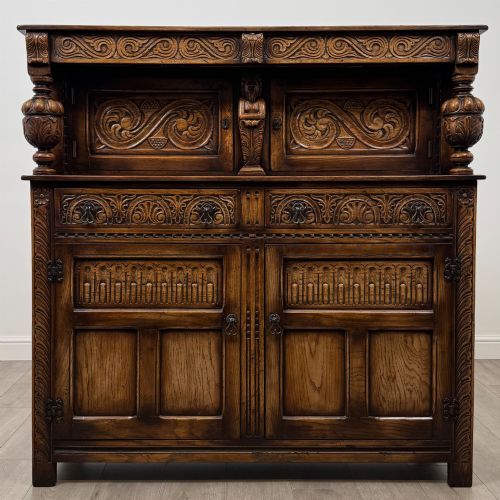
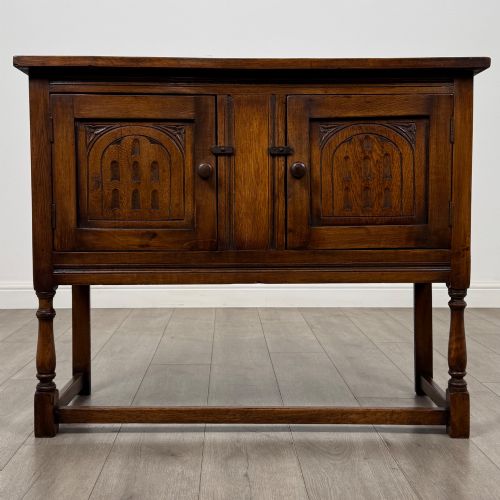
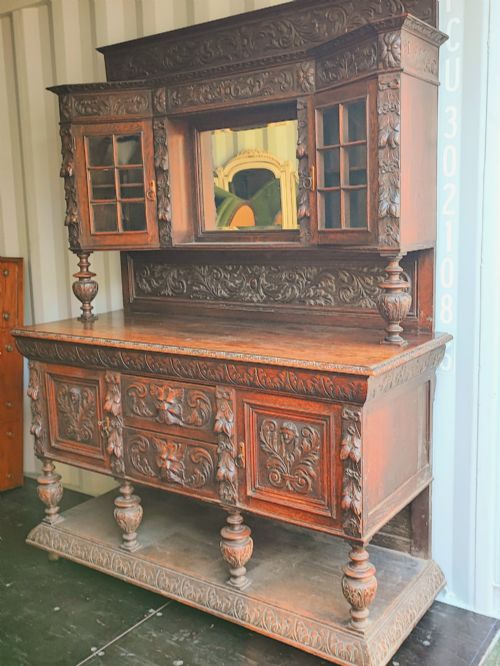
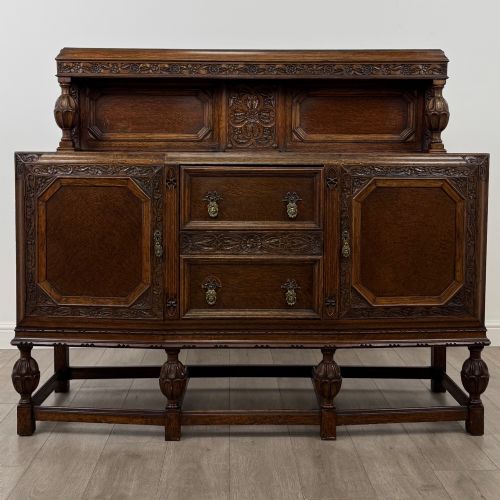



Vintage Oak Court Cupboard
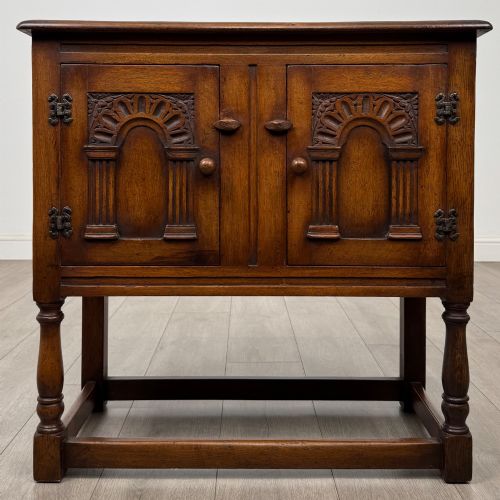
A vintage oak court cupboard brings substantial storage and centuries of revival craftsmanship into a room.

Vintage Oak Court Cupboard
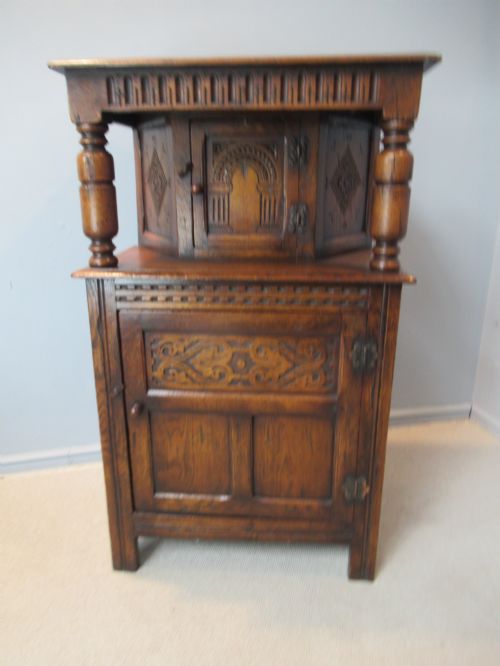
A vintage oak court cupboard provides heavy, partitioned storage through enclosed upper and lower compartments. These pieces emerge across periods including the 17th century, 18th century, Victorian, Edwardian, and the 1920s and 1930s.
The most frequent examples on this page are Edwardian and 20th-century interpretations built in the Jacobean, Tudor, and Arts and Crafts revivals. Alongside formal court cupboards, buyers encounter related vernacular forms such as the Welsh deuddarn, sideboards, and dressers.
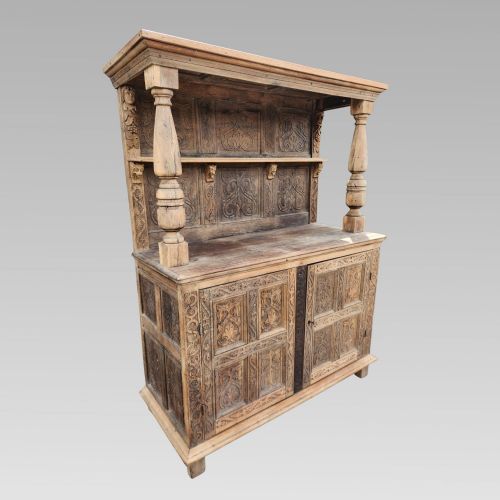
These items function primarily as display and storage furniture for dining spaces and hallways. Their presence ranges from compact side cabinets to large, intricately carved buffets and green man sideboards.
What varies in quality
The depth and crispness of hand-carved ornamentation separate standard revival pieces from superior examples. Elaborate motifs, such as figural green man carvings or deep relief panels, demand greater skill from the maker.
Timber selection and structural joinery define the integrity of the cabinetwork. Heavier, dense oak framing with precise panel fitting distinguishes superior craftsmanship from simpler production.
Listings feature oak combined with brass, iron, leaded glass, and bevelled glass across Edwardian, Victorian, and 18th-century periods.
The Vintage Oak Court Cupboard Glossary
- Court cupboard
- A traditional enclosed piece of furniture featuring a recessed upper stage supported by pillars above a lower cupboard base. It serves to store plate and dry goods.
- Linenfold
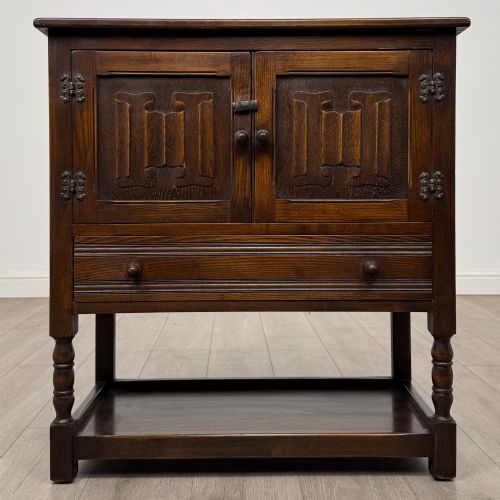
- A style of carved wooden panelling resembling folded vertical linen fabric. This technique appears frequently on Tudor and Jacobean revival cupboard doors.
- Jacobean Revival
- An architectural and furniture style popular in the 19th and early 20th centuries that imitates 17th-century English design. It uses dark oak, geometric mouldings, and strapwork.
- Green Man
- A sculptural architectural motif representing a human face engrafted with foliage and vines. It appears within the carved woodwork of Victorian and revival sideboards.
Vintage Oak Court Cupboard: Frequently Asked Questions
What is a court cupboard?
A court cupboard is a sturdy storage cabinet split into an upper tier and a lower compartment. These pieces were traditionally used to store food, utensils, and valuable household silver.
Over the centuries, cabinetmakers adapted the form through various revivals, resulting in the heavily carved oak sideboards and cupboards found in later periods.
How do I date an oak cupboard?
Dating relies on observing the construction methods, hardware materials, and stylistic revival influences present in the woodwork. Earlier examples from the seventeenth and eighteenth centuries display hand-split timbers and pegged joinery.
Later Edwardian and twentieth-century interpretations often combine machine-planed boards with historical revival styles like Jacobean or Arts and Crafts.
Where should I place a court cupboard?
These substantial pieces require generous wall space and structural support due to their heavy solid oak construction. Dining rooms and large hallways provide the ideal environment to showcase their storage capacity and carved details.
Keep them away from direct heat sources and strong sunlight to prevent the timber from drying out and splitting over time.