
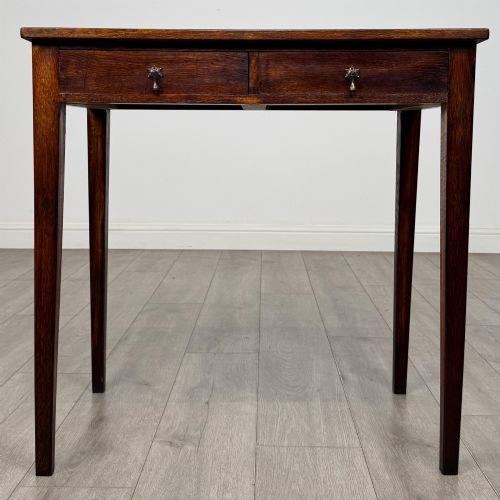
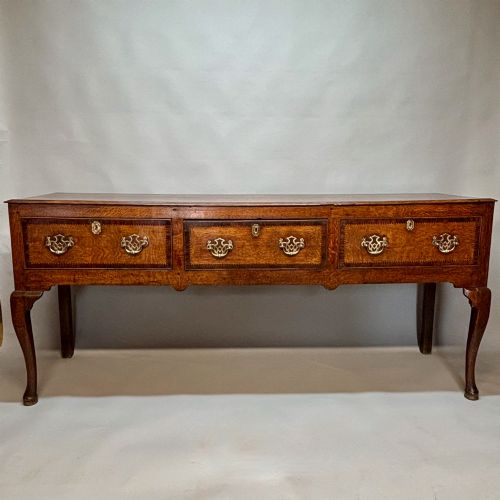
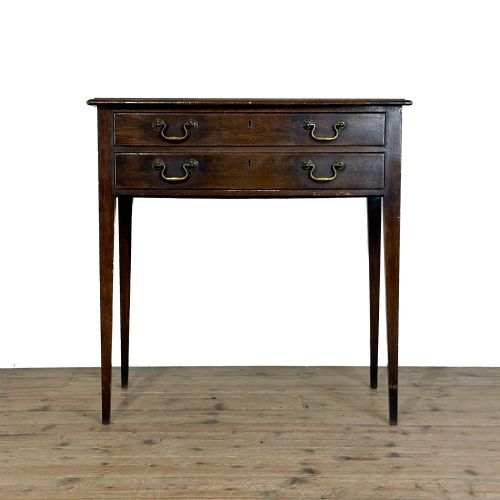
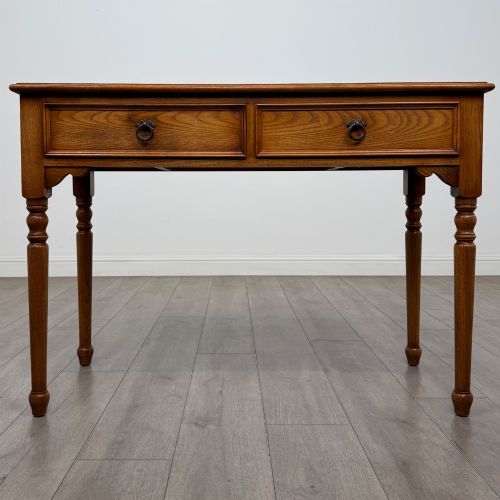

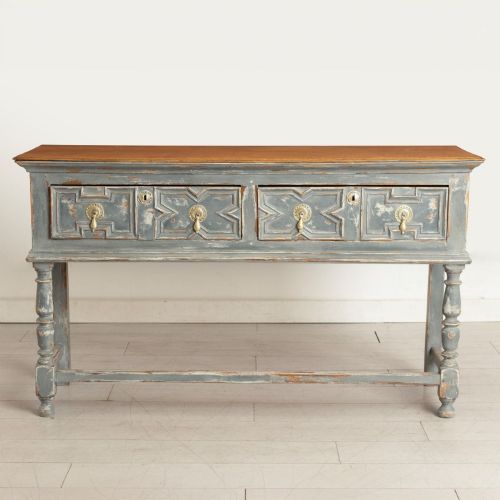
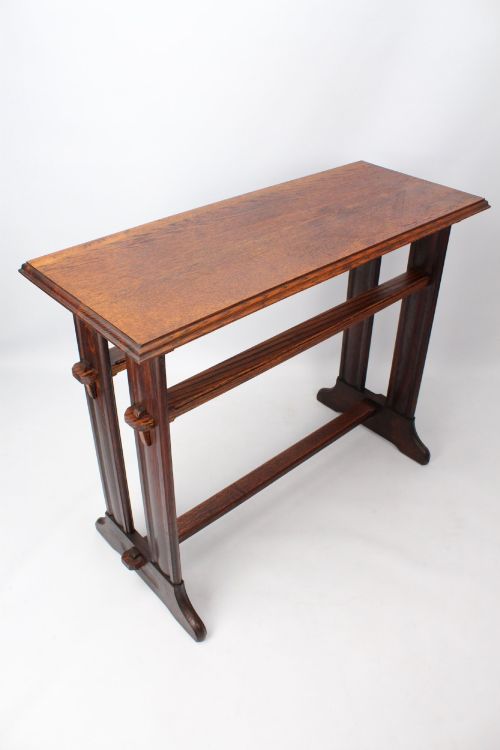
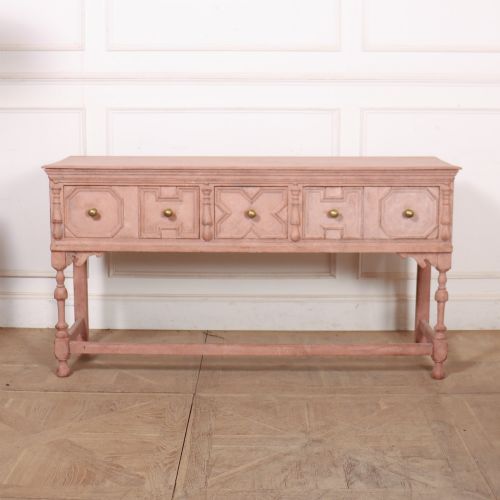
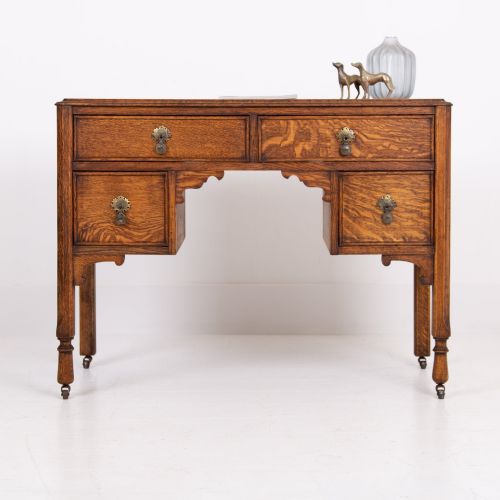
Vintage Oak Console
A vintage oak console brings sturdy timber and practical surfaces to hallways and living spaces, drawing on Edwardian and earlier craftsmanship.
Vintage Oak Console
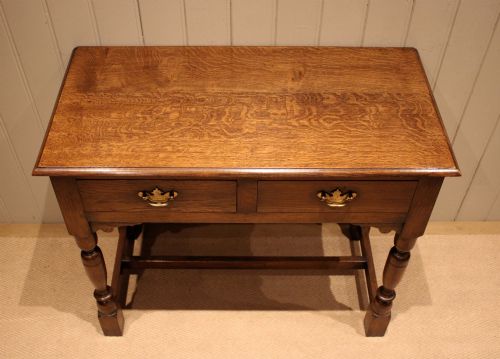
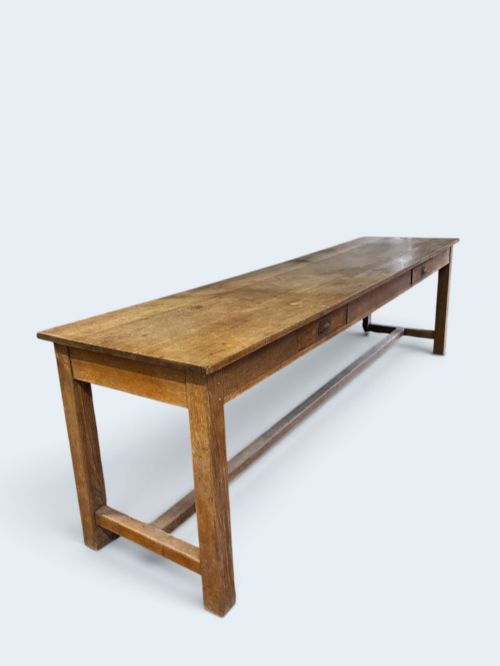
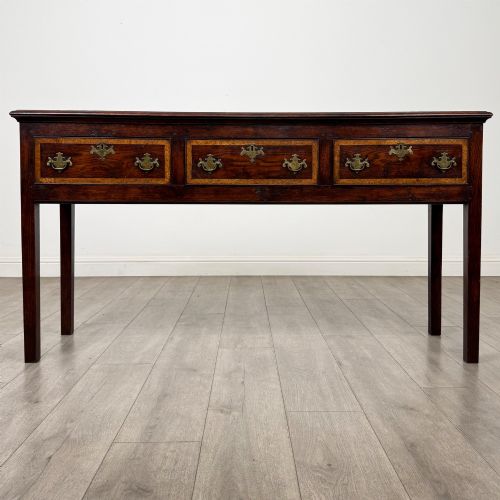
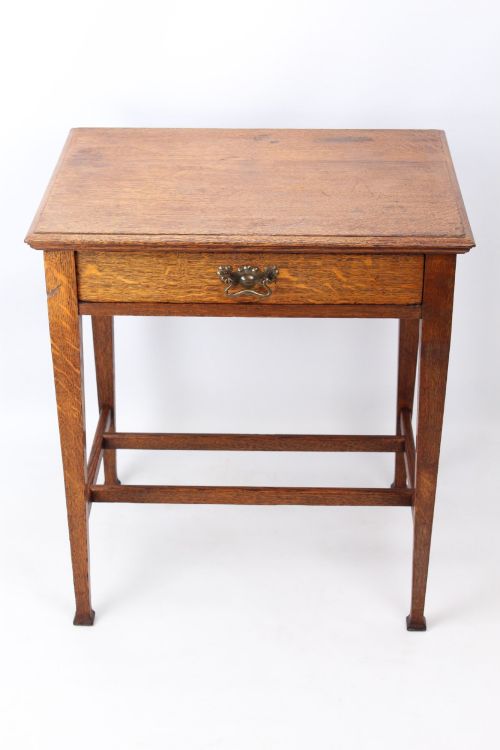
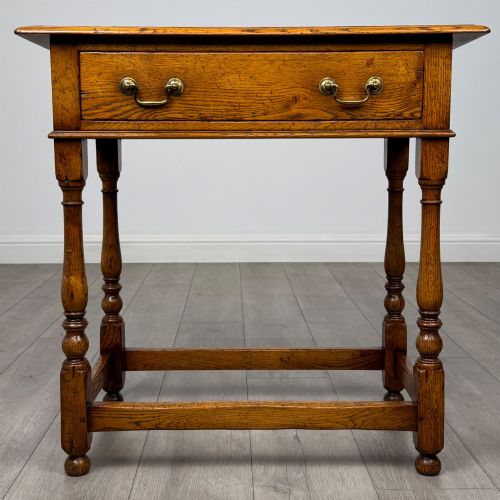
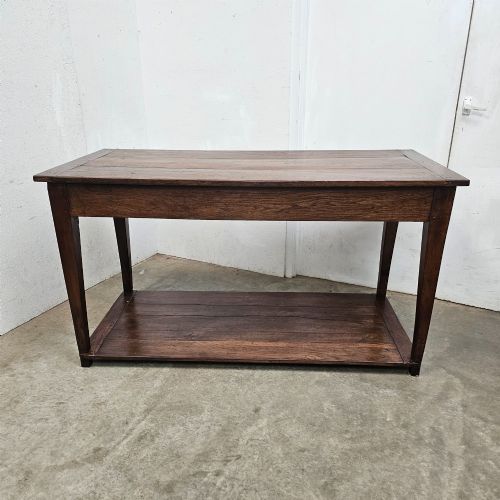
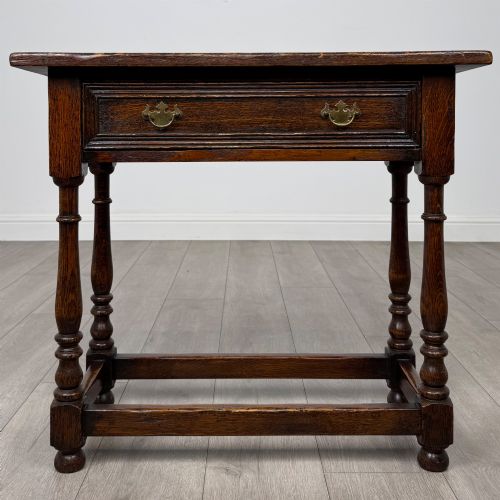
A vintage oak console encompasses side tables, writing desks, and narrow serving tables originating largely from the Edwardian era, the nineteen-twenties, and the nineteenth century. These pieces serve narrow corridors and reception rooms where depth is restricted.
The assortment on this page leans heavily towards Edwardian examples alongside pieces from nineteen-ten and nineteen-twenty, often shaped by Jacobean Revival or Arts and Crafts ideals. Simpler English country forms and occasional French country variants also appear.
Makers and workshops across Britain and France produced these utilitarian surfaces, utilising solid timber to withstand daily household demands.
The Measure of Quality
Quality rests upon the selection of timber and the integrity of the construction, distinguishing robust architectural proportions from lighter assembly. Pieces retaining original brassware and untouched surface patination command greater interest.
The depth of carving and the crispness of turned legs separate standard utility tables from finer revival work produced by dedicated cabinet makers.
Listings span the Georgian period, the nineteenth century, and the nineteen-twenties, constructed primarily in oak with brass and iron hardware.
Beresford and Hicks London·Hubert Simpson of Kendal
The Vintage Oak Console Glossary
- Lowboy
- A small oak table with drawers, typically standing on four legs, used traditionally as a dressing or side table.
- Dresser base
- A long, sturdy sideboard featuring drawers and sometimes a potboard shelf beneath, originating from country houses.
- Jacobean Revival
- A nineteenth and twentieth century style mimicking seventeenth century English furniture, noted for geometric mouldings and turned supports.
- Barley-twist
- A decorative turning technique resembling a twisted rope, commonly found on table legs and supports from the early twentieth century.
- Potboard
- An open lower shelf fitted beneath a dresser base or console, originally intended for storing earthenware pots.
Vintage Oak Console: Frequently Asked Questions
Where should I place a vintage oak console?
These narrow tables suit entrance halls, tight corridors, or behind living room sofas where floor space is limited. Their shallow profiles provide surface area for lamps and daily items without obstructing movement.
Heavier dresser bases and sideboards require more substantial wall space in dining rooms or kitchens to balance their visual weight.
How do I identify an Edwardian oak console?
Edwardian examples often feature lighter golden oak finishes, straightforward rectilinear frames, and subtle Arts and Crafts influences or Jacobean revival turnings. They bridge Victorian heaviness and twentieth-century simplicity.
Look for machine-sawn timbers combined with hand-finished details, as this transitional era adopted industrial methods while retaining artisan touches.
Can I use an antique desk as a console?
Writing tables and small desks work well in hallways or living spaces when their depth allows clearance. Their drawers offer convenient hidden storage for keys and post.
Check the kneehole height and overall width to ensure the piece sits flush against the wall without protruding awkwardly.
How do I care for vintage oak surfaces?
Maintain the wood by applying natural beeswax periodically to nourish the grain and protect against moisture. Avoid placing timber tables near direct heat sources or in strong sunlight.
Use coasters and felt pads beneath decorative items to prevent rings and scratches on polished or waxed tops.