
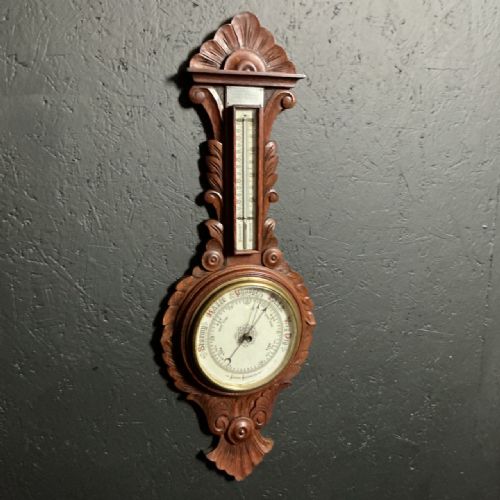
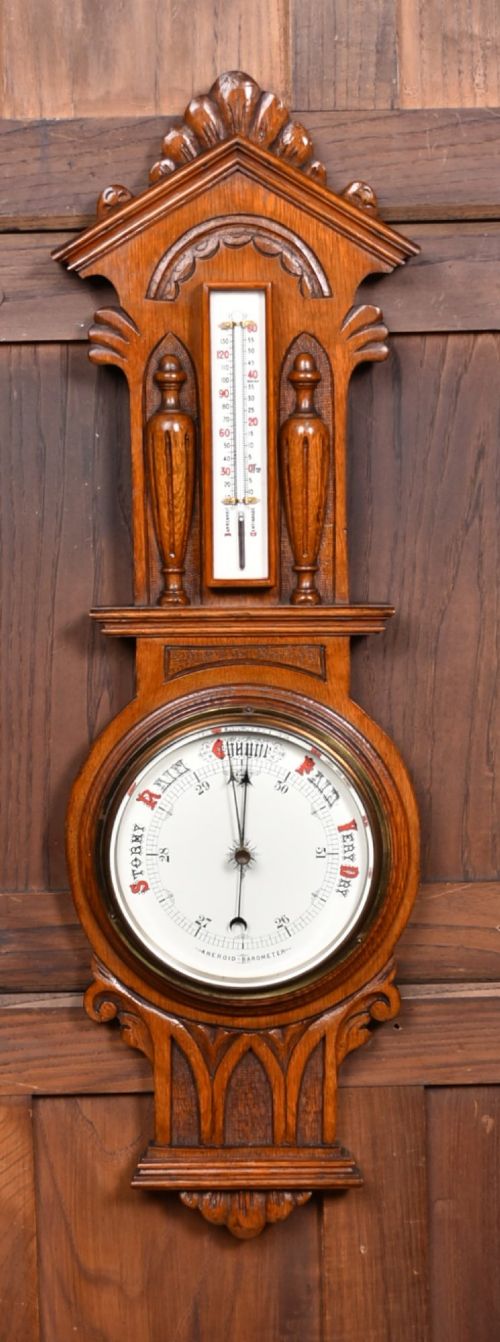
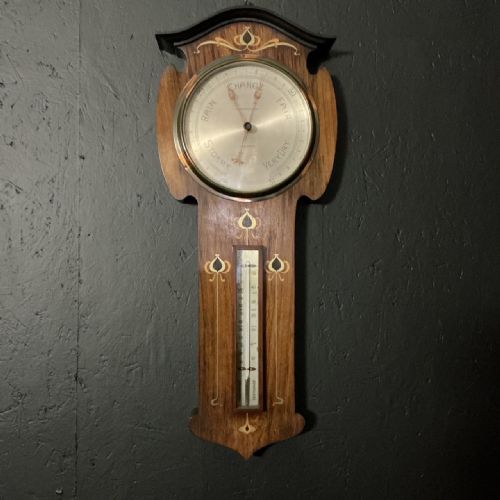
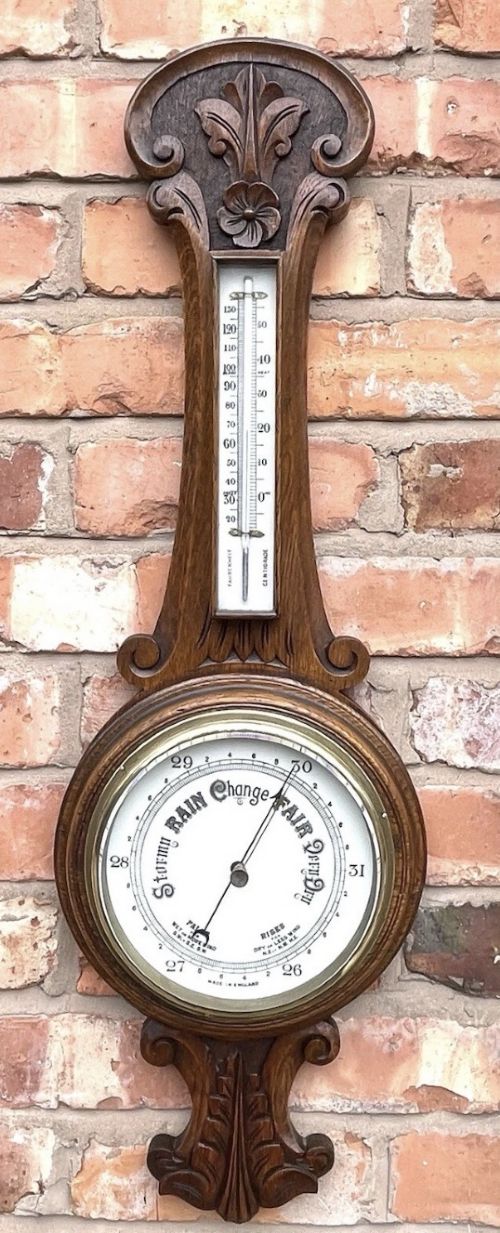


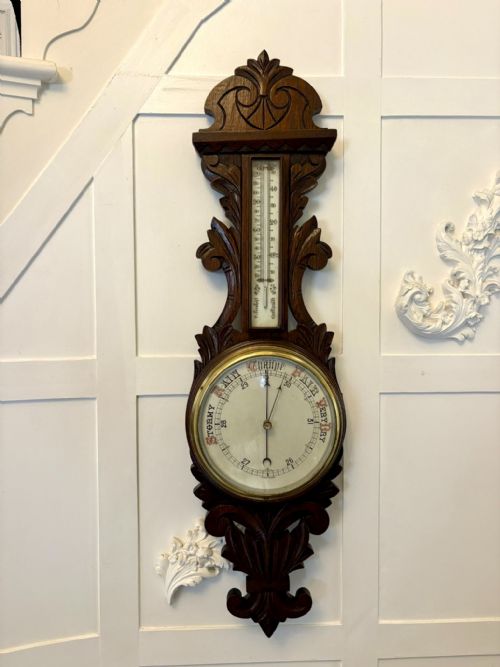


Vintage Oak Barometer Thermometer
These vintage oak barometer thermometer pieces combine weather-measuring utility with robust timber cabinetry, offering a functional centrepiece for the wall.
Vintage Oak Barometer Thermometer
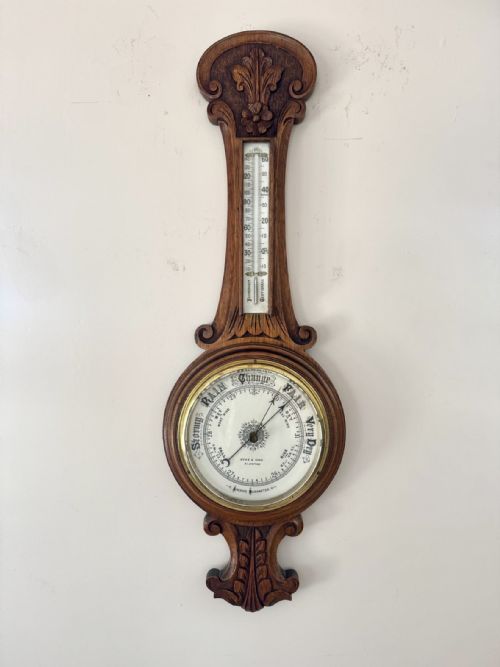
When you search for a vintage oak barometer thermometer, you encounter wall-hanging instruments spanning the Victorian, Edwardian, and early twentieth-century periods. These examples combine carved wooden housings with mercurial or aneroid dials, alongside built-in thermometer scales.
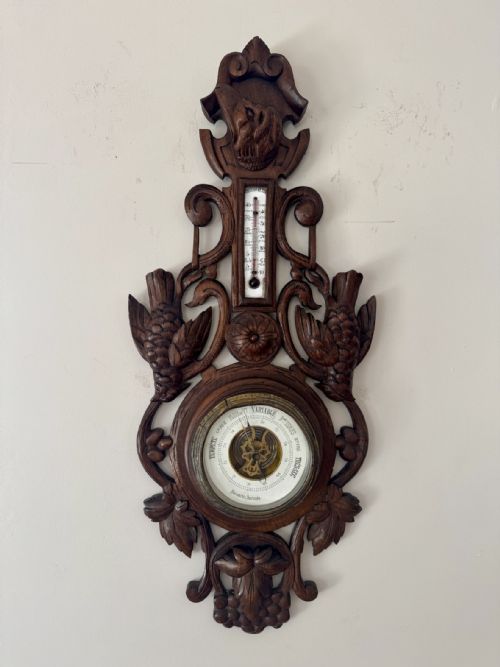
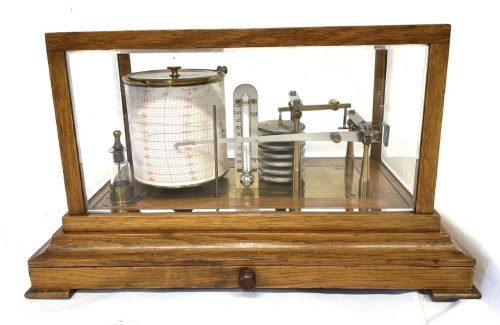
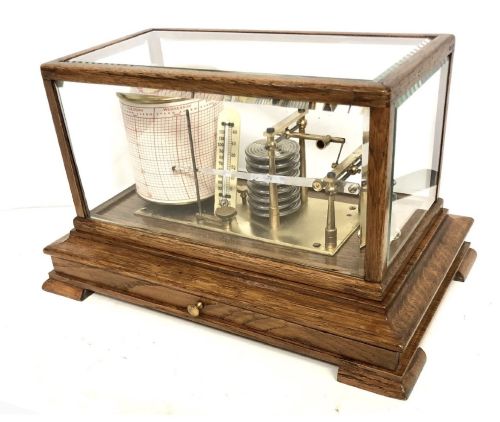
The selections on this page appear predominantly in carved oak, alongside variations in walnut and mahogany, taking the form of traditional banjo shapes, architectural wall pieces, and desktop barographs with chart drawers.
Makers ranging from Negretti & Zambra to Hyde & Sons Sleaford represent the scientific instrument trade of the nineteenth and twentieth centuries.
How they were made
Cabinets are constructed from solid oak, walnut, or mahogany, often shaped with hand-carved foliage or architectural moulding characteristic of Black Forest and Arts and Crafts design.
Dials and bezels utilise brass and bevelled glass to protect the paper scales and mercury or aneroid movements housed inside.
Some barometers include chart drawers beneath the dial, ready to hold spare paper rolls for recording local pressure shifts.
What varies in quality
The standard of carving defines the distinction between standard production pieces and finer workshop examples, particularly in the depth and crispness of foliage relief on Victorian banjo frames.
The presence of signed maker dials, such as those by Negretti & Zambra or J Hughes London, elevates the instrument from unbranded utility to documented scientific heritage.
Hyde & Sons Sleaford·Negretti & Zambra·W Watson & Sons·J Hughes London·Maple & Co·Jules Richard·Dobbie son and Hutton London
The Vintage Oak Barometer Thermometer Glossary
- Aneroid barometer
- An instrument that measures atmospheric pressure without liquid, using a flexible-walled metal capsule that expands or contracts.
- Banjo barometer
- A wall-hanging barometer shaped like a stringed musical instrument, typically featuring a circular dial at the top and a thermometer stem below.
- Barograph
- A recording barometer that draws a continuous graph of atmospheric pressure onto a rotating drum using a chart and ink nib.
- Bevelled glass
- Glass with an angled edge set into the brass dial bezel, adding depth and reflecting light across the instrument face.
Vintage Oak Barometer Thermometer: Frequently Asked Questions
How do I read an aneroid barometer?
Read the main needle to find the current atmospheric pressure indicated on the dial face. Tap the glass gently to settle any friction in the internal metal linkages before taking your reading.
Compare this position against the secondary indicator needle, which you manually set over the primary hand to track whether pressure rises or falls over the course of the day.
Where should I hang a wall barometer?
Hang your instrument on an interior wall away from direct sunlight, radiators, and draughty doors. Temperature fluctuations can interfere with the internal thermometer and metal mechanism.
Ensure the wall fixing supports the weight securely, particularly for larger carved oak and glass models from the Victorian period.
How do I date an oak barometer?
Examine the style of the wood carving and the construction methods used on the oak case. Victorian Gothic Revival and heavy Black Forest carving typically point to the nineteenth century, while simpler Edwardian formats emerge around nineteen hundred.
Check the dial for maker signatures and patent details, which often help narrow the production decade.
What is the difference between a barometer and a barograph?
A standard barometer displays real-time atmospheric pressure using a pointer moving across a static dial face. These instruments suit quick checks of local weather changes.
A barograph records pressure continuously onto a paper chart fitted to a clockwork rotating drum, providing a historical trace of weather patterns over a week.