

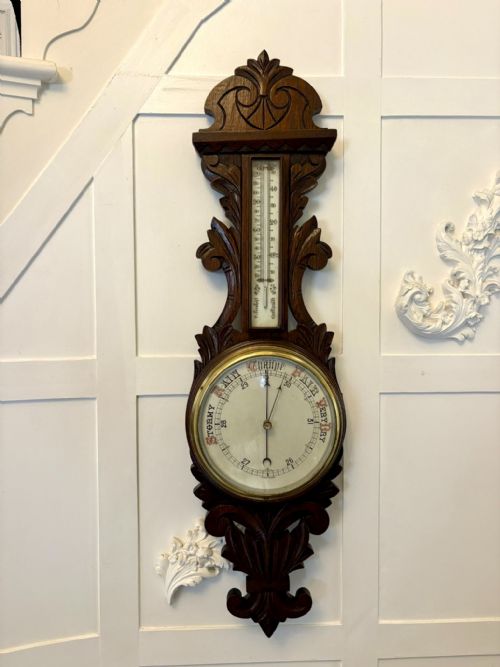


Traditional Wooden Barometer
A traditional wooden barometer reads the weather while anchoring a wall in mahogany, oak, or walnut.
Traditional Wooden Barometer
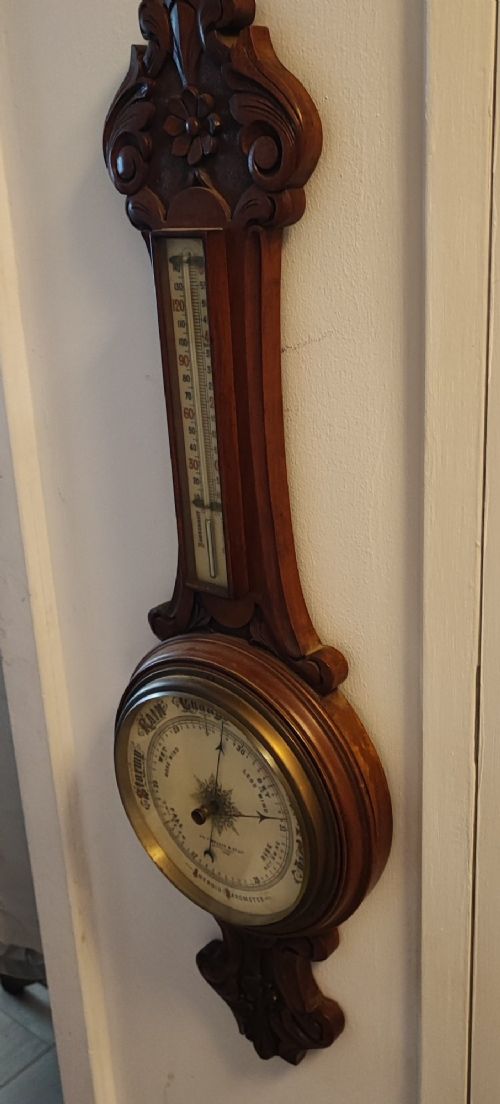
A traditional wooden barometer combines atmospheric measurement with domestic woodwork from the nineteenth and early twentieth centuries. These instruments hang on walls in domestic spaces, functioning as weather glasses and decorative panels alike.
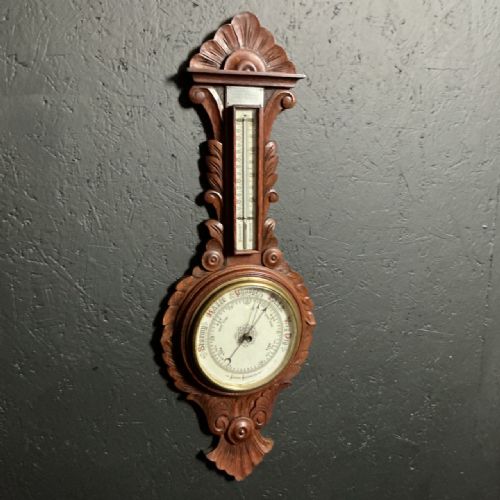
The selections available here lean heavily toward Victorian and Edwardian examples, spanning the periods from eighteen sixty to nineteen ten. Banjo frames, carved oak cases, and wall-hanging units dominate the forms encountered.
Makers ranged from provincial workshops to continental centres, producing mercury and aneroid mechanisms housed in timber bodies. Walnut, mahogany, and carved oak provide the primary chassis for these weather instruments.
How they were made
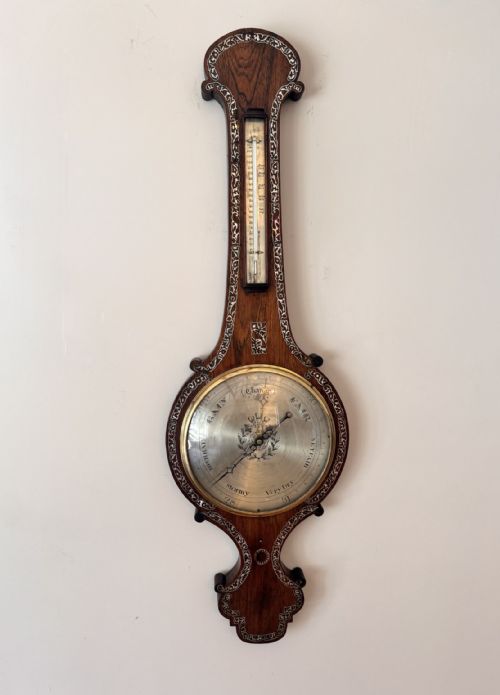
Cabinet makers utilised dense hardwoods such as mahogany, oak, walnut, and rosewood to house delicate pressure-sensing mechanisms. Timber cases frequently incorporated turned bezels, mother of pearl inlay, or deep relief carving.
Glass protected the dials, thermometers, and mercury columns while brass fittings secured the bezels and pointers to the wooden face. Dial faces utilised porcelain, enamel, or engraved brass plates to display barometric pressure.
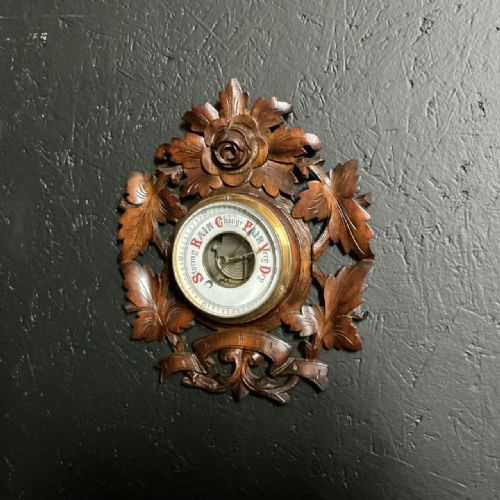
Carved wooden foliage creeps around aneroid dials, bringing miniature alpine forests straight onto nineteenth-century parlour walls.
What varies in quality
The depth and crispness of the woodwork set the baseline for quality, distinguishing deeply carved Black Forest foliage from simpler turned surrounds. Inlays of mother of pearl or contrasting timbers elevate the decorative ambition of the piece.
The complexity of the instrument assembly alters the stature of the barometer, particularly when thermometers or clock movements accompany the main pressure dial. Signed dials from known makers impart distinct provenance compared to anonymous workshop output.
Jenkins Of Old Swindon·Vecchio & Co of Shaftsbury·Ciresa Of Milan·A. Rivolta
The Traditional Wooden Barometer Glossary
- Aneroid barometer
- An instrument measuring atmospheric pressure without liquid, using a flexible metal box that expands or contracts.
- Banjo barometer
- A wall barometer shaped like a banjo, featuring a circular dial at the top and a long trunk containing a thermometer.
- Stick barometer
- A tall, narrow barometer enclosing a vertical glass tube filled with mercury to display atmospheric pressure.
- Wheel barometer
- A barometer using a mercury tube connected to a float and a pulley wheel that turns the pointer on a circular dial.
- Bezel
- The brass or wooden ring that holds the protective glass cover in place over the barometer dial face.
Traditional Wooden Barometer: Frequently Asked Questions
How do I set a traditional barometer?
Adjust the setting hand to align directly over the current pointer using the brass knob on the glass face. This records the position so you can observe whether pressure rises or falls over the coming hours.
Changes in weather typically accompany shifts away from this reference point. Tap the glass gently before reading to ensure the mechanism settles accurately.
Where should I hang a wooden barometer?
Select an interior wall away from direct sunlight, radiators, and draughty doorways to protect the wooden case and movement. Stable indoor temperatures prevent timber warping and keep the internal metal components functioning correctly.
Ensure the wall fixing supports the weight of the dense hardwood body securely. Most wall-hanging barometers feature a reinforced brass eyelet at the top for this purpose.
What is the difference between mercury and aneroid?
Mercury barometers rely on an open column of liquid metal reacting directly to atmospheric weight inside a glass tube. These traditional instruments require careful handling during transport to prevent air bubbles entering the column.
Aneroid barometers use a sealed vacuum capsule that expands and contracts with air pressure changes, moving a mechanical linkage to the dial. This enclosed design made them more robust for domestic wall mounting from the Victorian era onward.
How do I date a wooden barometer?
Examine the timber species, dial materials, and cabinet style to narrow down the decade of production. Victorian pieces often feature heavy carved oak or rosewood, while Edwardian versions frequently use lighter inlaid mahogany.
Signatures or maker stamps on the brass backplate or porcelain dial provide definitive clues. Patent dates or address details inscribed by the maker help anchor the timeline further.