


Vintage Nude Canvas Art
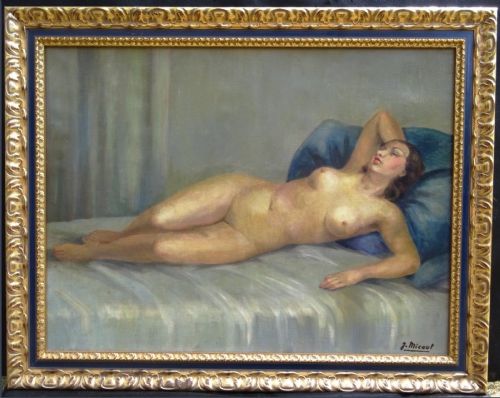
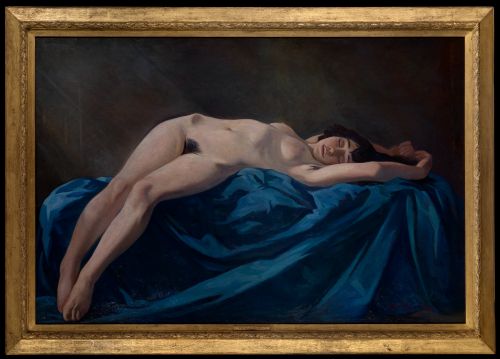
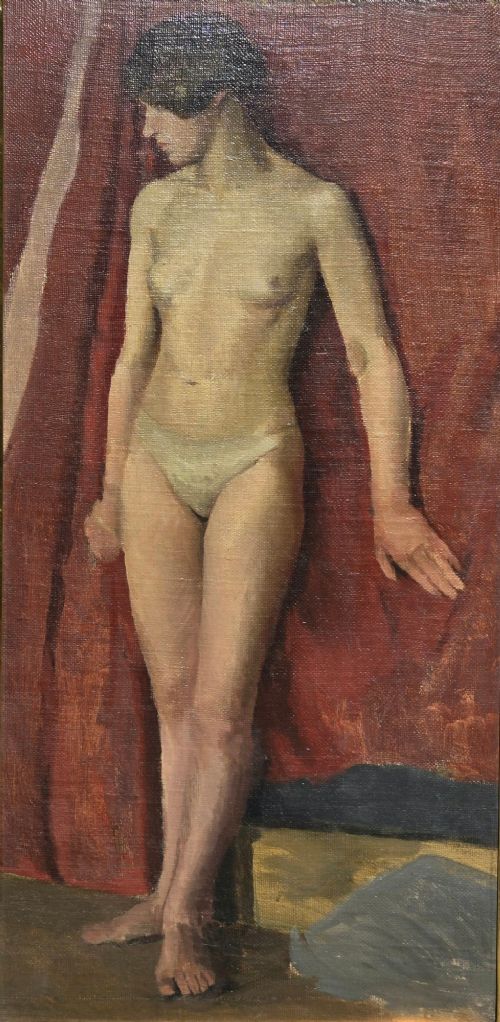
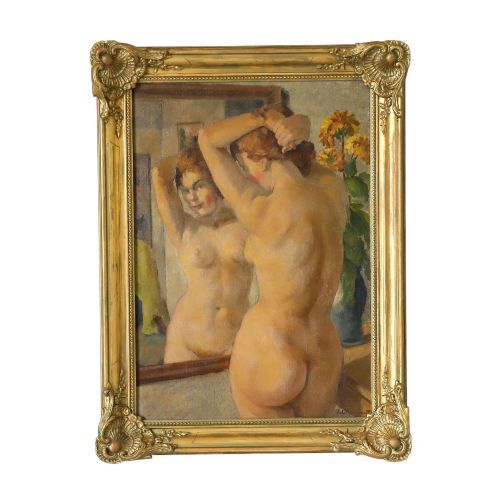
When you search for vintage nude canvas art, you uncover expressive painted studies spanning the early twentieth century to the post-war decades.
Vintage Nude Canvas Art
Vintage nude canvas art encompasses painted figurative works executed primarily in oil paint on woven fabric supports. These pieces range from academic studies and impressionist interpretations to modernist and expressionist compositions created across Europe.
The selections on this page draw heavily from French, British, and continental European traditions, often reflecting the artistic movements of the interwar period and the mid-twentieth century. Buyers frequently encounter framed works depicting seated, standing, or reclining figures captured in studio interiors and outdoor settings.
Subjects vary from intimate domestic portraits and bohemian sketches to mythological scenes and avant-garde explorations of form. The surviving works demonstrate how generations of painters approached the human figure through distinct regional lenses.
Materials and Techniques
Artists relied on oil paint applied to stretched canvas surfaces, occasionally utilising board supports or canvas laid down onto panel for stability. The layering of oil pigments allowed painters to build rich textures, subtle tonal gradations, and expressive brushwork.
Frames play a significant role in presentation, with many works retained in period wood or gilt wood surrounds that complement the aesthetic of the painting. The interaction between the oil medium and the canvas grain defines the visual character of each piece.
Materials documented in the collection are primarily oil paint on woven canvas, supported by period wood and gilt frames.
Factors of Quality
Quality in these figurative works rests on the confidence of the draughtsmanship and the artist's command of tone, shadow, and proportion. Stronger compositions reveal a deeper understanding of anatomical structure and light, whether handled through academic precision or expressive modernism.
The distinction between standard decorative studies and superior works lies in the vitality of the brushwork and the psychological depth of the portrayal. Provenance, exhibition history, and attribution to documented artists further elevate the standing of individual paintings.
Philippe de Rougemont·Margaret Maitland Howard·Raymond Moritz·Tony Giles·Henri Vincent-Anglade·Alexandre-Louis Martin·Gaetan Dumas·James Clark·Peter Jackson·Jean Hippolyte Marchand·Pinchus Krémègne·Yetta Kane·Raymond Arthur Roadnight
The Vintage Nude Canvas Art Glossary
- Chiaroscuro
- The use of strong contrasts between light and dark to give a three-dimensional volume to figures. This technique was frequently employed by European painters to dramatise the form of the body.
- Academic Realism
- A style of painting produced under the influence of European academies of art. It emphasises conventional standards of form, proportion, and smooth surface finishes.
- En Grisaille
- A painting executed entirely in shades of grey or neutral monochrome. Artists often used this method to create the visual effect of sculpture or preparatory studies.
- Post-Impressionism
- An artistic movement that extended impressionism while rejecting its limitations. Painters focused on symbolic content, heavier brushwork, and expressive use of colour.
- Mid-Century Expressionism
- A twentieth-century approach prioritising emotional experience over physical reality. Works in this style often feature vigorous application of paint and simplified forms.
Vintage Nude Canvas Art: Frequently Asked Questions
What periods do these paintings represent?
The available works span from the Edwardian era and the 1910s through the Art Deco period of the 1920s and 1930s. Later examples extend into the post-war years and the 1960s.
This broad timeline captures shifts in European art movements, moving from academic realism towards expressive modernism.
How were these canvases framed originally?
Many paintings are housed in period wooden frames, including gilt wood surrounds typical of the early and mid-twentieth century.
Original frames often show signs of age that correspond to the era in which the artwork was created.
Where were these artists working?
The creators operated across various European art centres, with significant representation from France, Britain, Belgium, and Sweden.
Locations such as Montparnasse in Paris served as major hubs for the bohemian lifestyle and life-drawing sessions depicted in these works.
How should I care for an oil painting on canvas?
Keep the artwork away from direct sunlight and fluctuating humidity to protect the canvas tension and oil pigments. Dust the surface gently with a soft, dry brush without applying moisture or cleaning agents.
Consult a professional art conservator if the canvas requires deeper cleaning or structural repairs.