



Vintage Norwegian Brooch
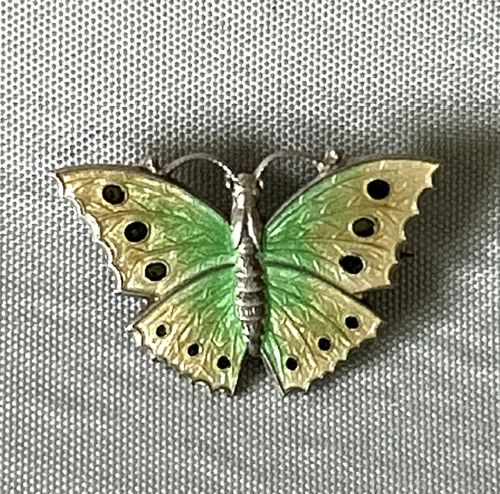
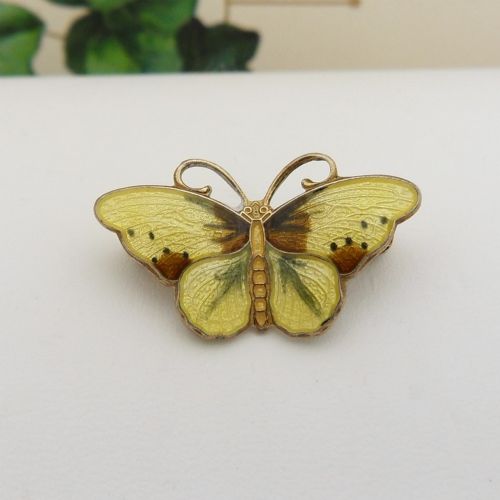
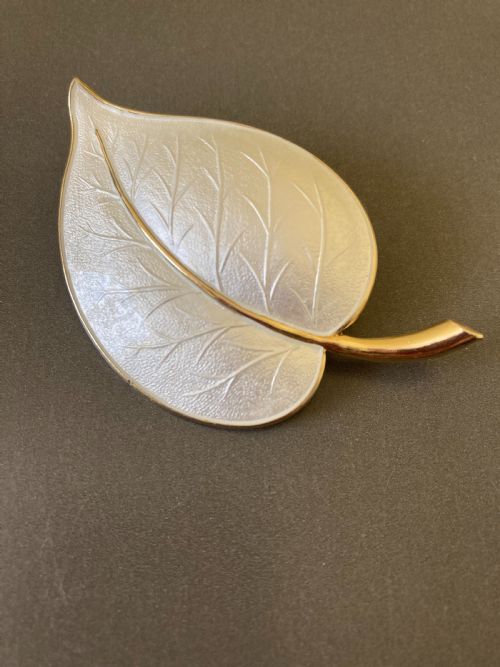
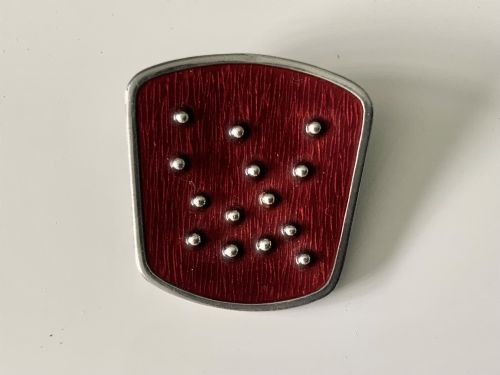
A vintage Norwegian brooch brings together silver and vibrant enamel in distinct forms that collectors prize for their colour.
Vintage Norwegian Brooch
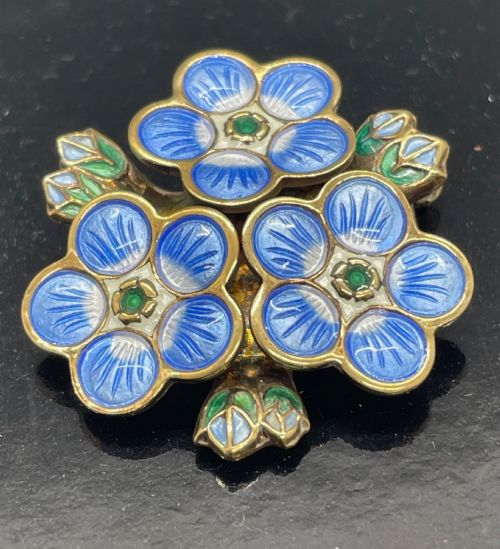
A vintage Norwegian brooch is a small decorative piece of jewellery created in Norway across the twentieth century. These pieces encompass delicate botanical designs, realistic animal forms, and geometric patterns rooted in Scandinavian design traditions.
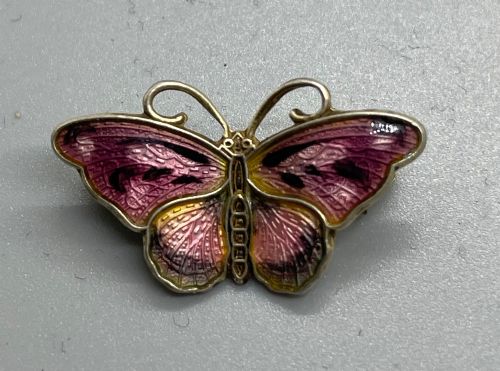
The version a buyer is most likely to meet on this page is the enameled silver butterfly or leaf motif from the mid-century period. Pieces frequently date from the 1950s and 1960s, though earlier examples from the 1920s, 1930s, and 1940s also appear.
Makers shaped these items using sterling silver, often applying a gold wash known as silver gilt or vermeil to highlight the metalwork. The resulting forms range from simple bar brooches to elaborate pictorial winter scenes and crown shapes.
Materials and technique
Silversmiths formed the base of each brooch from sterling silver, shaping wire and sheet metal to outline the desired pattern. Many workshops then applied a layer of gold gilt over the silver to provide a warm contrast against the coloured glass.
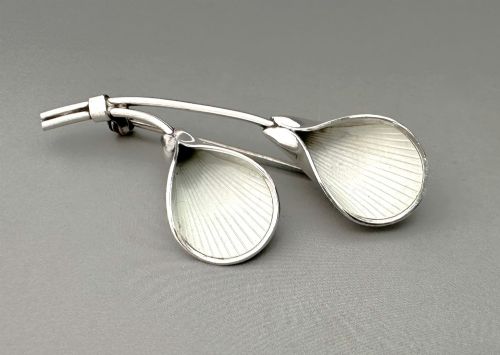
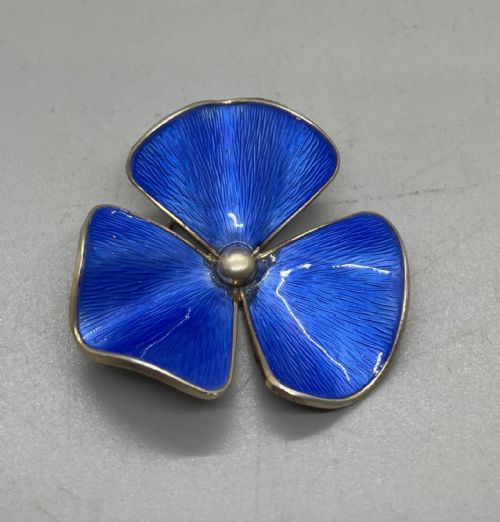
Enamelling involved fusing powdered glass to the metal surface through intense heat, often utilising guilloche techniques to engrave patterns beneath translucent enamel. This process created shimmering surfaces on butterfly wings, leaves, and floral motifs.
The listings span from the 1920s through the 1960s, featuring silver, enamel, and gold gilt in styles from Art Deco to Mid-Century Scandinavian.
Assessing quality in enamels
Quality rests in the precision of the engine-turned guilloche engraving and the even clarity of the vitreous enamel. Superior pieces display intricate background patterns that catch the light beneath deep, uniform layers of colour.
The refinement of the silver wirework and the crispness of the applied gold gilt also distinguish finer examples. Maker marks and silver standard stamps provide additional assurance of origin and material integrity.
David Andersen·Aksel Holmsen·Hroar Prydz·Hans Myhre·J Tostrup·Ivar T Holth·Theodore Olsen·Knut A Rasmussen
The Vintage Norwegian Brooch Glossary
- Guilloche
- An ornamental engraving technique that etches precise geometric patterns into metal. This method creates a textured background that shows through translucent enamel.
- Vitreous Enamel
- A material made by fusing powdered glass to a metal substrate at high temperatures. It produces a durable, glossy surface with rich colour depth.
- Silver Gilt
- Sterling silver that has been coated with a thin layer of gold. It is also referred to as vermeil in various documentation.
- Sterling Silver
- A silver alloy containing ninety-two point five percent silver by mass and seven point five percent other metals, usually copper. This standard provides the primary structural metal for these pieces.
Vintage Norwegian Brooch: Frequently Asked Questions
How do I wear a vintage Norwegian brooch?
These brooches secure easily to lapels, scarves, and heavy knitwear using traditional pin and safety catch mechanisms.
Position them against solid fabrics to allow the vibrant enamel colours and silver work to stand out.
What motifs are common?
Butterflies and natural leaf forms appear with great frequency across the twentieth century.
Geometric patterns, floral sprays, and pictorial winter scenes also represent popular design choices from Scandinavian workshops.
How do I identify the period?
Earlier pieces from the 1920s and 1930s often reflect Art Deco lines, while mid-century items from the 1950s and 1960s embrace Scandinavian Modern styles.
Maker marks and silver stamps stamped on the reverse offer further clues to the precise decade of production.
How should I care for enamel?
Protect the glass surface by storing each brooch separately in a soft pouch to prevent scratching from other items.
Clean the silver gently with a specialist polishing cloth while avoiding harsh chemical dips that can damage the enamel.