

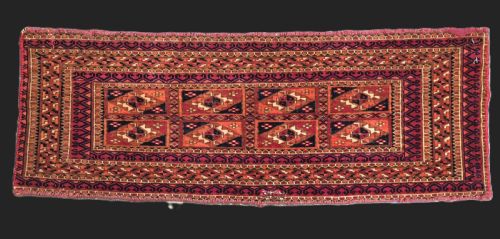
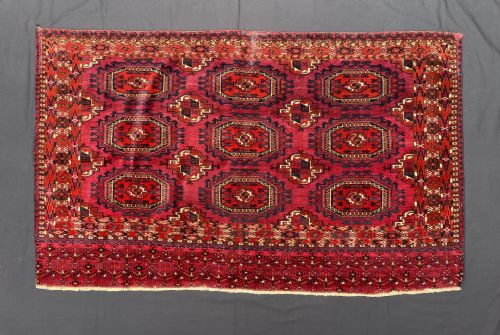


Vintage Nomadic Storage Bag
A vintage nomadic storage bag brings tangible history into a room through the tribal weaving traditions of Central Asia and Persia.
Vintage Nomadic Storage Bag
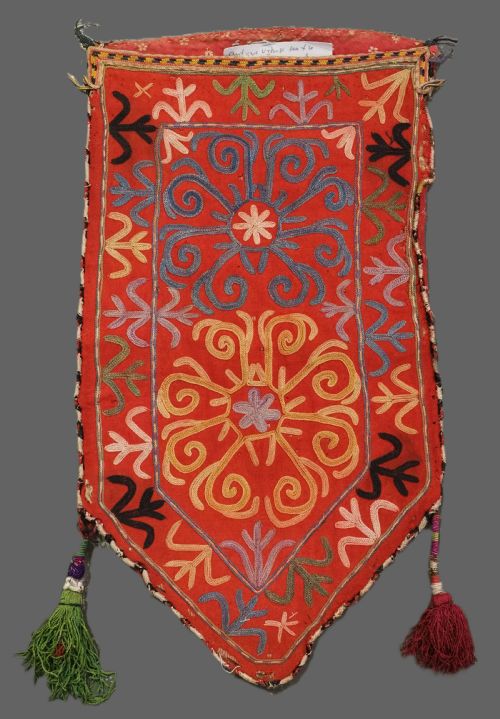
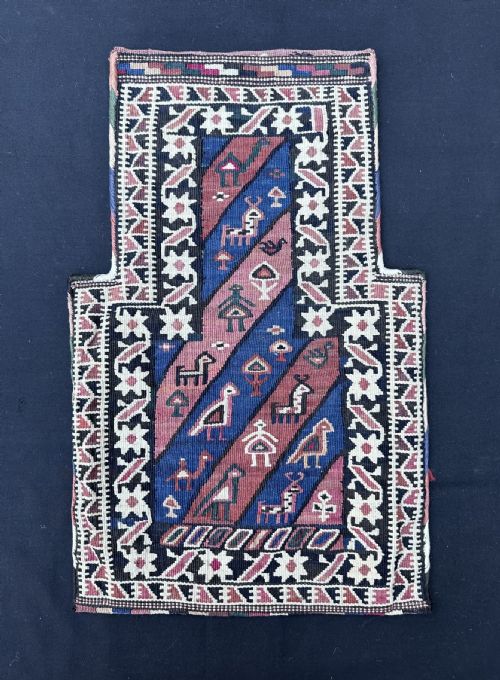
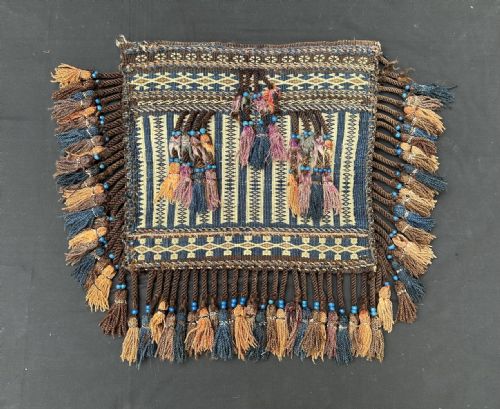
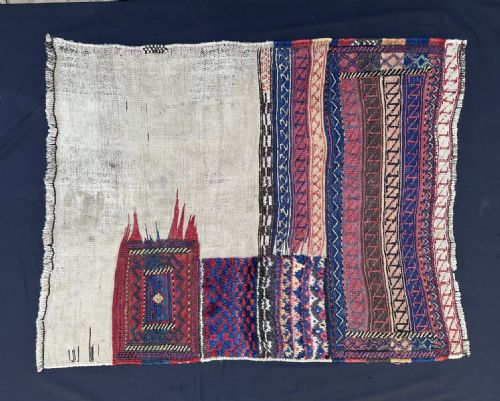
A vintage nomadic storage bag is a utilitarian textile created by tribal groups across Central Asia, Persia, and Afghanistan for domestic portability and household organisation. These pieces encompass various forms such as torbas, chuvals, mafashes, and salt-bags, originating from communities like the Yomut, Tekke, Ersari, and Bakhtiari. Buyers searching for a vintage nomadic storage bag encounter woven containers and bag faces designed for tent living, animal transport, and grain or bedding storage.
The items seen on this page span from the mid-nineteenth century through the early twentieth century, reflecting an era before mechanized production altered regional textile traditions. Many examples survive as complete pouches with plain weave backs, while others remain as intricately decorated bag faces intended for display. Their primary regional centres include Turkmenistan, Uzbekistan, and the tribal territories of western and southwestern Persia.
Forms vary from large tent storage bags down to smaller utilitarian pouches like spindle bags and hanging salt-bags. The visual vocabulary relies on tribal motifs, repeating guls, and banded flatweave patterns passed down through generations of nomadic weavers. These textiles bridge the gap between functional tribal artefact and decorative wall hanging.
Materials and construction methods
The construction of these textiles relies primarily on hand-spun wool and goat hair, selected for durability and structural strength during nomadic migration. Natural dyes provide the underlying palette, creating deep tones that age gracefully over decades of exposure and use. Silk and glass beads occasionally appear as supplementary materials for highlighting specific tribal motifs and adding texture.
Weaving techniques combine pile knotting with flatweave structures, utilising sturdy backings of plain weave wool to withstand heavy domestic use. Artisans incorporated hanging loops and reinforced edges directly into the structure, ensuring the containers could hang securely inside felt tents. The precision of the knotting and the tightness of the weave dictate the structural integrity of each surviving piece.
Some Yomut bag faces spent their early days as tiny nomadic pockets for keeping wool-spinning spindles safe from wandering goats.
Distinctions in quality and execution
Quality in these textiles depends on the density of the weave and the precision with which the tribal guls or geometric patterns are executed. Finer examples display meticulous knot counts and tight, even pile that maintains structural crispness across the entire surface. The depth and stability of the natural dyes further separate standard utilitarian pieces from exceptional tribal commissions.
The survival of original plain weave backs and intact hanging loops adds significantly to the integrity of a textile. Pieces that retain their structural completeness offer a clearer record of their original function within nomadic households. Conversely, individual bag faces indicate how utility shifted toward decorative wall display as traditional tent life receded.
The Vintage Nomadic Storage Bag Glossary
- Chuval
- A large tent storage bag used by Turkmen nomads for bedding and household belongings. These rectangular sacks feature detailed guls across the face and often survive as single panels.
- Torba
- A smaller horizontal storage bag traditionally hung on the lattice walls of a yurt. They display careful tribal iconography and frequently retain their original plain weave backs.
- Gul
- A primary medallion or repeating floral-octagon motif characteristic of Turkmen carpet and bag design. Each tribal grouping utilised distinct guls to signal lineage and identity.
- Mafrash
- A rectangular storage container or trapun bag used in pairs on pack animals during seasonal migrations. Their faces showcase banded flatweave designs or piled panels.
- Flatweave
- A textile structure produced without pile by tightly interlacing warp and weft threads. This technique forms the backs and side panels of many functional nomadic storage bags.
Vintage Nomadic Storage Bag: Frequently Asked Questions
What were nomadic storage bags used for?
Nomadic tribes utilised these bags for organising and transporting bedding, clothing, salt, and household goods during seasonal migrations. Their sturdy wool and goat hair construction protected contents from dust and moisture inside portable felt tents.
Inside the dwelling, these containers hung from wooden lattice frames to keep domestic items off the ground. Their varied sizes accommodated everything from bulk grain storage down to small personal implements like spindles.
How do I hang a storage bag on the wall?
Many pieces feature original hanging loops attached along the top edge, allowing them to slide directly onto a thin concealed rod or batten. For textiles without loops, a professional conservator can attach a discreet cotton sleeve or fabric support along the reverse.
Weight distribution matters greatly when mounting antique wool textiles. Securing the display mechanism to structural wall studs ensures the ancient foundation yarns avoid undue strain.
How can I tell different tribal designs apart?
Tribal attribution relies on the specific structural guls, secondary motifs, and colour palettes integrated into the weave. For instance, Tekke and Yomut weavers in Turkmenistan utilised distinct octagonal medallions and border arrangements that differ from Persian Bakhtiari or Baluch aesthetics.
Regional dye sources and specific flatweave banding techniques further clarify the geographic origin of each piece. Comparing knot density and wool texture helps isolate the specific nomadic group responsible for the work.
Are bag faces different from complete storage bags?
A complete storage bag includes both the decorative front panel and the plain weave back, maintaining its original three-dimensional pouch structure. Over time, many bags separated into individual faces when the utilitarian backs wore out from heavy floor or pack use.
Bag faces function primarily as flat decorative wall hangings while retaining the exact same tribal iconography as complete examples. Both forms provide identical insight into nineteenth-century nomadic weaving traditions.