




Vintage Needlepoint Panels
Vintage needlepoint panels are textile artworks worked in wool, silk, and canvas across centuries, offering rich colour and historic narrative for interior walls and furnishings.
Vintage Needlepoint Panels
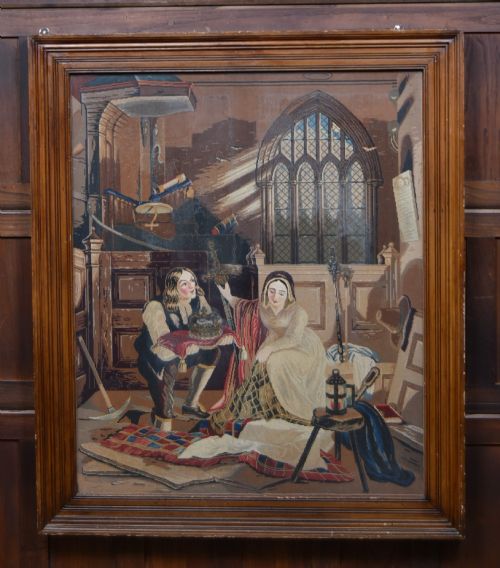
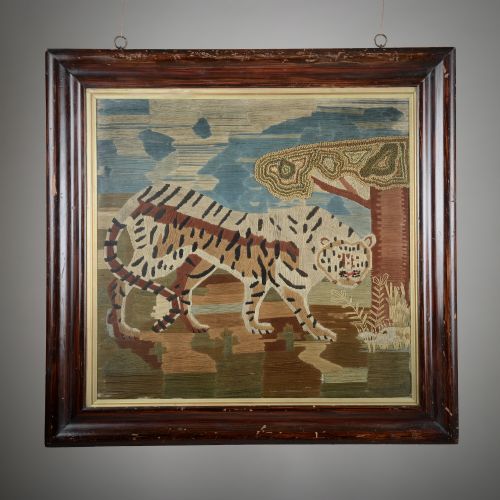
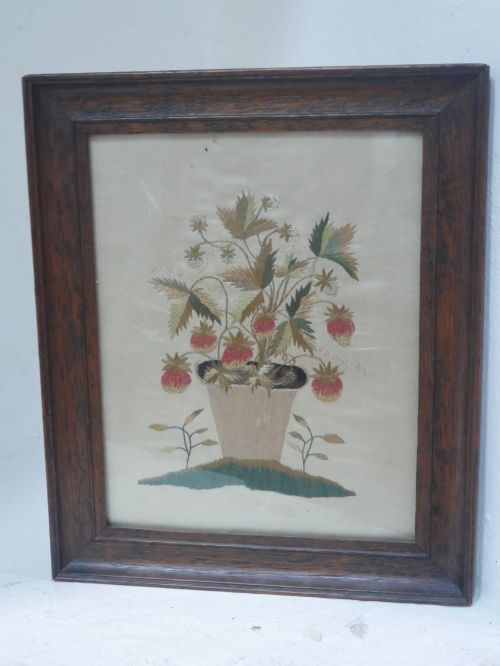
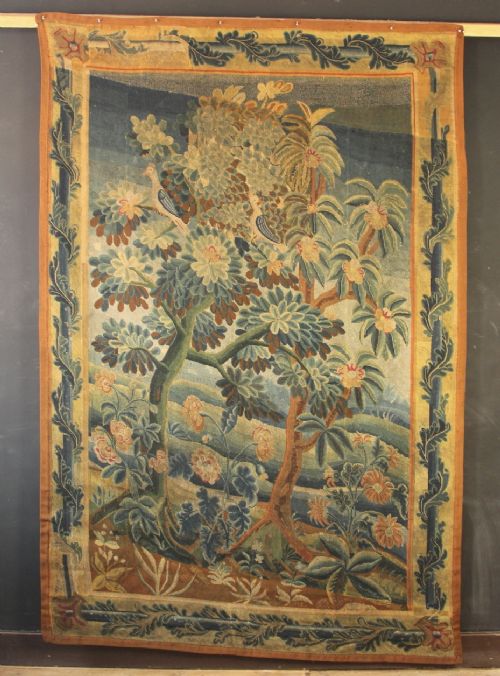
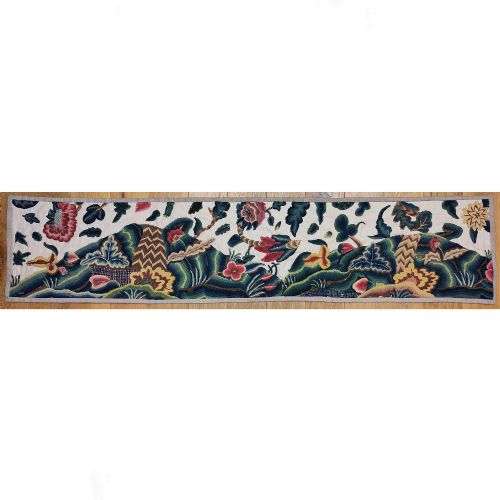
Vintage needlepoint panels encompass historic embroidered pictures, samplers, and tapestries designed for wall display, upholstery, and screens. When searching for vintage needlepoint panels, collectors encounter a diverse range of forms spanning from seventeenth-century crewelwork and band samplers to Victorian wool work pictures and twentieth-century decorative textiles.
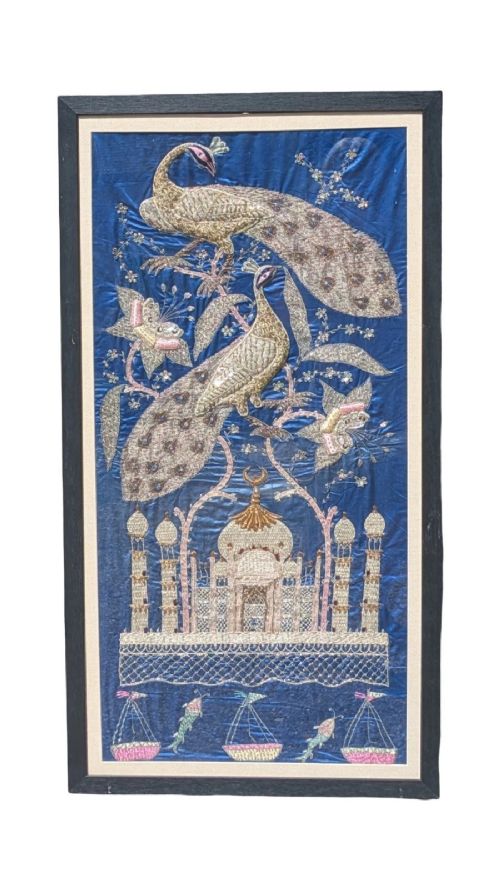
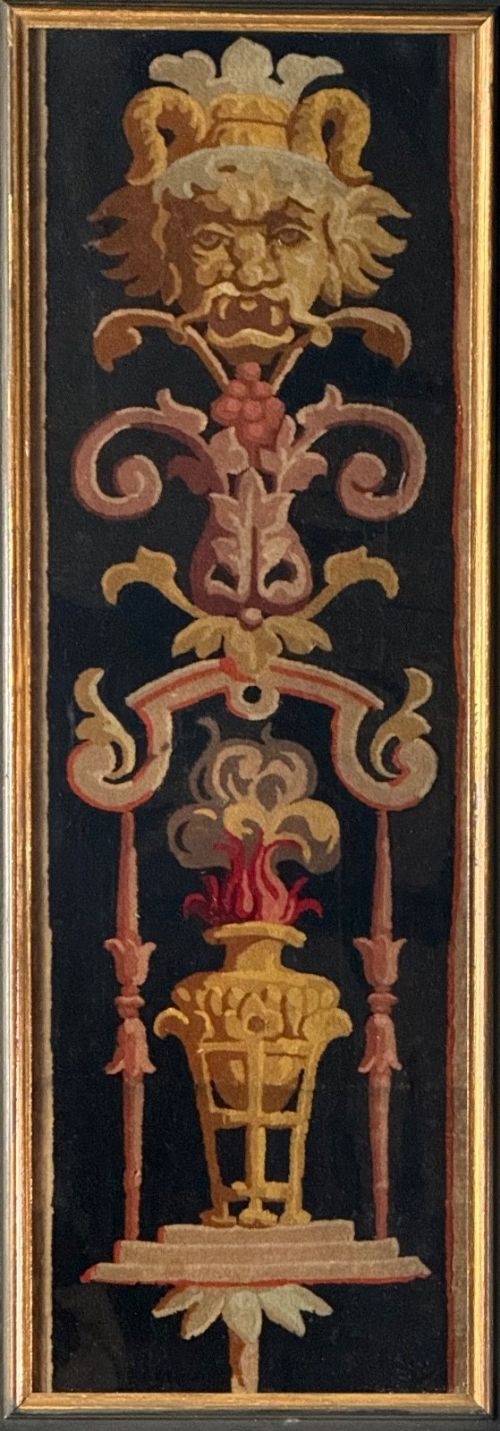
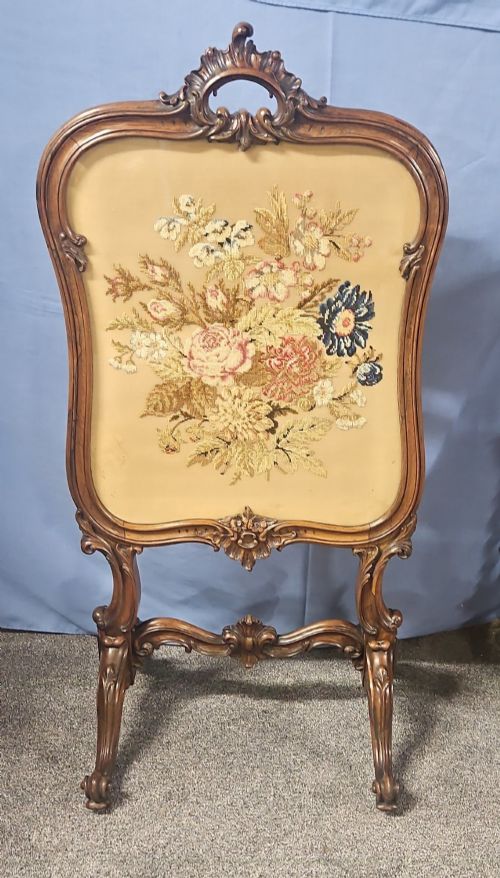
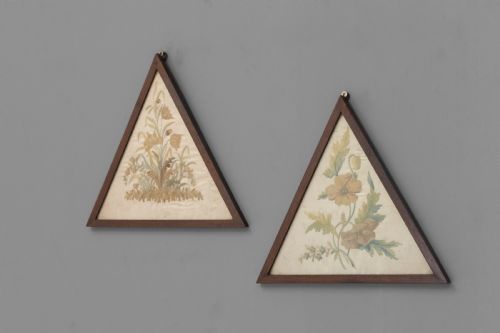
The material selection on this page stretches from early English crewelwork on linen to large European tapestries and framed beadwork fragments. Pieces frequently arrive mounted as wall art, incorporated into wooden firescreens, or fitted within seating frames such as French open armchairs.
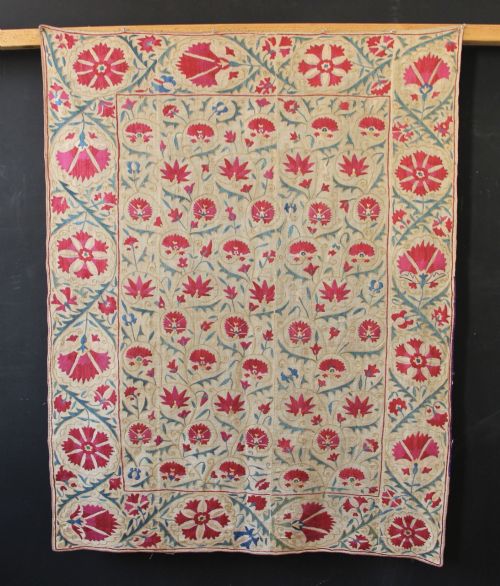
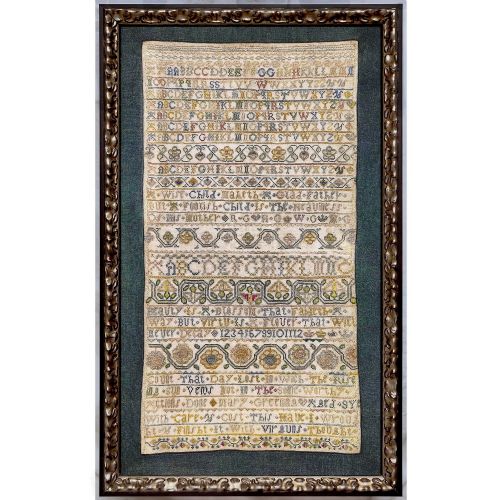
Dating across these listings reaches back to the seventeenth century through eighteenth-century pictorial works and nineteenth-century samplers signed by young makers. Buyers find both intimate domestic exercises and grander continental wall panels originating from English, French, Greek, and Indian traditions.
Materials and construction
Makers stitched these textiles using wool, silk, and beadwork threads applied to supportive foundations of linen and canvas. Ground materials provide the structural grid necessary for counted thread techniques and freehand embroidery.
Wooden frames in walnut, oak, and mahogany frequently house the textile art, alongside brass fixings and glass protection. Structural woodwork appears in the form of carved firescreens, privacy dividers, and painted armchairs designed to display the needlework panels.
The listings span from the seventeenth century through the Victorian era, utilising wool, silk, linen, and mahogany across framed art and firescreens.
Assessing quality in needlework
Quality resides in the precision of the stitching, the complexity of the pictorial design, and the survival of original fibres. Finer execution shows in detailed facial expressions, subtle colour shading, and densely worked grounds that leave no canvas exposed.
The integrity of the mounting and the historical context elevate certain examples, particularly signed samplers that preserve the name and age of the maker. Condition matters greatly, as does the retention of vibrant natural or early synthetic dyes across wool and silk elements.
The Vintage Needlepoint Panels Glossary
- Sampler
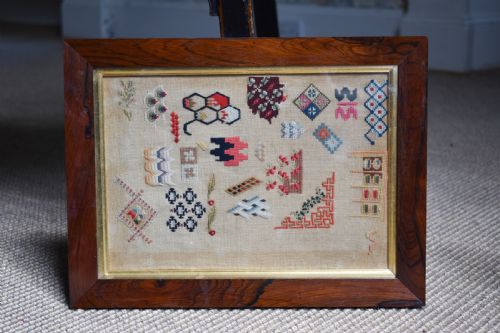
- A piece of needlework produced as a demonstration or test of skill, frequently featuring alphabets, numerals, and moral verses worked by young makers. These textiles serve as essential benchmarks for dating embroidery styles.
- Crewelwork
- Embroidery executed in wool yarn using traditional stitches such as chain stitch and stem stitch upon a linen ground. This technique flourished in seventeenth-century English textiles.
- Gros-point
- A needlepoint stitch worked on coarse canvas to create a firm, durable textile suitable for upholstery and heavy wall hangings. It uses thick wool yarns to build robust pictorial surfaces.
- Tapestry
- A form of textile art woven on a loom or embroidered to depict figurative scenes, landscapes, or heraldry. Historic examples often portray classical, mythological, or pastoral narratives.
- Band sampler
- A narrow format of embroidery featuring horizontal rows of diverse patterns and stitches compiled for reference. These pieces date predominantly to the seventeenth and eighteenth centuries.
Vintage Needlepoint Panels: Frequently Asked Questions
How do I hang a vintage needlepoint panel?
Most textile panels require professional framing behind glass with conservation-grade mounts to protect fragile historic fibres from dust and atmospheric moisture.
Heavier tapestries and firescreen inserts may be wall-mounted using concealed battens or displayed within their original wooden frames without direct pressure on the stitching.
What is the difference between a sampler and a tapestry?
Samplers display various practice stitches, alphabets, and motifs created by a maker to demonstrate technical proficiency. They frequently include names and dates.
Tapestries are pictorial compositions depicting complete scenes, figures, or landscapes meant for decorative narrative display rather than skill demonstration.
Can these panels be used for modern upholstery?
Sturdy gros-point and heavy wool needlepoint panels historically served as chair seats, firescreens, and footstools. Their durability makes them suitable for reupholstering period furniture when the fabric remains strong.
Fragile silk work or degraded canvas grounds should be reserved for wall art rather than functional seating.
How do I date a needlework panel?
Dating relies on stylistic clues, including the costume of depicted figures, the type of canvas or linen ground, and the palette of the wool or silk threads. Signed samplers bearing dates and makers' names provide the most reliable chronological markers.