



Vintage Naval Chest
A vintage naval chest offers practical storage built for travel, combining robust timbers with metal hardware designed to withstand long journeys at sea.
Vintage Naval Chest
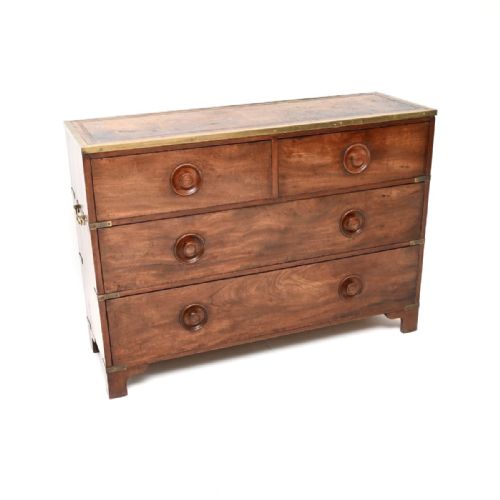
A vintage naval chest serves as a portable storage unit designed for officers and travellers during the nineteenth and early twentieth centuries. These pieces generally appear as two-part drawer units or solid trunks intended to divide easily for transport.
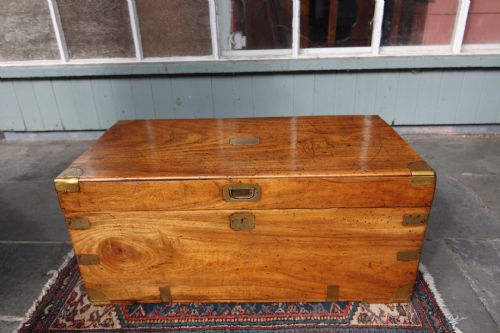
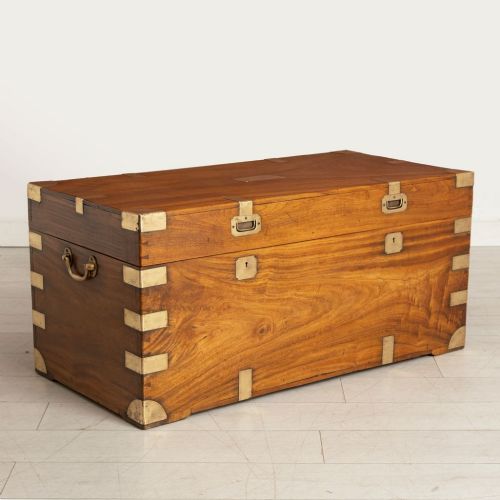
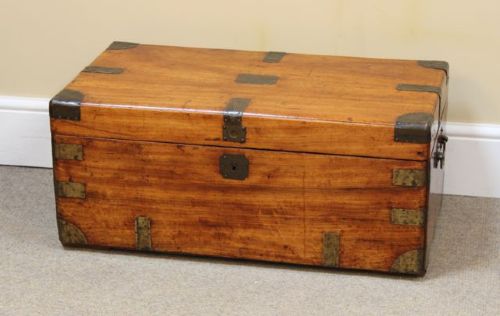
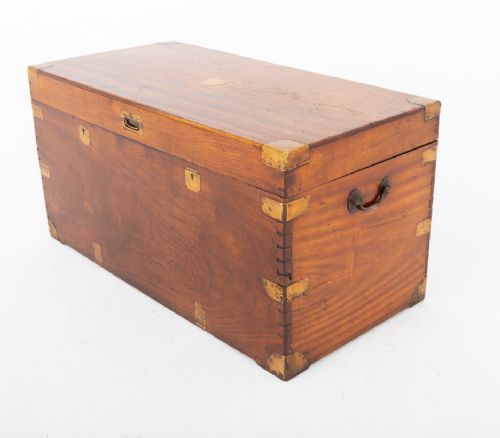
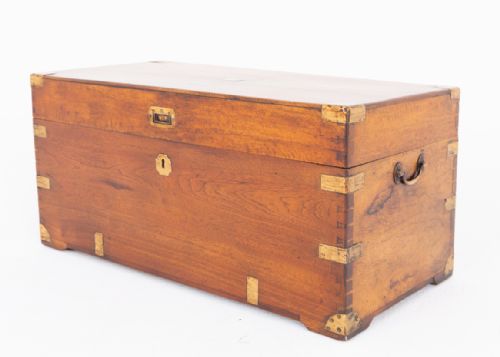
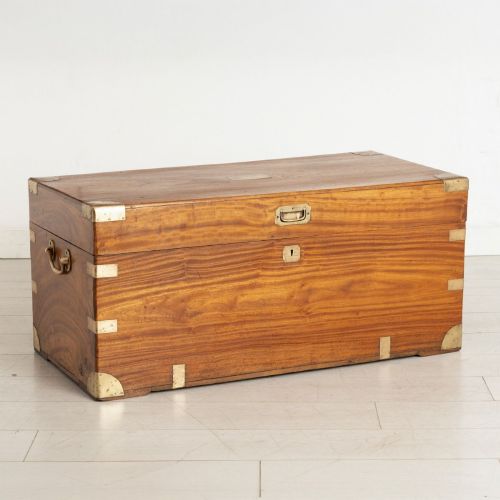
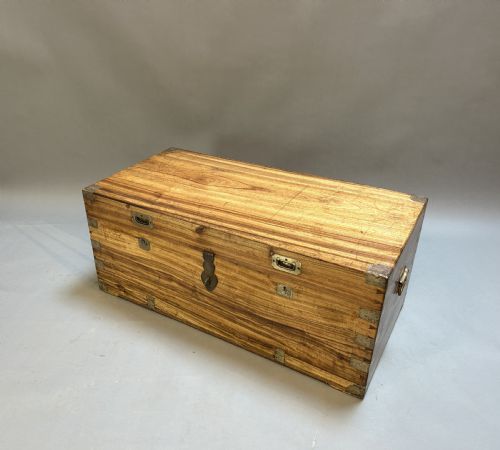
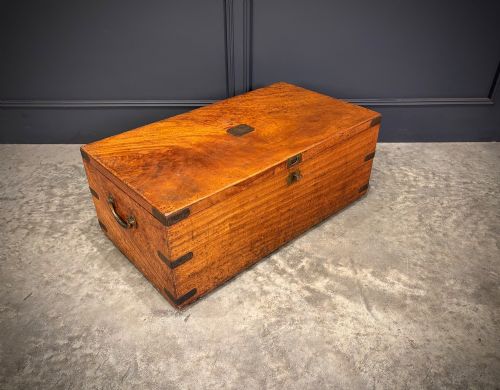
The versions most common on this page feature sturdy camphor wood or mahogany construction, often paired with brass corners and recessed handles. Buyers encounter both lift-top trunks and formal chests of drawers built to military specifications.
Origins span British and colonial service eras, frequently incorporating specific design elements like hidden compartments or secretary desks for field use. The aesthetic prioritises modular utility alongside rich timber grains.
Materials and construction methods
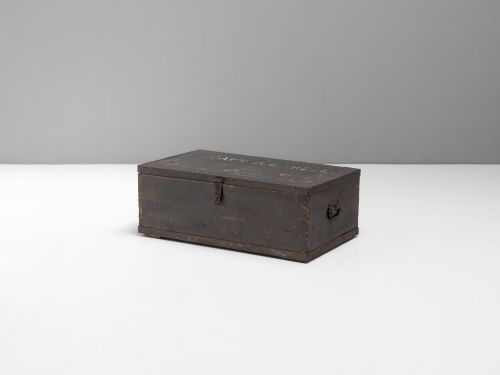
Craftsmen built these pieces using durable timbers such as camphor wood, mahogany, and teak to resist moisture and heavy handling during transit. Pine also appears in specific painted maritime examples.
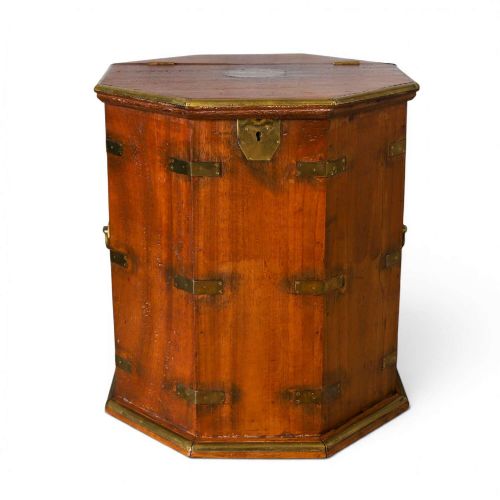
Structural reinforcement relies heavily on brass bindings, corner brackets, and iron fittings screwed securely to protect vulnerable edges from impact. Recessed brass handles allow sections to stack flush without catching during movement.
Several trunks still carry the faint, unmistakable scent of camphor after more than a century at sea.
Distinguishing quality across examples
Quality differentiates itself through the precision of the joinery and the integrity of the original hardware. Superior pieces retain matching brass fittings, working locks, and undamaged secret compartments.
The choice of timber and depth of grain also separate standard utility trunks from finer officer pieces. Original painted finishes or untouched patination on camphor and mahogany elevate the standing of an individual chest.
The Vintage Naval Chest Glossary
- Campaign chest
- A modular chest of drawers or trunk constructed in sections with recessed brass hardware for ease of transport during military deployment.
- Camphor wood
- An aromatic timber frequently utilised for naval trunks because its natural scent deters insects and dampness during long voyages.
- Secretaire chest
- A form featuring a fitted pull-out writing drawer with small compartments and pigeonholes for correspondence in the field.
- Zanzibar chest
- A heavily decorated trunk featuring brass studs and strapwork, reflecting East African and trade route influences on maritime storage.
Vintage Naval Chest: Frequently Asked Questions
How were these chests used at sea?
Officers and merchants used these trunks to transport uniforms, documents, and personal belongings across long sea voyages. The modular design allowed cabins to be packed and cleared efficiently.
Their robust construction protected contents from salt water and rough handling during transit between ships and shore.
What is the difference between a trunk and a chest of drawers?
Trunks feature a hinged lift-up top providing open internal storage space for bulkier items like blankets and uniforms. Chests of drawers offer stacked sliding compartments for organised garment storage.
Many campaign versions split horizontally into two distinct sections for easier carrying.
Why is camphor wood common in naval chests?
Camphor wood repels insects naturally, protecting stored textiles and paper goods from damage in humid marine environments. Its distinct aromatic quality remains noticeable in many surviving examples.
Carpenters also valued the timber for its stability and resistance to warping.
How do I care for a vintage naval chest?
Keep the timber away from direct heat sources and sudden temperature changes to prevent splitting or shrinkage. Regular dusting with a soft cloth maintains the natural finish of the wood.
Brass hardware can be left unpolished to show age or gently cleaned depending on personal preference.