



Vintage Mother of Pearl Jewellery
Vintage mother of pearl jewellery captures the iridescent shimmer of historic shell set in precious metals and carved into pendants, earrings, and cufflinks.
Vintage Mother of Pearl Jewellery
Vintage mother of pearl jewellery encompasses wearable adornments and decorative accessories created across the Georgian, Victorian, Edwardian, and Art Deco periods. Buyers search for this phrase to find items featuring the natural nacre of shells combined with metals such as silver, 9ct gold, and 18K yellow gold.
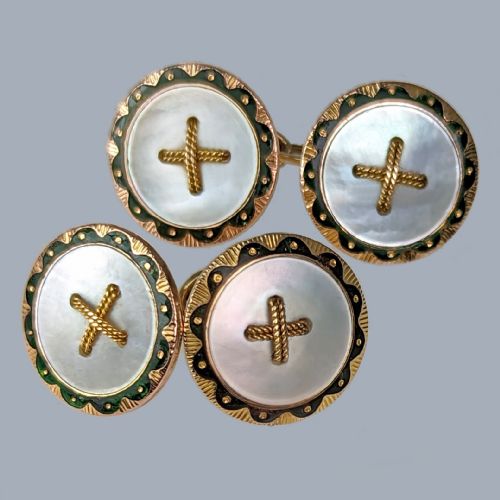
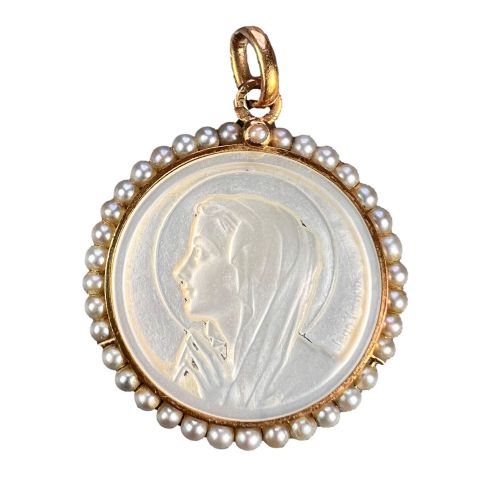
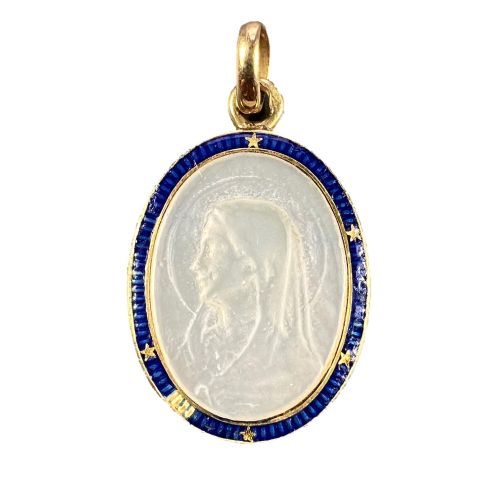
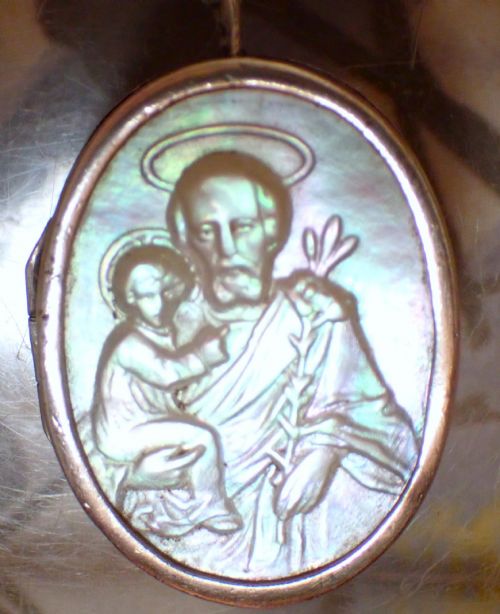
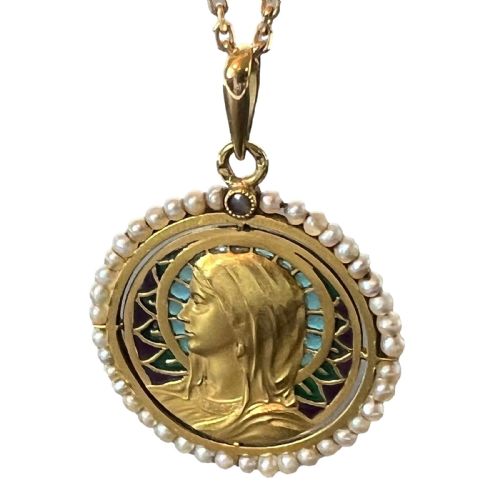
The version most commonly met on this page is the pendant or charm, often French in origin and depicting religious subjects like the Virgin Mary within gold frames. Earrings, cufflinks, and bracelets featuring carved or inlaid shell also appear frequently alongside larger storage pieces.
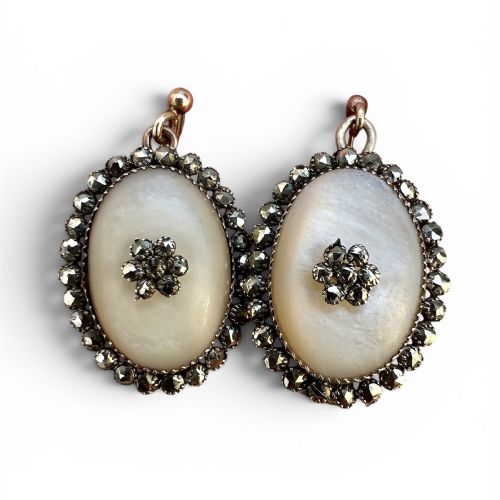
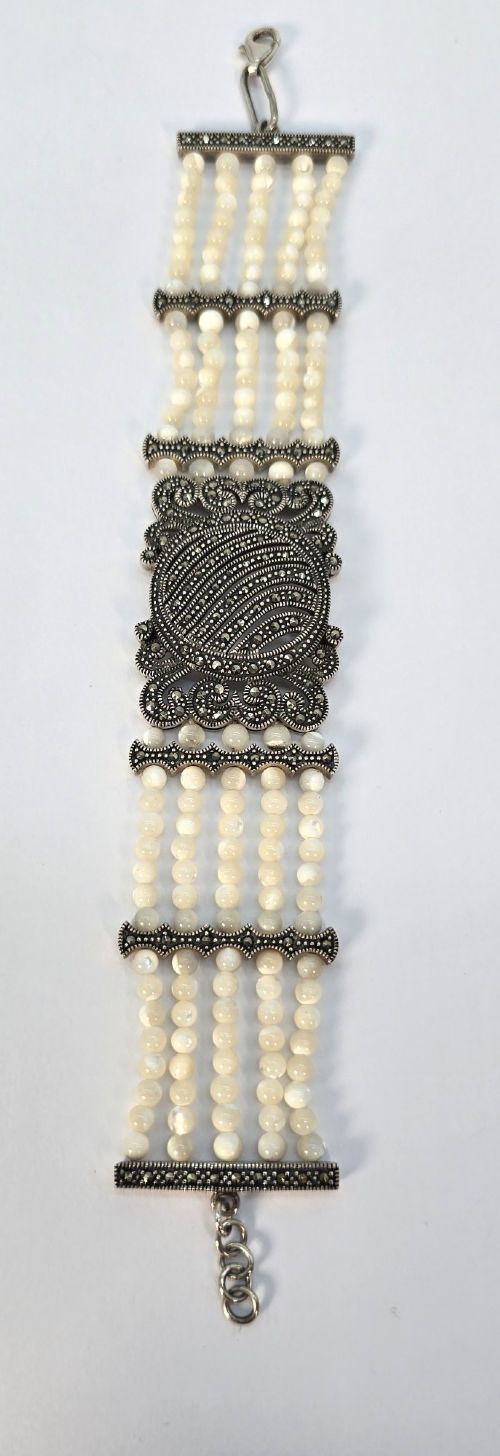
The selection ranges from delicate drop earrings set with marcasite to robust dress studs and intricate brooches. Each piece demonstrates how makers utilised the natural lustre of shell alongside gemstones like diamonds, sapphires, and opals.
How they were made
Craftsmen shaped natural nacre from shells by hand, utilising sawing, carving, and polishing techniques to reveal the luminous layers beneath the rough outer surface. This shaped material was then mounted into settings made from silver, brass, platinum, or gold.
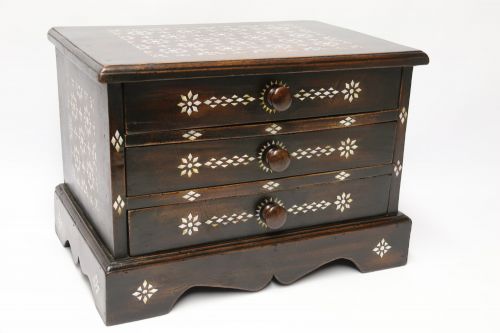
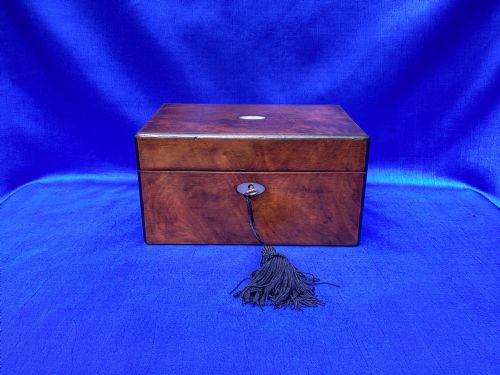
Makers integrated delicate wirework, twisted wire frames, and enamel work such as plique-a-jour to border the shell elements. In jewellery boxes and larger wooden cases, pieces of shell were inlaid flush into surfaces of rosewood, walnut, coromandel, and hardwood.
Secure bezels, screwback mechanisms, and intricate linkages held the components together, combining the organic fragility of the shell with durable precious metals.
A tiny carved shell saint gazes out from behind a golden French window, proving holiness fits on a pendant.
What varies in quality
The excellence of vintage mother of pearl jewellery rests upon the depth of the nacre and the strength of its natural iridescence. Superior examples display vibrant plays of colour across the surface without dull patches or natural pitting.
Metalwork execution distinguishes finer items, evident in crisp gold or silver hallmarks, secure stone settings, and precise wirework frames. Hand-carved details on pendants and charms show greater definition and skill in superior specimens compared to simpler stamped or plain polished discs.
Solomon Blanckensee Son·Meyle & Meyer
The Vintage Mother of Pearl Jewellery Glossary
- Mother of Pearl
- The iridescent internal layer of mollusc shells, valued for its shimmering play of colours. It has been shaped into jewellery and inlaid into wooden boxes for centuries.
- Plique-a-jour
- An enamelling technique where enamel is applied to a cellular framework without a backing, allowing light to shine through the transparent colour. It frequently appears in Art Nouveau pendants alongside shell elements.
- Marcasite
- Small faceted pyrite stones set into silver mounts to provide a brilliant, dark metallic sparkle. These stones often border shell in Georgian and Art Deco earrings and bracelets.
- Nacre
- The scientific term for the organic-inorganic composite material secreted by molluscs that forms pearl and mother of pearl. Its microscopic structure creates the characteristic lustrous sheen.
- Rosewood
- A dense, richly grained timber often utilised for Victorian boxes and workcases. It frequently served as the dark, contrasting background for inlaid mother of pearl motifs.
Vintage Mother of Pearl Jewellery: Frequently Asked Questions
How do I clean vintage mother of pearl jewellery?
Clean the shell gently with a soft, damp cloth to remove oils and dust, avoiding harsh chemical dips or ultrasonic cleaners that can damage organic nacre and delicate metal settings.
Dry the piece thoroughly immediately after wiping to protect any associated silver, gold, or steel components from moisture damage.
Is mother of pearl the same as pearl?
Mother of pearl is the inner lining of the shell itself, whereas pearls are formed layer by layer around an irritant within the body of certain molluscs.
Both share the same organic-inorganic composition of nacre, which gives them their characteristic iridescent shimmer, but their forms and origins differ.
How do I date a mother of pearl pendant?
Examine the metal mount, hallmarks, and style of the piece, as Edwardian and Victorian items often feature distinct closed-back settings, specific gold purities, and hand-carved religious motifs.
Art Deco examples typically display geometric metal frames and screwback mechanisms, while Georgian pieces show older cut styles and hand-fabricated silver and gold work.
Can I wear vintage mother of pearl daily?
Shell is a softer, organic material that can scratch or dull with constant friction, so these pieces benefit from careful handling and removal during vigorous activities.
Store items separately in soft pouches away from harder gemstones to preserve the delicate carved surfaces and polished lustre.