

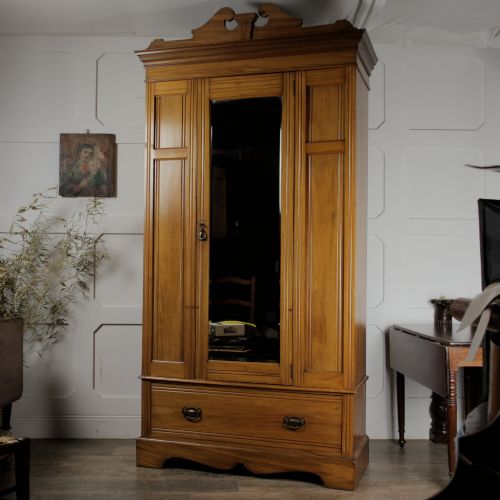
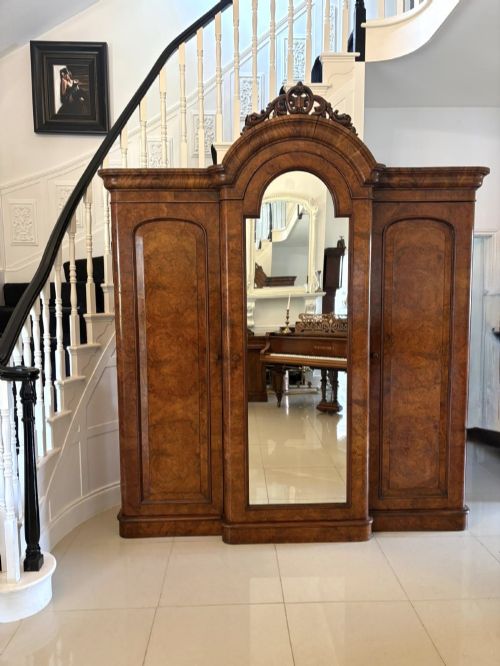
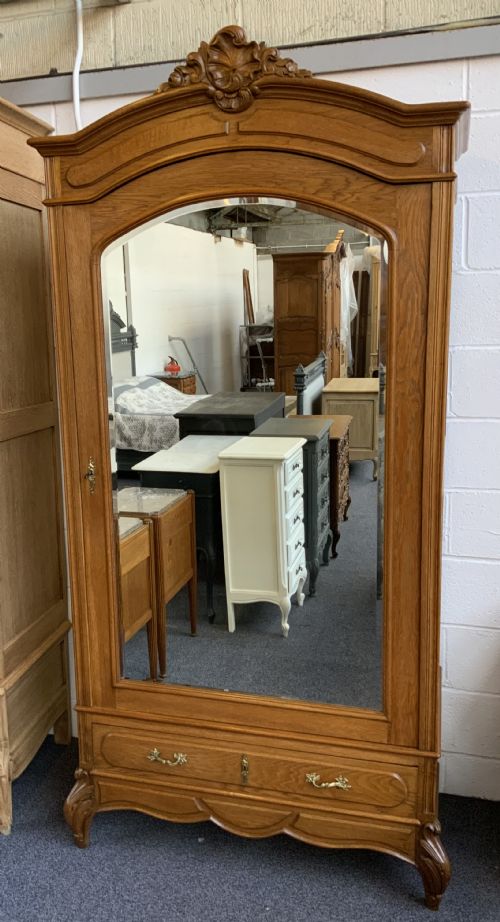
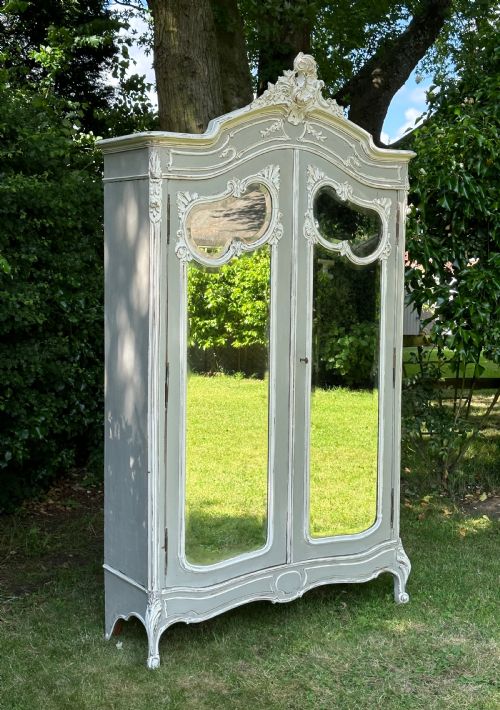
Vintage Mirror Wardrobe
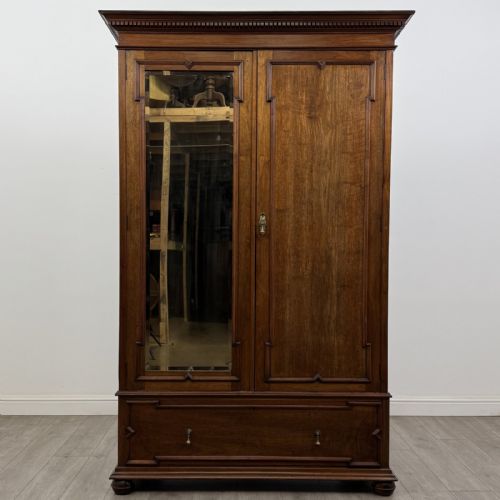
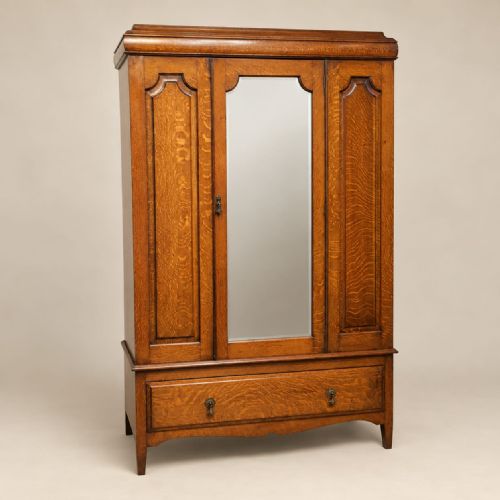
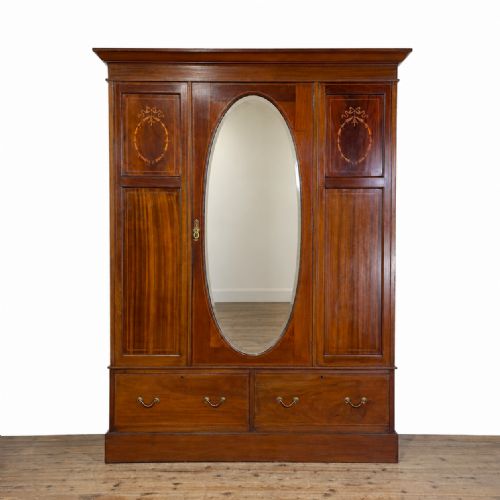
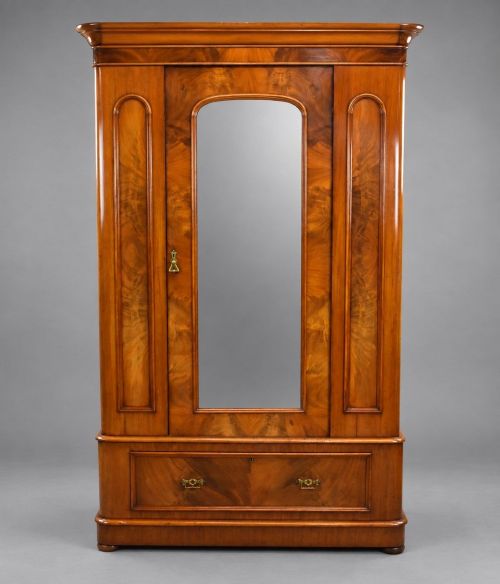
A vintage mirror wardrobe offers substantial bedroom storage paired with full-length glass panels, originating across Victorian, Edwardian and later twentieth-century periods.
Vintage Mirror Wardrobe
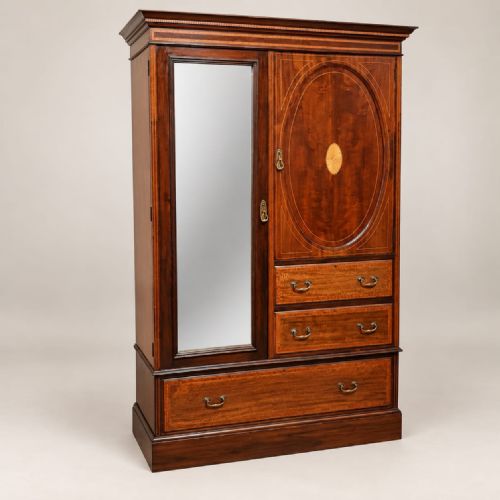
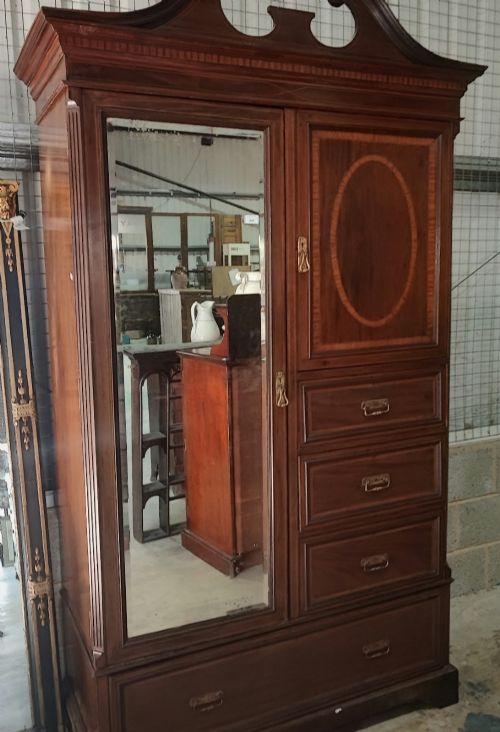
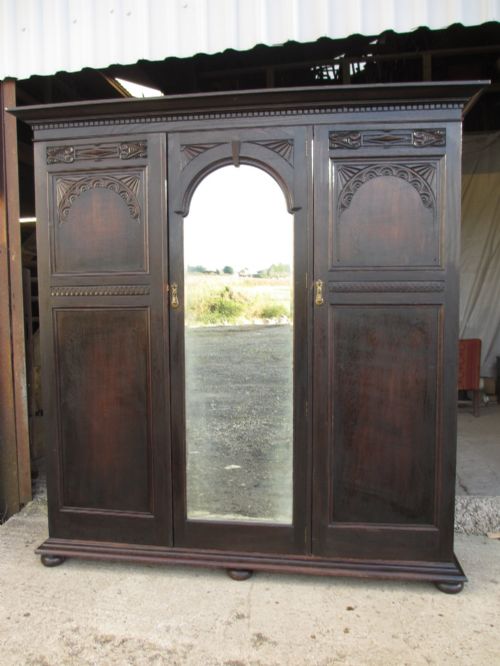
A vintage mirror wardrobe provides deep clothes hanging space alongside integrated mirrored doors that reflect light around a bedroom. These large items of furniture appear frequently in Edwardian and Victorian forms, often constructed as single, double or triple door configurations.
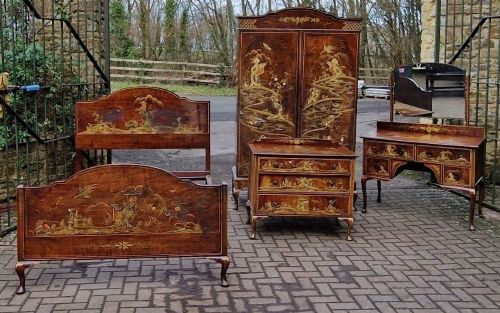
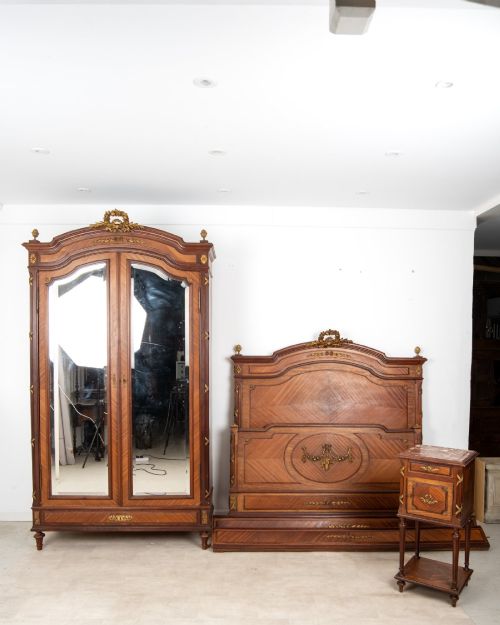
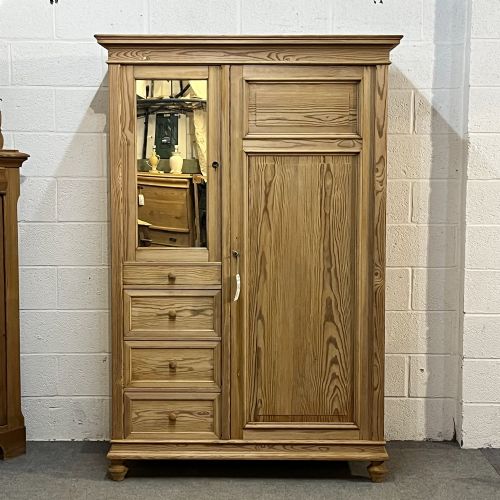
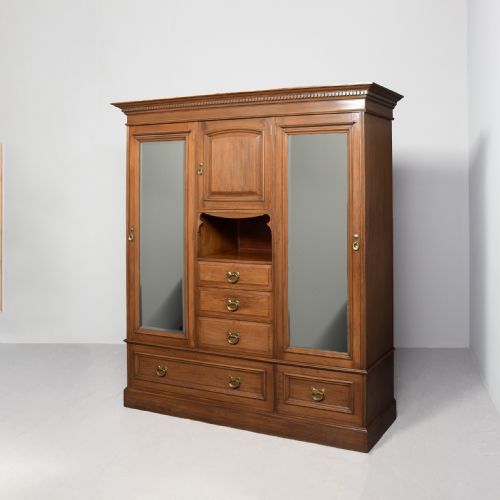
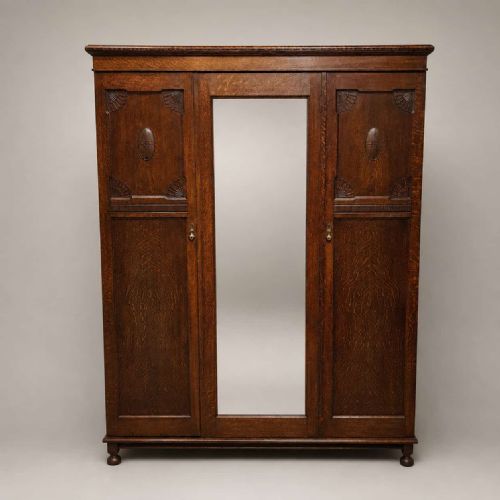
The pieces on this page span several decades, ranging from nineteenth-century mahogany and burr walnut constructions to early twentieth-century oak, satinwood and French armoires. Compactum designs and combination wardrobes integrate drawers and small compartments alongside the primary mirrored hanging sections.
Makers such as Edwards and Roberts, Waring and Gillows, Lamb of Manchester and Heals contributed notable examples to this category. Styles stretch from Arts and Crafts and Art Nouveau to Louis XVI Revival and French provincial designs.
Materials and Construction Methods
Carpenters utilised solid timbers like oak, mahogany, walnut, ash and satinwood, often applying decorative veneers such as burr walnut or straight-grained walnut to larger flat surfaces. Brass hardware, gilt bronze ormolu mounts and inlaid woodwork provide ornamental detail.
Mirror glass panels are set securely into door frames, sometimes with bevelled edges, while drawer construction typically employs traditional dovetail joints. Waxed, polished or painted finishes protect the wood surfaces and highlight the grain.
Vintage Mirror Wardrobe Retail Price Guide 2026
Typical asking prices for vintage mirror wardrobe among the pieces listed under this phrase on Sellingantiques today, from the lower quarter to the upper quarter. They describe what is for sale here now, not the wider market.
Some gentlemen wardrobes include specialised compartments for collars and ties alongside the full-length mirrors.
Factors Defining Quality
The refinement of the timber selection and the complexity of the cabinetry distinguish superior pieces from standard furniture. Finely figured burr walnut, intricate marquetry inlay, hand-carved oak details and substantial brass mountings indicate higher workmanship.
Structural scale and intact original bevelled mirror glass contribute significantly to the character of each piece. Matching bedroom suites and labelled items by prominent cabinet makers demonstrate elevated standards of design and production.
Edwards and Roberts·Waring and Gillows·Lamb of Manchester·Heals
The Vintage Mirror Wardrobe Glossary
- Compactum wardrobe
- A multi-functional wardrobe that combines hanging space with internal drawers, shelves and sometimes small cupboard sections. This layout maximises storage efficiency within a single footprint.
- Ormolu mounts
- Gilt-bronze decorative ornaments applied to the exterior of furniture, particularly common on French armoires and revival pieces. They provide contrasting metallic highlights against dark woods.
- Inlay
- A technique where pieces of contrasting wood, metal or shell are inserted into depressions in the primary timber surface to create decorative patterns. Edwardian satinwood pieces frequently employ this method.
- Combination wardrobe
- A storage unit that integrates hanging space, drawers and shelving into one connected framework. These pieces often feature a central mirrored door flanked by panelled doors or drawer stacks.
- Bevelled glass
- Mirror glass with edges cut and polished at an angled slope to create a decorative framed effect. This detail appears frequently on nineteenth and early twentieth-century mirrored doors.
Vintage Mirror Wardrobe: Frequently Asked Questions
What is a compactum wardrobe?
A compactum wardrobe is a large storage piece that integrates hanging space with internal drawers, shelves and cupboards.
These units provide diverse storage options within a single footprint, often featuring a central mirrored door alongside smaller compartments.
How do I date an antique wardrobe?
Dating relies on examining the timber species, construction joints, hardware and prevailing stylistic influences such as Arts and Crafts or Art Nouveau.
Maker labels, patent stamps and characteristic period veneers like burr walnut or satinwood help narrow the decade of manufacture.
Are these wardrobes easy to dismantle?
Many large nineteenth and early twentieth-century wardrobes were constructed to be taken apart for transport and reassembly in homes.
Cornices, base plinths, side panels and heavy doors often separate into modular sections held together by bolts or fixings.
What is the difference between a wardrobe and an armoire?
An armoire is a traditional French-style cupboard or wardrobe, often featuring double doors and decorative carvings or ormolu mounts.
While both terms describe large clothes storage furniture, armoires frequently exhibit distinctive continental design motifs and proportions.