
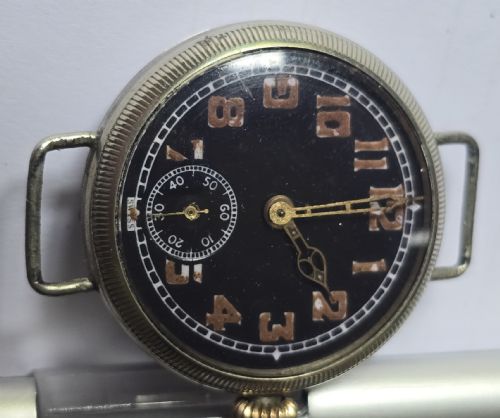


Vintage Military Wristwatch
A vintage military wristwatch carries the exact timekeeping history of past conflicts, combining rugged utility with enduring horological design.
Vintage Military Wristwatch
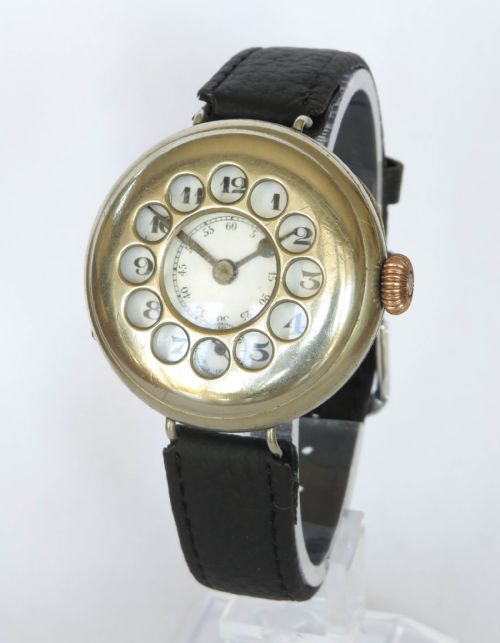
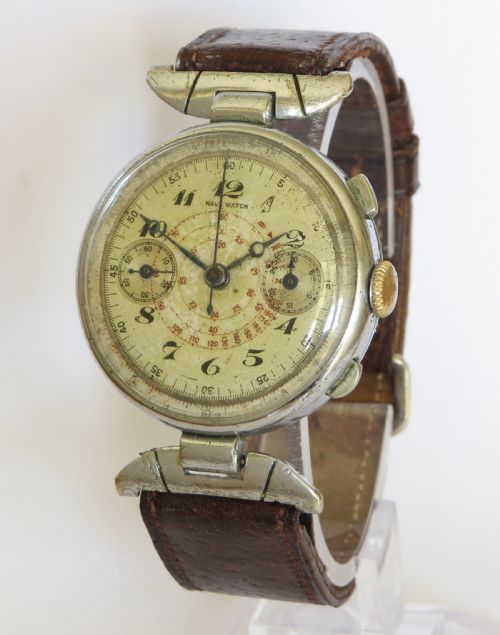
A vintage military wristwatch is a robust timekeeper originally commissioned for service personnel, pilots, and aircrews across multiple global conflicts. These timepieces range from First World War trench watches fitted with shrapnel guards to Second World War British issue pieces and mid-century air force chronographs. Buyers examining this page will frequently encounter robust steel or chrome cases housing high-contrast dials built for strict legibility.
Assessing quality and authenticity
Quality in these timepieces rests upon the originality of the dial, the preservation of official military markings, and the integrity of the movement. Pieces retaining their original issue numbers, broad arrow marks, or department stamps command greater historic interest.
The degree of wear on the case and the presence of factory components rather than later replacement parts dictate the overall standard. A well-preserved dial without excessive degradation separates exceptional service instruments from heavily altered examples.
Materials recorded across the inventory include stainless steel, brass, chrome, silver, leather, glass, and enamel.
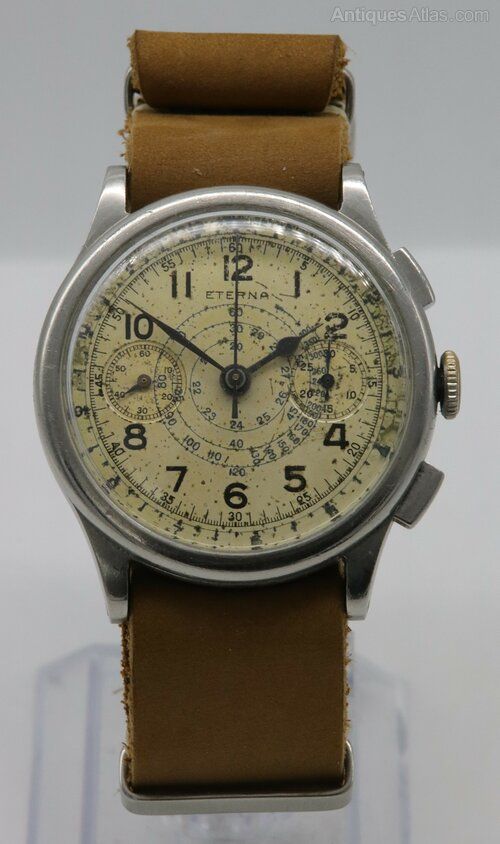
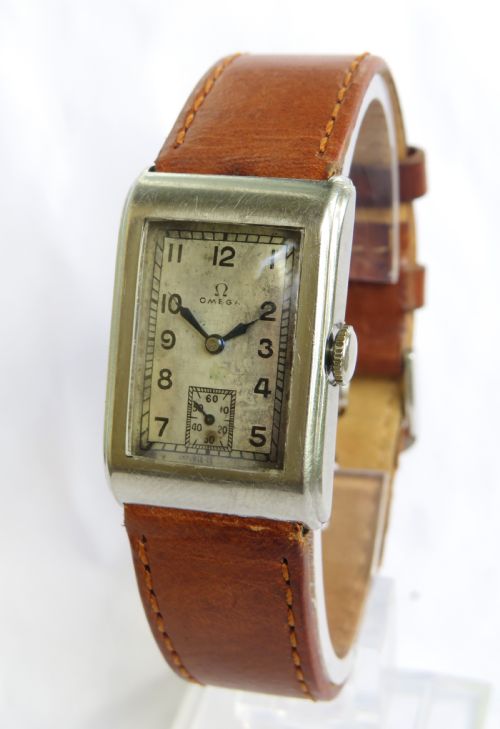
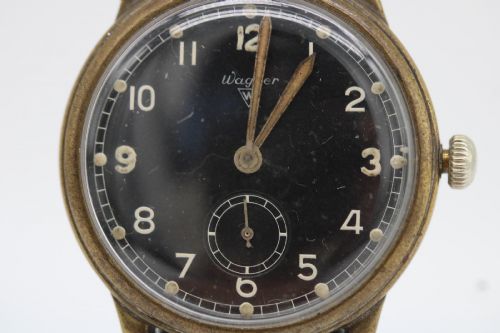
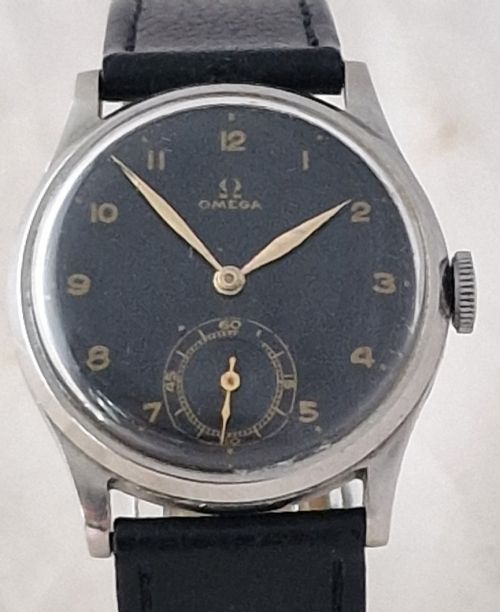
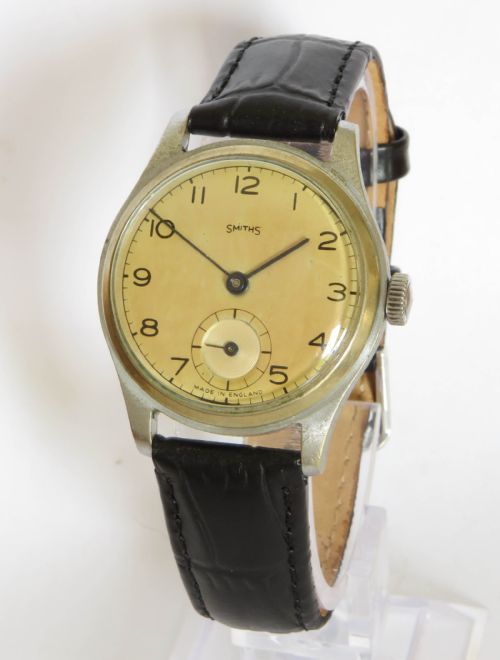
Eterna Chronograph Wristwatch·Omega·Hahn Landeron·Wagner German Military·Smiths·Roamer·Belair·Ebel RAF Issue·West End Watch Co·Revue Vertex·Benrus·Timor·Vixa
The Vintage Military Wristwatch Glossary
- Chronograph
- A watch with a stopwatch function alongside its standard timekeeping display. These complications were vital for pilots and navigators calculating speed and distance.
- Trench watch
- An early form of wristwatch adapted from pocket watches during the First World War. They often featured wire lugs and protective metal shrapnel guards over the glass.
- WWW
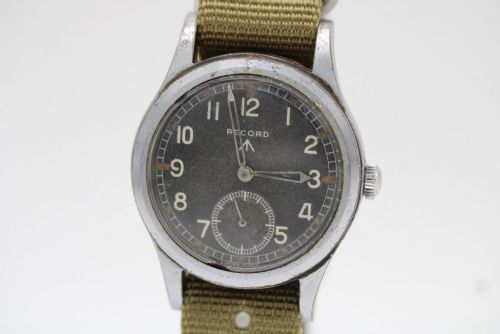
- An abbreviation used by the British Ministry of Defence standing for Watch, Wrist, Waterproof. These form part of the iconic Dirty Dozen group issued during the 1940s.
- ATP
- Army Trade Pattern refers to the specification standard used by the British military for general service watches prior to the introduction of the WWW standard.
- Shrapnel guard
- A hinged metal grid fitted over the watch glass to protect it from impact during active combat. They are particularly sought after on First World War pieces.
Vintage Military Wristwatch: Frequently Asked Questions
How do I identify a military issue watch?
Military issue watches usually display specific government engravings, broad arrow marks, or serial numbers on the case back. These stamps denote the branch of service, such as RAF or army trade patterns.
Contrasting dials with 24-hour markers or specialised department codes also indicate official military provenance rather than civilian production.
Can I wear a vintage military watch daily?
Many collectors wear these watches regularly, provided they receive proper care and routine servicing by a qualified horologist. Mechanical movements from the mid-twentieth century remain remarkably resilient.
However, because most vintage models lack modern waterproof seals, owners should keep them away from moisture and heavy impacts.
What does Dirty Dozen mean?
The Dirty Dozen refers to a specific group of twelve Swiss watch manufacturers who supplied standardised waterproof wristwatches to the British Ministry of Defence during the Second World War.
These pieces share specific military specifications including black dials, Arabic numerals, sub-seconds registers, and stainless steel or nickel-chromium cases.
Why do some military watches have shrapnel guards?
Shrapnel guards were added to early trench watches during the First World War to prevent the fragile glass crystal from shattering during combat. Soldiers strapped these protective metal grids directly over the watch face.
Finding a period piece that retains its original guard is uncommon, as many were removed when owners returned to civilian life.